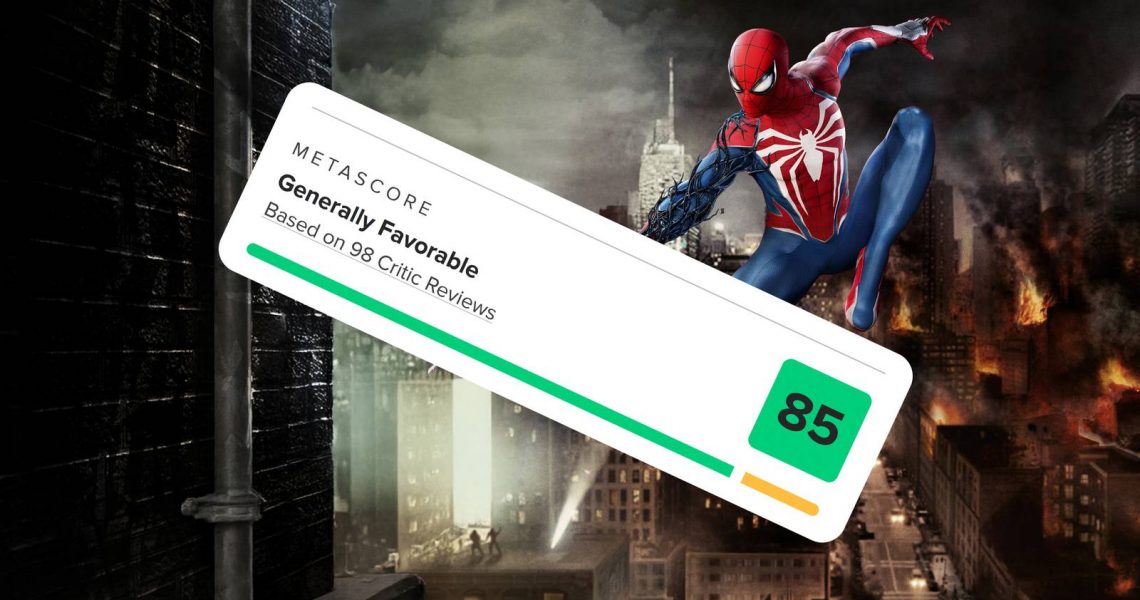
The 85 Metacritic PlayStation Game With Better Superheroes than Spider-Man
It’s hard to find a modern, AAA superhero video game series better than Marvel’s Spider-Man. Rights to such iconic characters as Spider-Man, Batman, and Superman can be both difficult to acquire and complicated to navigate, and audiences tend to have sky-high expectations. Basically, when Insomniac reveals that it will be releasing a Spider-Man or Wolverine adaptation, the pressure for critical and commercial success is palpable.
Things used to be a bit different, though. In the early days of the gaming medium, superhero video games were often arcade-inspired, and eventually leaned into the licensed movie tie-in trend of the 2000s. This led to mixed results: for every Spider-Man 2 there were several lackluster or phoned-in projects, resulting in worsening audience cynicism over the years. Sony, now known for effectively leading the industry with superhero adaptations, dealt with these shifting expectations and demands by creating new characters and lore altogether through the Infamous franchise, games that are still far more unique and compelling than those from the Marvel’s Spider-Man label, in many ways.
The First Infamous Introduced Players to a Whole New World
There’s nothing quite like swinging through New York City and beating up bad guys as Spider-Man, but these gameplay elements can often feel emulative rather than wholly original. There’s a clear emphasis on cinematic or flashy gameplay to pair with cutting-edge visuals, rather than a desire to deliver deep and thoughtful gameplay. When adapting a character like Spider-Man or Batman, studios can be hogtied by several factors, not the least of which being pre-established lore and tone.
But 2009’s Infamous had no such restrictions, giving Sucker Punch Productions considerable freedom to develop the gameplay systems it had mastered through the Sly Cooper series. Infamous takes place in Empire City, a fictional US metropolis clearly meant to represent New York City, and this decision alone flung the doors open for greater creativity. There was no chance of audiences dissecting Empire City for its accuracy relative to reality, as there is no real-world counterpart to measure it against.
Beyond the setting, Infamous‘ cast of characters and world-building were unshackled from the rules and pedigree of source material. Cole McGrath, the game’s protagonist, was able to have a unique and original backstory; his acquisition of lightning powers didn’t need to adhere to pre-established rules or precedents; the story’s shocking villain did not require a comic book counterpart to be interesting. This freedom set the stage for Infamous‘ story and gameplay, both of which are inventive and exciting, even all these years later.
These points about originality can also apply to Prototype, a quasi-superhero game from the same era.
Infamous’ Superpowered Gameplay Is Clever and Thrilling
I’ve always felt that Infamous gets a bit overlooked in the gameplay department. It may not be as polished as something like Batman: Arkham Asylum, let alone Marvel’s Spider-Man, but it’s far more creative. Cole attains lightning-based powers at the start of the game, and his suite of abilities becomes increasingly varied and extensive as the game goes on. With his powers built so specifically around electricity, Cole can eventually pull off all manner of cool maneuvers, such as:
- “Grinding” on electric wires and train tracks
- Turning bodies of water into electric traps
- Calling down pillars of lightning from the sky (controlled with the DualShock’s gyroscope)
- Forming blades from concentrated electric energy
These powers would eventually expand to include other elements in Infamous‘ sequels, such as smoke, fire, and ice, but Cole’s lighting powers remain the most focused rendition of the concept. Naturally, Cole McGrath is far from the first electricity-based superhero, with his closest parallel perhaps being DC’s Static Shock, but these characters have been historically underrepresented in gaming. Moreover, because of the traditionally family-friendly orientation of superhero stories, such heroes would likely not have the narrative or mechanical complexity of Cole.
Infamous Is Darker Than Most Superhero Stories, and That’s a Good Thing
Choosing Between Good and Evil Is Central to the Infamous Experience
Cole McGrath can be a typical hero, helping those in need and saving the day without incurring mass casualties, but Infamous breaks the superhero mold by giving the player the final say in this matter: you can play Infamous as an evil, superpowered maniac, if you so choose. Cole’s moral alignment is determined by fairly predictable factors, like binary story choices or civilian casualties. For instance, players can choose to sacrifice a character to complete a mission, or use exclusively lethal combat methods when fighting enemies.
Making “evil” decisions will change the appearance of Cole’s character model and the lightning that he is able to channel—blue lightning for good playthroughs, red (and eventually black) lightning for evil ones. More significant are the abilities that Cole will acquire based on his ethical orientation. Put simply, good playthroughs will net players access to powers designed around precision and incapacitation, whereas bad playthroughs will result in more destructive, indiscriminate area-of-effect attacks. This morality system thus leads to considerable replay value, as it impacts the gameplay as much as the story itself.
Infamous’ Story Is Free from Marvel, DC Oversight
Something that has always bothered me about Marvel’s Spider-Man is its unwillingness to embrace darker storytelling or a more mature tone. Characters are often strictly good or evil, leads are protected by plot armor, and supposedly disturbing plotlines like the symbiote invasion are robbed of their impact, ugliness, and venom (no pun intended).
Without getting into spoilers, Infamous is absolutely not like this. If anything, it suffers a bit from the edgy trends of the late-2000s, but even that is a nice change of pace from modern, overly sanitized superhero stories. There’s a real sense of danger and stakes in the world of Infamous which, coupled with the freedom that the game provides, adds more weight to the hero’s burden. In turn, this makes for a more intriguing and affecting narrative, one that still feels like a superhero story despite bucking conventions left and right.