What is the Best Sims Game?
I’ve been playing The Sims for nearly 20 years now. The franchise released its first game when I was a baby, so in a strange way, Maxis’ flagship IP has grown up alongside me. Just as I’ve cycled through my own phases—bubbly geek, emo wannabe, and now-writer—The Sims has undergone its own transformations. From experimental spin-offs in the early 2000s to full-scale reinventions of its mainline entries, the iconic life simulator has lived a dozen different lives.
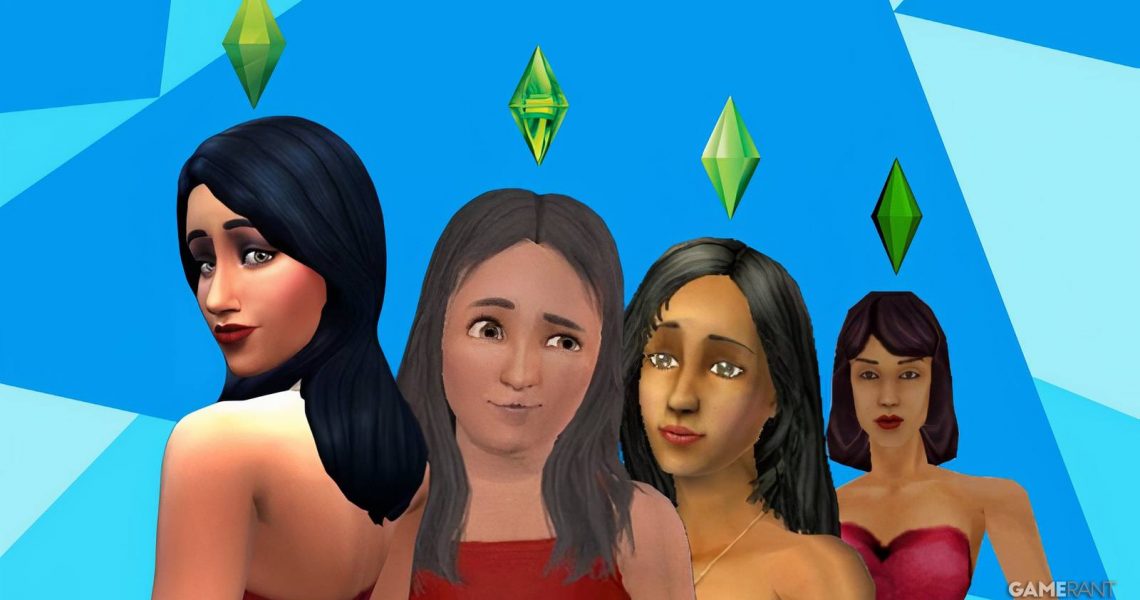
After 25 years on computer screens around the world, it’s no surprise that every Sims player has an opinion. Those opinions often clash. “The spinoffs didn’t work” is met with “the spinoffs were the best.” “The Goth family looks great now,” battles against “Bella Goth’s dress should never have been touched.” More recently, enthusiasm for Project Rene‘s multiplayer approach runs headlong into skepticism about its direction. The discourse never ends. But beneath all of it lies one enduring, unavoidable question: what is the best Sims game? And for some unknown reason, I want to answer that question.
How am I going to do it? Simple. Answering that isn’t about declaring a winner based on vibes alone. Each entry in the franchise was built with different priorities, limitations, and audiences in mind. Those differences matter. So rather than relying on nostalgia or internet consensus, the approach here is simple: break each game down on its own terms. By laying out the strengths and shortcomings of every mainline Sims title, patterns begin to emerge. And from those patterns, the best overall life-sim experience becomes clear. No magic tricks required—just placing the Plumbob where it belongs.

You Can Play a Baldur’s Gate 3 & The Sims Love Child Demo Sooner Than You Think
I was prepared to play a game that marries Baldur’s Gate 3’s romance with The Sims’ Build Mode in Q3 2026. But recent news has changed that timeline.
Is The Sims (2000) The Best Sims Game?
We have to start somewhere. Will Wright’s game, originally a spinoff originated from the success of SimCity, was unlike anything dominating the market at the time. Simply put, it was a game in which players could manage the daily lives of virtual avatars in a single household. Perhaps it could best be described as a dollhouse. Having only Little Computer People as a competitor from 15 years earlier, The Sims had much to prove in a market that had not yet embraced the life-sim. Little did Maxis know that it was launching one of the biggest video game franchises of all time.
Pros and Cons of The Sims

The Sims has a lot going for it. It has the weight of being the first. By early 2002, it had become the best-selling PC game of its time. Although that title now belongs to Minecraft, this accomplishment reflects The Sims’ cultural staying power. And the title was recently rereleased to celebrate The Sims‘ 25th anniversary, so it’s on many Simmers’ minds. However, the pressure of being the first leaves ample room for improvement. Here’s a more objective view:
|
Pros |
Description |
Cons |
Description |
|---|---|---|---|
|
Simpler Mechanics |
The learning curve is as low as it’s going to get. You make a Sim, get a job, and have a home. Although it is unforgiving, there’s not much to discover. You’ll need that simplicity to get by. |
Difficulty |
The Sims is a hard game. It is objectively the hardest in the franchise. Rapidly deteriorating needs, evaporating Simoleons, and a multi-member household might as well depress Simmers. This design was intentional, as The Sims’ tone was more satirical. |
|
It’s Wacky |
The earlier Sims games set the tone for hilarity and hijinks. Go-go dancers will pop out of cakes. Sad clowns will visit your house. Bears will rummage through trash. It has an air of randomness that later titles lack. |
No Life Stages |
Once you leave the Create-A-Sim, you’re stuck with that Sim forever. No evolution, no aspirations. Just a husk of an avatar to control until you remove the ladder from the pool… accidentally. |
|
Nostalgia |
Playing The Sims in 2025 is like visiting an old friend. They’ve aged, they’re a little rougher around the edges than you remember, and they may make you cringe sometimes. But they’re your friend. The memories you have together are priceless. |
Dated |
If this isn’t your first Sims title, you may bounce off it within an hour of booting it in favor of smoother performance, more customization, and easier gameplay. |
Is The Sims 2 The Best Sims Game?
A year after The Sims’ launch, Maxis began work on a sequel. This one was bigger, more robust, and a 3D game that offered players a 360-degree view of the action. The Sims 2 would focus on more individualized experiences: aging, situational awareness, and longer-term goals for Sims. It aimed to give players some of the control they lacked in the first game. Unsurprisingly, this shift to full player autonomy led to critical and financial success, cementing the franchise as a household name among gamers of all ages.
Pros and Cons of The Sims 2

For many people, The Sims 2 was their first Sims game. And everyone remembers their first. However, a more objective look paints a more balanced scale—one not marred by the glasses of nostalgia.
|
Pros |
Description |
Cons |
Description |
|---|---|---|---|
|
A Cemented Identity |
The Sims 2 was the blueprint that catapulted the IP into what it is now. Gone were the days of a fixed camera and impossible scenarios. Embraced were the concepts of Sim aspirations, genetics, and days off. |
Sims Look… Oof |
With the shift to 3D, players could fully customize Sims. Unfortunately, Sims 2’s Sims don’t look their best. The graphics have aged considerably alongside its CAS and Build Mode. |
|
Vivid Lore |
The player was beckoned to explore the neighborhoods only because NPCs seemed to live lives of their own. The Bella Goth mystery, Mrs. Crumplebottom’s dead husbands, and the Caliente sisters’ alien heritage are all fandom staples that were fully realized with The Sims 2. |
Traveling is a Nightmare |
If you want your Sim to head somewhere after work, be prepared to pull an all-nighter. For some reason, travel is not intuitive and will take forever. This is a shame, considering that some of The Sims 2‘s highlights come from exploration. |
|
Deep Gameplay |
This is the first game with extensive narrative potential. |
Lack of Customization |
Sims in this game are afflicted with a bad case of “same face” syndrome. There are only a handful of skin colors to choose from. And Sims will likely all have the same body shape. Frankly, for all its innovations, it lacks the diversity The Sims is known for. |

Why There Are Almost No Games Like The Sims
Why has no game rivaled The Sims? From complex systems to cultural dominance, here’s why no true Sims alternative exists, yet.
Is The Sims 3 The Best Sims Game?
If The Sims 2 defined the franchise’s identity, The Sims 3 attempted to blow its walls down entirely. Released in 2009, this entry introduced what was then its most ambitious feature: an open world. No more loading screens between home, work, or community lots. Sims could move freely through their neighborhoods, forming relationships and routines that felt genuinely interconnected. The Sims 3 also leaned hard into player freedom, from personality sliders to Create-a-Style, offering near-total control over how avatars and their worlds looked and behaved. It was messy, bold, and deeply experimental.
Pros and Cons of The Sims 3

|
Pros |
Description |
Cons |
Description |
|---|---|---|---|
|
Open World Gameplay |
The Sims 3’s open world fundamentally changed how the game felt. Sims existed simultaneously, living parallel lives. This created a sense of continuity and immersion unmatched by any other entry in the series. |
Performance Issues |
The Sims 3’s greatest strength was also its downfall. Open worlds strained hardware then and now, leading to long load times, lag, crashes, and save corruption. |
|
Unmatched Customization |
Create-a-Style allowed players to recolor and retexture nearly everything. Furniture, clothing, walls; truly, nothing was off-limits. It empowered creativity in a way no other Sims game has replicated since. |
Visual Inconsistency |
While customization was deep, the art direction was uneven. Sims often looked uncanny, and Create-a-Style sometimes resulted in worlds that felt visually chaotic rather than cohesive. |
|
Incredible DLC |
The Sims 3 wasn’t afraid to be overwhelming. Some of the best Sims Expansion Packs like Generations, Supernatural, and Late Night layered complexity without stripping away player agency. |
Steep Learning Curve |
With so many systems operating at once, new players could feel lost. This game demands patience. Occasionally, troubleshooting. |
Is The Sims 4 The Best Sims Game?
When The Sims 4 launched in 2014, it did so under a cloud of skepticism—and for good reason, unfortunately. At release, it lacked staples that had become expectations: pools, toddlers, and open neighborhoods. Yet over time, The Sims 4 has evolved into something very different from its predecessors. It traded systemic depth for emotional storytelling, focusing on expressive Sims, streamlined mechanics, and an accessible sandbox designed to appeal to the widest possible audience. In many ways, The Sims 4 is less a direct sequel and more a reinterpretation of what a life sim can be.
Pros and Cons of The Sims 4

|
Pros |
Description |
Cons |
Description |
|---|---|---|---|
|
Best Sims, Emotionally |
No game in the franchise captures moment-to-moment emotion like The Sims 4. Sims feel alive with expressive animations, nuanced moods, and reactive social interactions that make even mundane moments engaging. |
Fragmented Content & Financial Barriers |
The Sims 4’s reliance on packs means essential gameplay is often locked behind multiple purchases. Even longtime players may feel like they’re assembling a “complete” game piece by piece. |
|
Build/Buy Excellence |
The Sims 4 has the best building tools in the series. Intuitive controls, room-based construction, and constant quality-of-life updates make it a dream for builders and decorators. |
Closed Neighborhoods |
The return to closed lots broke immersion for players who fell in love with The Sims 3’s seamless worlds. The environments feel curated but static. |
|
Longevity Through Updates |
Years of free patches have transformed it into a sprawling platform rather than a static game. Also, The Sims 4 is free. |
Bug Hell |
The Sims 4 is buggy. Almost irremediably so, as every new update or piece of DLC makes the game unplayable for some for days at a time. |

Anything But The Sims 5 – How Maxis’ Sims 4 Remaster and Project Rene Are Probably the Best Bet for the Developer
The future of The Sims franchise is uncertain, but recent rumors, leaks, and Project Rene might point the way forward rather than The Sims 5.
Verdict: The Sims 3 Is Still the Best Sims Game
I played The Sims 3 all throughout high school, right up until The Sims 4 arrived. Even then, I kept going back. Not out of stubbornness or nostalgia alone, but because when The Sims 4 launched, The Sims 3 still felt complete. It still felt alive. Over the years, I’ve realized that it holds a special place in my heart not just because of when I played it, but because of how much it let me do. What makes The Sims 3 the best entry in the franchise, for me, comes down to this:
- It balances freedom and structure better than any other Sims game. There’s enough chaos to let stories emerge naturally, but enough systems in place to give those stories weight.
- Its worlds feel alive, not staged. Sims don’t exist in bubbles; they coexist, intersect, and evolve whether you’re watching them or not.
- It encourages experimentation. From fame-stemmed drama to grounded, slice-of-life storytelling, the game never nudges players toward a “correct” way to play.
- It feels whole. Even with its flaws, The Sims 3 delivers a fully realized life simulation experience that no other entry quite matches.
In The Sims 3, I lived out a post-high school “dream life” long before I actually graduated. One where I was charismatic, confident, understood, and fulfilled. I also micromanaged generations, started rivalries that spanned entire towns, and orchestrated full-blown feuds between werewolves and vampires that felt absurdly epic at the time. Honestly, they still do. The game supported all of it without forcing me into a specific playstyle.
The Sims was revolutionary. The Sims 2 was foundational. The Sims 4 is accessible and expressive. But The Sims 3 is the game where everything comes together: ambitious, imperfect, and expansive in a way that still hasn’t been replicated. It isn’t just a great Sims game. It’s the one that made the franchise feel limitless.