Which Divinity Games Do You Need to Play Before Larian’s New Game Comes Out?
Larian Studios, a developer whose reputation skyrocketed in 2023 following the phenomenal Baldur’s Gate 3, recently announced its next game, Divinity. Gamers with any degree of familiarity with pre-BG3 Larian may have pricked up their ears at this reveal, as it signals the now-behemoth developer returning to its roots: Larian cut its teeth with earlier Divinity games, after all.
There have been a total of six Divinity games developed by Larian Studios, starting with Divine Divinity in 2002. The most recent entry in the series, Divinity: Original Sin 2, was released in 2017. During these 15 years, Larian developed nothing but Divinity games. In fact, Divine Divinity was only the studio’s second-ever project. The point is, while Larian is now renowned for Baldur’s Gate 3, its development history is almost entirely defined by the Divinity IP. And unlike BG3, which is adapted from Dungeons and Dragons, the Divinity series is an original creation of Larian. As such, its overarching mechanics and narrative are specific to the studio. It follows that some gamers will want to trace the history of Divinity and even dip their toes into earlier games in anticipation of its reprisal.
Games You “Need” to Play Before Larian’s New Divinity
Larian has stated that the upcoming Divinity game will be an accessible entry point for newcomers, as no prior experience with the franchise is required. However, the developer also stated in a press release: “Those who’ve played Divinity: Original Sin and Divinity: Original Sin 2 will be able to enjoy greater understanding and continuity.” This implies that the Original Sin games contain some indirect or direct context that can enrich one’s experience with the new game.
Divinity: Original Sin
The first Divinity: Original Sin, despite being released 12 years after the first game in the franchise, is often considered the launching point of the IP. Original Sin is what helped Divinity, and Larian by extension, reach mainstream success, having a greater scope and higher level of polish than previous entries.
Notably, Divinity: Original Sin received almost $1,000,000 in Kickstarter crowdfunding, which helped Larian complete the game in the midst of financial difficulties.
Original Sin follows two customizable protagonists as they fight against the Source, a powerful form of dark magic. This story is disconnected from those of the previous Divinity games, but the greater departure is in the gameplay department: Divinity: Original Sin is a turn-based CRPG, whereas its predecessors are real-time action-RPGs in the vein of Diablo and Dragon Age. In a sense, the first Original Sin is a prototype for what Larian would go on to do with BG3.
Divinity: Original Sin 2
Released three years after its predecessor, Divinity: Original Sin 2 is even more of a prototypical game for Baldur’s Gate 3. Much like Baldur’s Gate 3, the player can either create a custom character or choose from a list of predetermined heroes, all of whom can be recruited as NPCs as well. Other Baldur’s Gate 3 parallels include four-player cooperative multiplayer, the battle menu UI, and the interaction of elemental effects in the environment.
Original Sin 2‘s story follows the Source-centric conflict from the first game, but is delivered with much more ambition and detail. With more money and manpower than ever before, Larian was able to make Original Sin 2 its most high-fidelity, well-produced, and expansive game up to that point. In other words, it’s an ideal sequel to the first Original Sin, building upon its foundations and continuing to hone Larian’s CRPG formula.
What Other Divinity Games Should You Play?
Before getting into why Larian would name the Original Sin games as especially nice-to-play ahead of Divinity, it’s worth commenting on the other entries in the series:
- Divine Divinity (2002)
- Beyond Divinity (2004)
- Divinity 2: Ego Draconis (2009)
- Divinity: Dragon Commander (2013)
Divine Divinity and Beyond Divinity both adopt isometric ARPG conventions, feeling very akin to the first two Diablo games; their gameplay loops are defined by dungeon-crawling, gear-grinding, and real-time combat. Divinity 2: Ego Draconis is quite similar to its predecessors in some ways, though it features a third-person camera and greater focus on cinematics, feeling quite reminiscent of older BioWare titles. Dragon Commander is the greatest outlier in the series, as it’s an RTS with brief real-time combat sections.
Dragon Commander is notable because it marks the first time Larian produced a game with venture capitalist funding, rather than through traditional publishing—a strategy that would ultimately result in the development of Baldur’s Gate 3.
None of these games is as well-regarded as the Divinity: Original Sin duology, but they do take place in the Divinity universe, so playing them will inevitably yield some lore insights. As far as which games are actually worth your time, Divine Divinity and Beyond Divinity are the best-reviewed of the bunch, while Divinity 2: Ego Draconis is the lowest-reviewed. Ego Draconis does let you shapeshift into a dragon, however. Do with that information what you will, but keep in mind that none of these are likely to be representative of the upcoming Divinity game.
If in Doubt, Just Play Divinity: Original Sin 2
If you’re looking for a simple, relatively risk-free entry point to the Divinity IP, Divinity: Original Sin 2 is your best bet. It’s widely regarded as being simply a better version of its predecessor, which was itself the best-reviewed, most popular game in the series during its time. Players do not have to be too concerned with the events of the first game to enjoy the sequel. It’s also an easy recommendation for Baldur’s Gate 3 fans, due to the aforementioned similarities.
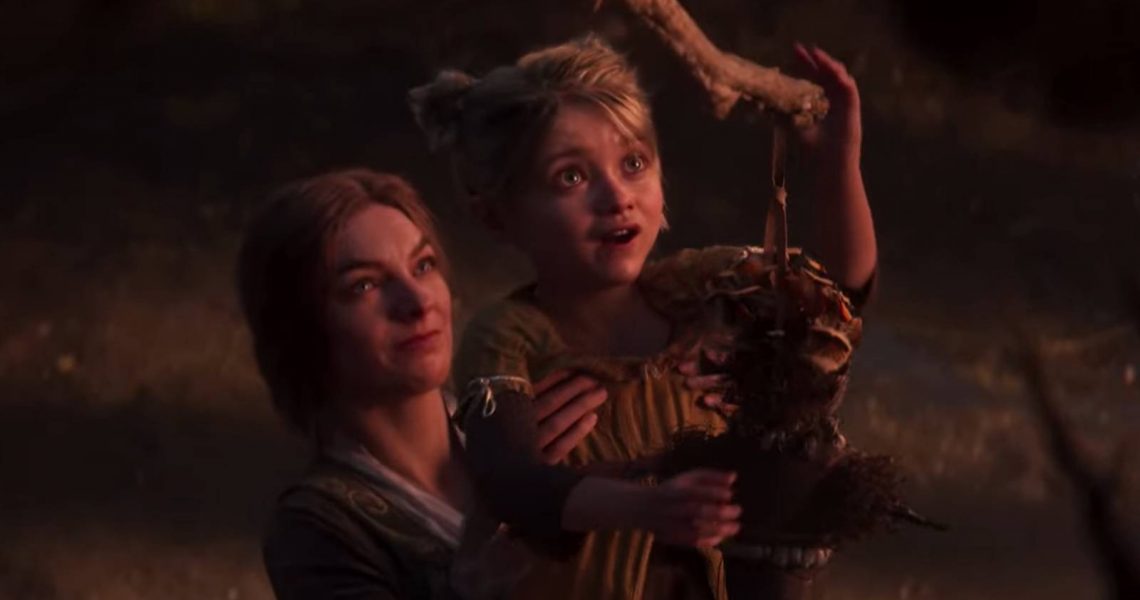
As for why Larian would call out the Original Sin games as the best entry point, there’s a fairly obvious explanation: these are the most modern and best-received games in the Divinity series. It’s only natural that Larian would recommend them before earlier titles with more mixed reputations. Allowing for a bit of speculation, though, one could theorize that Original Sins‘ motifs of cults and dark magic may recur in the new Divinity. Such a theory would be supported by Divinity‘s famously grotesque TGA reveal trailer.
Paradoxically, since the tone of the Original Sin games is a bit more lighthearted than previous entries, perhaps Divinity will have lighthearted elements as well. Then again, Swen Vincke has insinuated that this upcoming Divinity will be a culmination of everything Larian has done so far, so speculation can only take us so far.