Baldur’s Gate 3’s Console Mod List is Extremely Disappointing for What Should Be An Easy Win
Baldur’s Gate 3 has an incredibly active modding community. That is, at least on PC. New races, class overhauls, hundreds of visual packs, and entire systems exist because fans keep expanding Larian’s world long after launch. So when console players finally gained access to mod support, the expectation was simple: even if console modding would likely be more limited, race mods should have been an easy win. PC modders have already solved the problem because dozens of fully playable, lore-authentic races exist on Nexus. By comparison, console players get a long list of creative workarounds.
These workarounds are not because modders lack interest. On the contrary, Baldur’s Gate 3 modders have worked hard to ensure that console players can enjoy content within the limitations of the platform, but the underlying problem remains that console restrictions make proper race implementation nearly impossible. The result is a strange, frustrating gap: the most in-demand, high-impact mods remain out of reach for a massive portion of the player base, even though they should be one of the easiest paths toward extending the game’s life on console.
How Baldur’s Gate 3’s Console Mods Actually Work

Before looking at what’s missing, it’s best to understand what console players are dealing with. Baldur’s Gate 3’s race mods on PC overwrite core assets: models, skeletons, animations, character creation entries, UI categories, tagging systems, and race-specific variable hooks. On console, none of that is allowed. In fact, there are some additional hoops console mods must jump through. Console mods for console must follow these rules:
- They can not add, modify, or remove shaders
- Mods that increase the amount of nudity or violence already present in the game are prohibited
- All console mods must pass internal testing conducted by Larian, Sony, and Microsoft—which is why console mods take a longer time to get approval or rejection
- Mods must not interfere with booting the game or mod management
- Mods that crash the game are disqualified
- Avoid unsupported file formats (.exe, .dll)

With stricter requirements comes exclusion. Larian explained before BG3 Patch 8 that the technical demands of incorporating modded races mean that console players will not have access to race mods. This effectively removes the possibility of adding playable races in a straightforward manner. To get around this, many modders resort to a polymorph or disguise system. Instead of adding a race, they give the player an item or a passive ability that temporarily transforms them into a preset model. It’s clever, and it works. But it’s not the same as a fully supported race. These limits explain why the console scene looks the way it does: imaginative workarounds, impressive effort, but ultimately constrained by the platform itself.
Popular D&D Races That Should Be Easy Wins for the BG3 Console Modding Scene

If console supported true race mods, many fan-favorite Dungeons & Dragons races would fit seamlessly into BG3’s systems. Some of these races are already available on PC:
- Aasimar – Strong lore grounding, light-themed abilities, natural synergy with Paladins and Clerics. Aasimars are already playable on PC, but some players were looking forward to them on console.
- Shifters – Polymorph-leaning abilities that could have worked similarly to the Disguise Self spell.
- Goliaths – As a popular D&D race, many console players would have embraced Goliaths via mods—like their PC player counterparts have.
- Genasi – Elemental subraces that overlap with in-game effects BG3 already uses.
- Kalashtar – Perfect tie-in to psionic systems already implemented.
What Race Mods Baldur’s Gate 3 Console Players Actually Get
Baldur’s Gate 3 mods and modders have done heroic work to bring race-like experiences to consoles, but the technical limitations dictate the design, not the other way around. Below is an overview of the major “race” options currently available:
- ASE – 10 Monster Races (Bugbear, Drider, Intellect Devourer, etc.): This is one of the most ambitious console-compatible options. It adds ten creature forms, each with unique animations, passives, and dialogue tags. However, they aren’t races in the traditional sense—they’re disguises triggered by equipping special underwear items. All of BG3‘s armor becomes invisible, character creation is bypassed, and toggling forms must be done manually. Despite those limitations, it’s one of the closest things consoles have to a real race pack. It’s still fundamentally a workaround rather than a true implementation, however.
- ASE – Devils (Cambions and Succubi/Incubi): Another disguise-based mod filling in the gap of a race mod. Players can select from dozens of appearances, including character-inspired versions like Raphael or Mizora, and gain themed spells and passives. The imagination is strong, but the technical execution is constrained by console rules. This is the theme across the entire console modding scene: the idea works, the infrastructure does not.
- ASE – Automaton (Warforged/Steel Watcher-Inspired): If anyone ever wanted to play as a Steelwatcher, this is their mod. This is one of the most impressive disguise console mods with custom passives, unique abilities, roleplay tags, and multiple looks. The animations fit surprisingly well, but again, this is not a true race. It’s a disguise with stat tweaks.
- ASE – Kobolds / Goblins / Undead / Ghosts: These provide fun fantasy options with multiple presets and quality-of-life features, but all rely on the same disguise toggle structure. Console players can become kobolds, change into goblins, or temporarily inhabit ghost forms. None of these function through real character creation, and none can be fully integrated into gameplay systems like PC race mods.
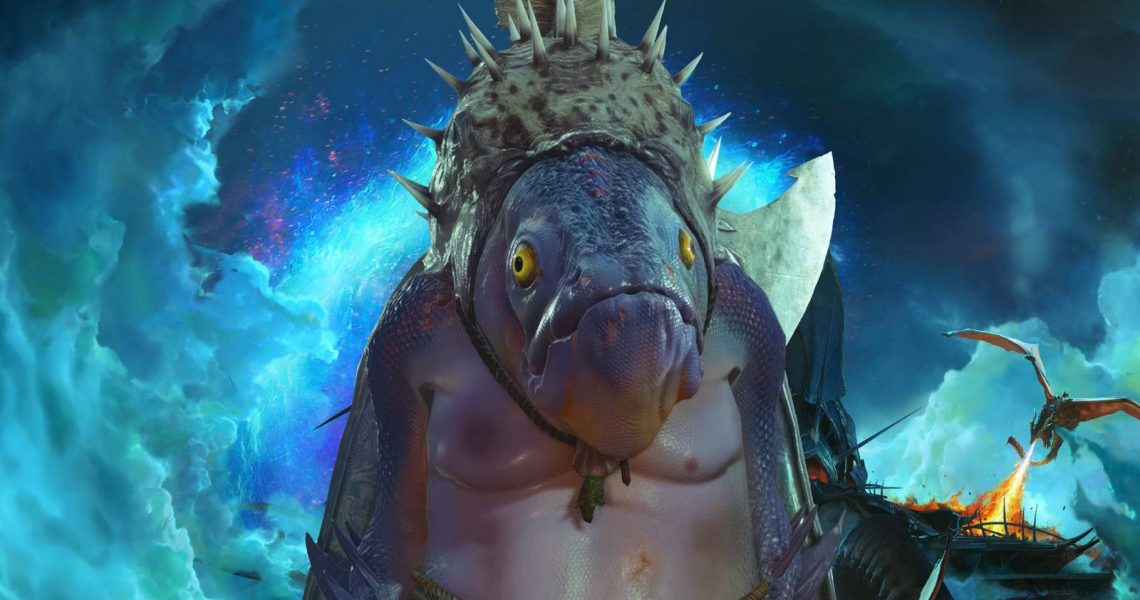
- Kuo-Toa (The Only True Console Race): Here’s the outlier. The Kuo-Toa mod is the only one that actually creates a fully playable race with its own spells, deity, and Dream Guardian options. It’s the sole example of a genuine race mod that passed console certification. The reason why the Kuo-Toa is the only race mod that works is that it uses a Kuo-Toa in-game asset.

Console Players Deserve More—and Console Mods Need Better Tools
The problem isn’t a lack of interest. It’s structural. Console modding for Baldur’s Gate 3 is limited by what Sony and Microsoft allow, what Larian enables through its framework, and what modders can feasibly build without overwriting core assets. Herein lies the extra frustration: Baldur’s Gate 3 is practically built for race variety. The systems exist. The assets exist. The passion exists. PC modders have already proven how easily the game can support them, yet console players simply aren’t allowed to access that layer of modification.

BG3 remains one of the most moddable modern fantasy RPGs, and bringing mod support to consoles was an extraordinary step, but race mods should not be the hill this feature dies on. If anything deserves to be updated next, it’s this: give console players the tools PC modders already rely on, or at least the ability to implement true races in character creation. BG3 is a game defined by choice. Console mod support should reflect that, not restrict it.

Baldur’s Gate 3

9/10
- Released
-
August 3, 2023
- ESRB
-
M for Mature: Blood and Gore, Partial Nudity, Sexual Content, Strong Language, Violence