Warframe: The Old Peace Sends Players Straight into Hell, and They’ll Love Every Second of It
Twelve years into its lifespan, Warframe remains a rarity: a live-service game that not only survives but reinvents itself with each passing era. This remains true even as other live-service games seemingly struggle with the long-term fatigue that the model can give players, and while it has stumbled here and there, Tennos have stayed strong (and been rewarded) time and again. Now, developer Digital Extreme is preparing for one of its most ambitious projects yet: The Old Peace. Not only will it reach deep into Warframe‘s buried history, but it will also set the stage for 2026’s monumental expansion into Tau.
To understand how The Old Peace came to be, we sat down with creative director Rebecca Ford, principal writer Kat Kingsley, lead writer Adrian Bott, and audio lead Erich Preston for Game Rant Advance. They walked us through the project’s inspirations, narrative goals, mechanical experiments, and the future (and past) of Warframe’s ever-evolving universe.
From Experiment to Massive Space Opera
“We humbly promise to keep telling grounded human stories in ways and formats you’ve, hopefully, never seen before in a game” – Rebecca Ford
When Ford looks back on the game’s 2013 launch, she describes Warframe as “one of the biggest experiments we’ve ever conducted.” What started as a scrappy, strange sci-fi project now stands as one of the most consistently transforming games in the industry—a “pre-teen,” as Ford calls it, still growing but unmistakably itself. For Ford, as well as every Warframe developer, this 12-year period has been incredibly personal. Warframe is as synonymous with all the names that have brought it life, just as it is with the company name Digital Extremes.

From infancy to its pre-teen years, every system in Warframe has undergone various changes or reworks. The exciting prospect of this metaphor is that Warframe is not yet a teen, not yet a young adult, and not yet a full-fledged adult, meaning its potential for growth and change is still not yet complete (if it ever could be). However hard it is to identify these changes, just like they are as a child grows before your eyes, Ford did highlight a few major changes fans can expect with the Old Peace:
- A full Operator/Drifter graphical remaster, a leap Ford compares to going from “PS3 to PS5,” so dramatic that players are prompted to re-edit their Operator before beginning the update.
- A renewed focus on experimental storytelling, continuing a streak that began with Whispers in the Walls, Jade Shadows, and Warframe: 1999.
Why Warframe’s Future Lies in its Past
It’s interesting that Warframe explores so much of its past, with the Old Peace being similarly rooted in this concept, as Digital Extremes moves toward its future, too. Self-reflection can be hard for anyone, but for a game like Warframe that is obviously still growing, that becomes much harder. However, Ford did say that this backward-looking approach to its future is intentional, narratively and philosophically. “It’s pivotal to learn from the past to inform our future,” she explains, pointing to the game’s long history and equally long future ambitions. As Ford continued,
“Warframe is 12 years old, and we never want it to end. If we want that dream to remain real, we have to constantly evolve and reflect inward on who we used to be, who we are now, and where we will go from here.”
Just as Whispers in the Walls recontextualized Albrecht Entrati and Jade Shadows reframed the Stalker, The Old Peace excavates the earliest scars of the Tenno, pulling players into a forgotten era of uneasy diplomacy between the Orokin and Sentients. And at the heart of that buried timeline is a story the Operator was forced to forget.
How The Old Peace Was Inspired…and Died
“The story we’re exploring here is how the Old Peace died” – Adrian Bott
When asked how the team came up with The Old Peace, Ford explained there were several factors: the importance of Tau in Tenno history, the desire to keep this surreal sci-fi story still grounded, the serious themes that these are just kids who control deadly weapons, and all this without undermining the brutal truth of war. And as Ford revealed, the conceptual spark came from a single phrase in a writing meaning: “Trench Warframe.” Proposed by Steven Sinclair, this terminology has taken over the team’s 2025, with Ford reading a ton of World War 1 novels.
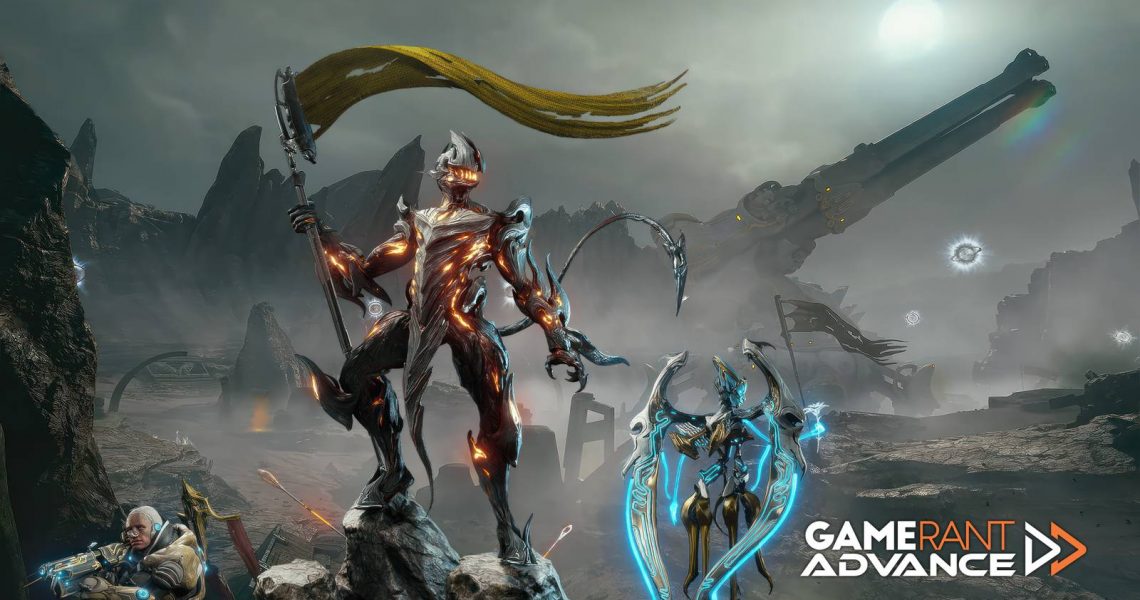
This comment guided the update’s bleak World War I aesthetic: muddy trench networks, oppressive skies, and young soldiers thrust into devastating conflict. Ford cites extensive WWI research as inspiration, grounding one of Warframe’s most surreal sci-fi arcs in the human cost of war. After all, the old peace died.
The Operator’s memories were buried “for their own protection,” according to Bott, and explores the memories made during a brief peace between the Orokin and Sentients. Unfortunately, as fans know, that peace was shattered, the Solar Rail destroyed, and Tau severed from the Origin System. The Old Peace allows players to revisit these memories, witness the doomed peace firsthand, and understand exactly how it collapsed.
War is Hell
“Trench Warframe” isn’t just a thematic examination of this history, but a gameplay one. The Old Peace will add two experimental mission types to the sandbox: The Perita Rebellion and The Descendia.
- The Perita Rebellion – A 12-minute descent into the Operator’s wartime memories, designed to feel like a grounded WWI action scene. Tactical objectives, militaristic pacing, and even a new Bayonet weapon class reinforce the era’s grit.
- The Descendia – A reverse-tower dive into the literal and emotional “hell” of Roathe’s memory—an infernal, Entrati-driven nightmare that grows more punishing the deeper players go.
Ford on the Goal of These New Warframe Mission Types
“Our hope and main goal for these new game modes is that since they have new content and rewards we’ve never had before tied to them, like the Tauron Strike ultimate abilities or the Honoria player titles, that the game modes themselves feel just as fresh and exciting. If we are going to ask players to invest in unlocking these new ways to play Warframe, the path to get there should be just as engaging and tantalizing as the new gameplay features as well.”
All of this nicely coincided with the final design from the first Warframe art director, Michael “Mynki” Brennan, as well. His Devil Warframe concept really fits into the Old Peace setting because of its “devil on the battlefield” vibe. “War is Hell” is a culmination of all these ideas, which also narratively forms the backbone of The Devil’s Triad.

The Devil’s Triad: If You’re Going Through Hell, Keep Going
“We want players to feel an emotional connection with these three…but also a connection to the overall world of Warframe and all the mysteries it has waiting for you” – Adrian Bott
Following the success of the K.I.M. relationship system in Warframe: 1999, Digital Extremes is expanding the idea with three gothic Protoframes:
- Lyon – The Loyal, Grounding Presence
- Marie – The Alluring, Incisive Tragedian
- Roathe – The Protoframe Bound By Grief and Guilt
Warframe’s narrative experiments often arrive quietly, disguised as side quests or optional systems. The Devil’s Triad, however, refuses to blend into the background. As Bott described it, it’s a “side story, not a quest or mission, but still a fully fledged narrative played out through the K.I.M. system and the revelations of the Descendia.” Where the Perita Rebellion focuses on external warfare, the Descendia is the mirror opposite: an inward collapse, Roathe’s personal hell.
Accompanying the player on this journey are the other two Triad members, Lyon and Marie. Bott emphasizes that they act as “loyal allies and spiritual support,” guiding players through emotional terrain that is less about combat and more about understanding. This companionship gives the mode an unusual warmth, even as the setting grows increasingly nightmarish. If it’s not already, it will be immediately obvious how much of a tonal shift lies at the heart of the Triad’s creation.

Warframe: 1999 leaned into neon-drenched nostalgia and alternative-retro energy; the Triad, by contrast, draws from gothic romance, aristocratic decadence, doomed intimacy, and characters propelled by existential longing rather than cool 90s swagger. This shift required a complete aesthetic and systemic overhaul:
- A separate “Grim K.I.M.” interface (G.I.M.)
- A new soundtrack
- A unique color palette and UI identity
- More complex branching relationship paths than the 1999 roster
Despite having only three characters, Kingsley notes that the Triad’s writing load “rivals, if not exceeds” the full 1999 K.I.M. system because each Triad member is layered, verbose, and morally ambiguous in ways that demand deeper conversations. The Devil’s Triad marks one of Digital Extremes’ boldest narrative experiments, neither a traditional quest nor a simple dialogue expansion, but a fully realized side story built from what players loved most in Warframe: 1999.
If You Find Love in Hell, Keep Loving
Romance and platonic paths both return, but with expanded depth, culminating in Captura Dates (staged scenes unlocked at max relationship level). These moments reflect each Protoframe’s personality and include kiss interactions. Some conversations even cross over with the 1999 cast, depending on prior choices. Ford notes the team intentionally flirted with making certain Triad members outright antagonists because players have requested it for years. While the final portrayal is more nuanced, she hints that future updates may push a darker direction based on community response.
Ultimately, the Devil’s Triad redefines what a Warframe “side story” can be: a character-driven, emotion-first narrative that blends romance, horror, and mythmaking. It’s a signal of where Warframe’s storytelling is heading, and a clear structural precursor to what players may encounter on the road to Tau.
Preston on Making The Old Peace a Classic Space Opera
“The Old Peace is, sonically, very much a classic space opera. For most of the score and sounds, we took an organic, grounded approach. The score consists of orchestra, acoustic grand piano, choir, and other textures with a predominantly human touch. The sound design was intentionally kept very natural to help bring Tau to life as realistically as possible… Utilizing a live orchestra is a first for Warframe, and I feel that it brings an element to the soundtrack that we haven’t heard before. Overall, you will find a wide variety of music and sounds in The Old Peace.”
Ford On Bringing Anime Energy and Warframe Style to the New Focus School Ultimate Abilities
“There are absolutely some major ones that stand out. Battles in things like the mecha genre inspired our huge sword attack, Dragon Ball Z and Jujutsu Kaisen inspired our beams of energy, and the Fate series (Fate/Apocrypha specifically) inspired some of our archery. We all pulled inspiration from series that mean a lot to us, and, at the end of the day, we needed to create something that was uniquely Warframe, uniquely “us,” in every way. So while we have inspiration, the final product you see in-game is inspired by the greats but is still unique to Warframe’s artistic style prose. But I will say one of the most important feelings for this entire update was ‘good grappling’ against a giant boss, and I listened to the Attack on Titan soundtrack over and over again while playing to make sure it gave me the same feeling on a creative level, but distinctly Warframe.”
Ford On Making Primes the World-Building Mythmakers They Are
“Anytime we shake something up for Warframe, whether it be in gameplay, narrative, or both, we always make sure it ‘fits’ into what is currently happening in the game content-wise. Since this is the first time we are diving into Warframe’s enigmatic history, it felt like it would be a missed opportunity not to do something fun with our Primes. We know players are elated when their favorite Warframes have a narrative stake in the current story beat, and playing with the Primes gives us the opportunity to do it with multiple Warframes at once!
Our introduction of Protoframes in Warframe: 1999 was another example of how we can explore individual Warframes as characters and see their backstories in a meaningful way. So our thought process hasn’t necessarily changed around themselves as a whole, but we are being more open-minded about ways to utilize them as a next step to making a player’s day to see their favorite get in the spotlight. For The Old Peace, you can see a number of new angles we are playing with, Excalibur Prime being temporarily playable for a mission, Caliban Prime acting as an environmental set piece, and the Prime Vanguard bringing commandeered Primes into the newest enemy faction as boss fights.”

Waframe: The Old Peace Leads to The Other Side of Hell
“The only thing we can promise is that we will always continue to tell human stories, even around Primes, all in service of forming strong emotional connections with each other and the world of Warframe” – Rebecca Ford
In writing, one of the best ways to make key characters relatable, compelling, or otherwise designed for a key audience is to put them through hell. Stories and characters without trauma, without quirks, without conflict are not good stories or characters, by definition. However, fighting and hopefully making it to the other side of hell is just as important, just as human, as any story that Warframe can tell. That remains the purpose of The Old Peace: what lies on the other side?
The Old Peace revisits the past to prepare for the future, not just Warframe‘s but the player’s. It will prepare players for a leap the studio has been teasing for years: the modern-day Tau system. There’s still a long road through hell to get there, but there’s plenty of fun in and outside of Warframe.
- Early 2026 will bring the usual Echoes update and expand Old Peace content
- The TennoVIP Events (Digital Extremes’ world tour) resumes in Australia
- And sometime in 2026, Modern-Day Tau becomes playable in Warframe.
On all this, Ford ended with poignant love for all Tennos and Digital Extremes:
“It’s my goal to ensure Warframe continues to become more accessible and remains fresh with new, weird ideas. I feel so privileged to work with such a talented team that has trusted each other for over 12 years to iterate on this initial idea over and over again. They are my rock and the reason Warframe continues to thrive year after year.”
On the other side of Hell players may find the modern-day Tau system, and while it may still be going through its own hell, the fact remains it’s something fans have wanted to see forever. With this in mind, Digital Extremes has also woven in grounded historical metaphors, gothic romances, infernal psychological exploration, anime-inspired spectacle, classic space opera music, and a new emphasis on Primes. This may sound like a confusing, twisted ball of inspiration, yet it’s not.
At its center sits something resolutely Warframe: a human story told through the eyes of children forged into warriors, and the worlds they loved and lost. 2026’s Tau may be the destination, but The Old Peace is the emotional cost of getting there.

- Released
-
March 25, 2013
- ESRB
-
M for Mature: Blood and Gore, Violence