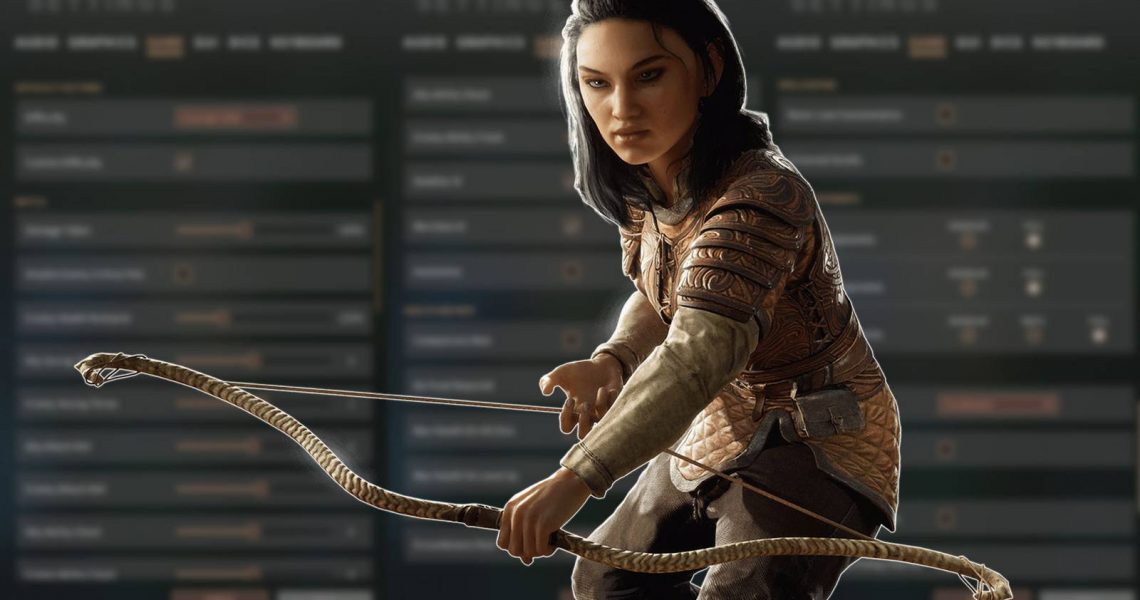
Solasta 2 All Difficulty Modes Explained
In Solasta 2 players must make lots of choices before beginning the Main Campaign, ‘The Mark of Maraike,‘ and the Difficulty Mode is one of the most critical. With three different Difficulty Levels, the game offers a smoother approach for beginners with Explorer, or a challenging experience for seasoned players who choose the Authentic Mode.
Here’s every difficulty level in Solasta 2 explained, as well as a summary of what gameplay changes will affect the players’ experience in every mode.

Which Difficulty Should You Choose in Resident Evil Requiem?
Pick the right mode in Resident Evil Requiem. From chill story runs to brutal survival. Here’s how each difficulty stacks up.
Solasta 2 Difficulty Levels Explained
There are currently two different preset Difficulty Modes in Solasta 2: Authentic and Explorer, and an additional Custom Mode for those who want to tweak the difficulty even further, but that mode is not accessible at first, nor through the Difficulty Mode Choice Assistant.
- Authentic: Doesn’t add any modifiers and represents the original gameplay experience.
- Explorer: An easier mode with handicaps and additional modifiers to help players overcome challenges.
- Custom: Offers the possibility of tweaking various aspects of gameplay inside and outside combat.
Let’s analyze every difficulty mode for the Main Campaign of Solasta 2 to help players figure out which is the best suited for their skills, and also include an explanation on how to access the Custom Mode, which can be unlocked once players advance with the adventure and complete the Combat Tutorial.
Authentic (Standard)
The Authentic Game Mode applies the ‘Rules as Written‘ settings for the game; this means every enemy will have maximum HP, damage, and will act accordingly to the best of its possibilities, prioritizing weaker targets and also applying critical damage on hits as per the rules.
Rolls for actions inside and outside combat will be done as per the rules (without extra modifiers), with a fixed difficulty level, and if the party members fail them, that’s that; there’s no do-over.
Exhaustion levels apply as normal when players travel under the Forced March condition in the world map, and characters are more likely to suffer the penalty from Exhaustion when doing so. The same applies for every other abnormal status effect in the game: Characters can be cursed, poisoned, fall prone, etc, at a normal rate.

Mount & Blade 2 Bannerlord: The Best Companions
Finding the right companion is incredibly important to not only take on the burden in the game but to have someone there to save the player.
When characters fall during combat, they will have to do Death Saving Throws and could become stabilized at 1 HP, but in a critical failure, they will automatically die and will need to be resurrected using a special Item: Aether Pearl, or a Spell that resurrects like Revivify or Resurrect.
The enemy AI will roll attack dice and damage as normal. They will also resist spells, do DEX, CON, WIS saving throws as per usual, without extra modifiers.
Encumbrance works as normal: Having too much in your inventory beyond your STR modifier’s limit will affect how fast characters move and act during battle and outside of it.
Spellcasting follows the rules of Somatic, Verbal, and Material components. Spellcasters will have to have a free hand to cast Somatic Component Spells, or not be silenced to cast Verbal Spells, or have the Material components needed for certain spells (Like Greater Restoration, which needs Diamond Dust, for example).
Here are some of the presets for this difficulty Mode:
- Damage Taken is set at 100%
- Attack Roll Modifiers – Ally: 0
- Attack Roll Modifiers – Enemy: 0
- Ability Check Modifiers – Ally: 0
- Ability Check Modifiers – Enemy: 0
- Saving Throw Modifiers – Enemy: 0
- Saving Throw Modifiers – Enemy: 0
- Karmic Dice: On (it prevents streaks of bad rolls one after the other with a secret re-roll)
- Weighted Damage and Healing Dice: Off (makes your damage and healing dice rolls less likely to be unlucky on quick succession)
- Encumbrance Mode: Limited (Whenever your carry limit exceeds 5lbs, your speed is reduced by 5)
Some of the mechanics involved in Rev 5e Spellcasting might not be implemented yet, as this is an Early Access game, and some of the content is still unavailable. It is still recommended that veteran players select the Authentic Mode as it is the closest to a TTRPG campaign they will be able to enjoy.

Solasta 2: Should You Honor the Covenant?
In Solasta 2’s tutorial, Maraike offers players two choices: accept the covenant and take up Ma Hin’s burden, or refuse and face the deity’s wrath.
Explorer (Easy)
Contrary to the Authentic Mode, the Explorer (Easy) Mode is a much more forgiving experience for players who are starting their RPG adventures or just want to relax and enjoy the story. This game mode is recommended for beginners.
The settings for this mode slightly reduce the damage the environment and enemies cause to the party (30% less), ensuring a smoother campaign experience, making it less likely to fail due to silly mistakes.
Exhaustion and other Status effects are less likely to affect characters, since they will have a Saving Throw modifier, and they will also succeed more outside of combat while performing skill checks.
During combat, it is less likely for characters to miss their attacks, and they will roll better dice for healing and damage on every occasion thanks to the Weighted Dice.
Spellcasting still follows the same SVM rules, but since players will fail less often, the cost for spells will be naturally reduced as they make use of their magic. On the other hand, having too many items in their inventory won’t burden characters.
Here are some of the presets for this difficulty Mode:
- Damage Taken is set at 70%
- Attack Roll Modifiers – Ally: +2
- Attack Roll Modifiers – Enemy: -2
- Ability Check Modifiers – Ally: +2
- Ability Check Modifiers – Enemy: -2
- Saving Throw Modifiers – Enemy: +2
- Saving Throw Modifiers – Enemy: -2
- Karmic Dice: On (it prevents streaks of bad rolls one after the other with a secret re-roll)
- Weighted Damage and Healing Dice: On (makes your damage and healing dice rolls less likely to be unlucky on quick succession)
- Encumbrance Mode: Unlimited (You can carry any number of items of any weight without penalty)
Custom (Adjusted)
Even if players choose one of the two preset difficulty levels, there’s yet another difficulty mode hidden inside the game. The same is accessed after players play and save the campaign for the first time, and can be activated by accessing the Main Menu (ESC) then going for Settings.
On the Gameplay Tab of the Settings menu, scroll down to Difficulty and tweak the parameters until you are satisfied.
As mentioned before, players can modify the total damage taken, grant additional attack roll modifiers to their characters, add a handicap that negatively impacts enemies on their attack rolls, add more chances to succeed on ability checks, penalize enemy ability checks, add more chances on succeeding a saving throw with their characters, and also negatively impact the enemies saving throws to make it more likely for them to fail.
Additionally, players can turn on/off the Karmic Dice and Weighted Dice modifiers, which greatly impact the results of the DRS, and probably avoid dying just by sheer force of luck during a bad streak.
Or, accept the full weight of randomness and embrace every Critical Miss as it was meant to be: Failing a Death Saving Throw or Missing an Attack at a critical moment means certain death.
On that note, the maximum Damage Reduction players can set with this Difficulty Mode is 50% (which is a lot). For example, let’s say an enemy casts Magic Missile at a character, which has a 100% chance of impact, and the damage rolls are for 3d4+1, resulting in 14 total damage. With 50% damage reduction, the target character would take, instead, 7 damage.
And that’s more or less how the Custom Difficulty Mode works in Solasta 2. If players are eager to play games like Baldur’s Gate 4 or Divinity 3, this is a great option to make the wait less painful.

Solasta II

- Released
-
March 12, 2026
- Developer(s)
-
Tactical Adventures
- Publisher(s)
-
Tactical Adventures
- Engine
-
Unreal Engine 5
- Multiplayer
-
Online Co-Op