Video Game Myths That Felt Like Chasing a Four-Leaf Clover
Chasing a four-leaf clover requires a particular kind of foolish optimism, and video game myths operate on the same logic. From schoolyard whispers about rare Pokemon to sprawling Skyrim forum threads, gaming has always had its share of legends that felt plausible enough to chase. Some were scrapped ideas that left ghost-traces in the code, and some remain genuinely unexplained, but what these five gaming myths share — from Pokemon and beyond — is that the chase itself was often more memorable than any payoff could have been.
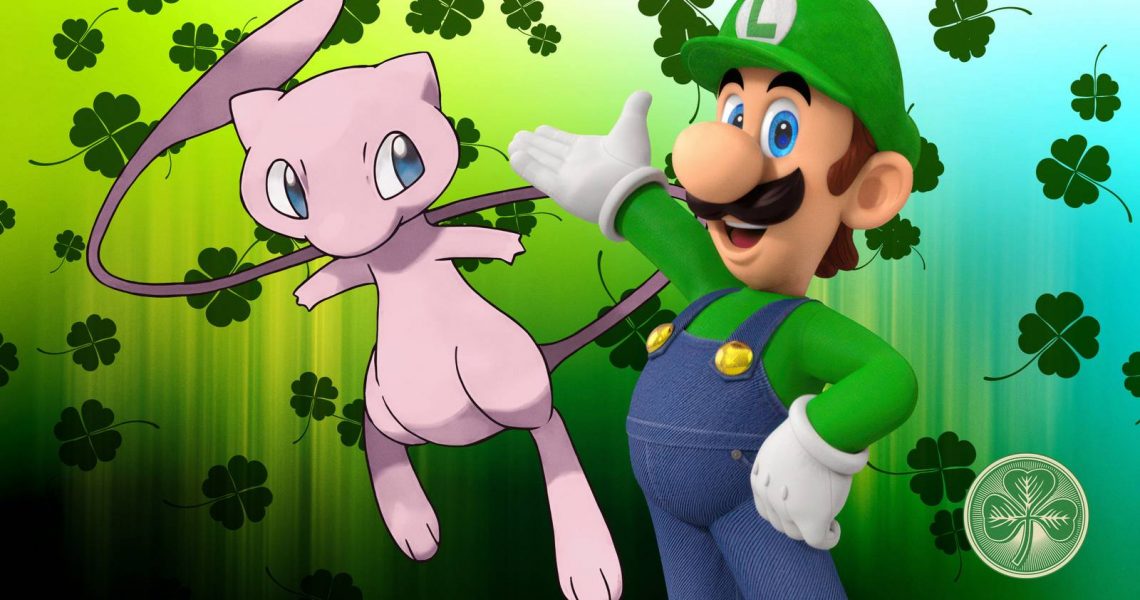
The best place to begin is with one of the most foundational gaming myths, and though every kid who grew up with Pokemon had a “trick” to guarantee a catch — mash B, hold down, tap A twice — none of them worked. But failure was ubiquitous back then, particularly in Pokemon Red and Pokemon Blue, where everybody was chasing Mew. Rumor had it that somewhere near the S.S. Anne lurked an immovable truck, and if one could just get Strength after the ship departed and move that boulder, a Mew could be found underneath.

Pokemon FireRed & LeafGreen Type-Chart Guide
Here’s a type-chart for Pokemon FireRed & LeafGreen, that you can use to calculate damage and become a true Pokemon Master!
Pokemon’s Iconic Truck Trick

It’s a myth so connected to childhood and the hobby itself that it feels like everybody knows about the Mew under the truck, but what most people don’t know (or have forgotten) is that there actually is some truth behind it. Mew was secretly in the game’s code, added at the last minute by developer Shigeki Morimoto, and beyond some limited, bespoke distribution of the creature from Game Freak itself, a glitch even made it possible to encounter Mew around Cerulean City. In retrospect, that kernel of truth, mixed in with its foundational relationship to many gamers, gave this myth its legs.
GameRant Quiz
Easy (15s)Medium (10s)Hard (5s)
Haunted Halo and the Golden Warthog
Similarly, foundational myths were extremely common during Halo‘s domination of the console multiplayer market. Two in particular took on lives of their own, the first being the ever-elusive Golden Warthog in Halo 2. Plastered across in-game billboards were advertisements for a golden version of the series’ iconic Warthog, and one on the map Headlong, which spawned dozens of theories about possibly finding one in-game. The methods for obtaining it were elaborate, specific, multistep processes that circulated endlessly across forums, and all of them were completely fabricated.
The Golden Warthog was never even in the game’s files, but as it burrowed into the hearts of fans, it eventually made its way into Halo 2: Anniversary’s multiplayer and forge mode, vindicating the dreamers if not the myth itself. More tangentially, the convoluted, community-puzzle nature of the fake acquisition method bears a striking resemblance to the kind of raid mechanics and world secrets Bungie would later build into the Destiny franchise. In these ways, it’s almost as if the time spent on this chase was rewarded, in a roundabout sort of way.
Ghosts in the Machine

Where the Warthog myth was about chasing something shiny, the mythical hunt for the ghosts of Halo was about capturing something more unsettling. In July 2006, before modding or game manipulation was mainstream, a video surfaced depicting an Xbox Live match on Halo 2‘s Lockout map. In it, an invincible white Spartan with no gamertag or scoreboard presence invaded an otherwise normal game. It even got a kill, which was credited to “The Guardians,” the game’s placeholder name for deaths by unknown causes.
The eeriest part of this myth is that these ghosts would keep popping up in both Halo 2 and Halo 3. Authentic, clearly unadulterated sightings were rare and difficult to distinguish from modded reproductions, but no consensus was ever reached on how to explain them. Ultimately, nobody knows whether it was an elaborate hoax or a genuine glitch, but it lodged itself into Halo multiplayer folklore, and players dedicated themselves to the hunt for footage.
Skyrim’s Glass Menageries
The most modern entry on the list feels much more philosophical, in retrospect: scattered across The Elder Scrolls 5: Skyrim were five glass insect jars, each in a specific location, each containing a different insect, and lids marked with unique symbols. They weren’t quest items, and they served no mechanical purpose, but for years, they drove the Elder Scrolls community to chase the promise that these jars meant something, anything at all. Theories populated forums and fan discussions, some suggesting the markings were Viking runes hinting at an apocalypse, others that they were a secret message from developers hinting at future Elder Scrolls content.
For a game as dense as Skyrim, none of it seemed implausible, but when the truth arrived via a social media exchange between YouTuber Camelworks and members of the original development team, it was, in the most Bethesda way imaginable, deeply anticlimactic. The jars were leftovers from a scrapped idea, and the art was simply never updated. Just five bugs in jars, sitting in carefully chosen spots across a massive world, because nobody got around to removing them. It’s the kind of ending that would feel like a letdown if it weren’t so perfectly on-brand, but for Skyrim players back then, it truly was one of gaming’s great mysteries.
Fable and the Secret of the Sands
Of all the myth-chasing this list holds, Fable had the purest as a game all about mythic fantasy. The most iconic of the bunch, the Sandgoose, was just a name, alluded to and passed around by the community, leading to hundreds of fan hours spent searching the game’s world. It might’ve been an actual creature, or a ship that’d ferry players to the Hook Coast, but what’s remarkable is that Lionhead Studios seemed to find the whole thing as charming as the players did, because the franchise worked quickly to immortalize it.
The myth has earned mention in nearly every subsequent entry in the series: the Snowspire Oracle in Fable: The Lost Chapters references the Sandgoose directly, and Fable 3‘s Sandgoose rifle was the most powerful ranged weapon in the game, and one of its rarest items. The best of the bunch, however, was on a gravestone in Fable 2’s Oakfield’s Cemetery, which read: “Sandgoose. Loved by all. Seen by none.” As closers go, it’s hard to beat.
Myths Worth Chasing
These myths say something real about the relationship between players and the games they love. None of them panned out the way the hopeful might’ve imagined, but the searches weren’t a waste. They built communities, spawned legends, and, in more than a few cases, pressured developers to make the myth real. “Loved by all, seen by none” can only be true for so long, so if someone says they know exactly how to find the impossible in a video game, maybe follow them for a little while. Four-leaf clovers do exist, after all.