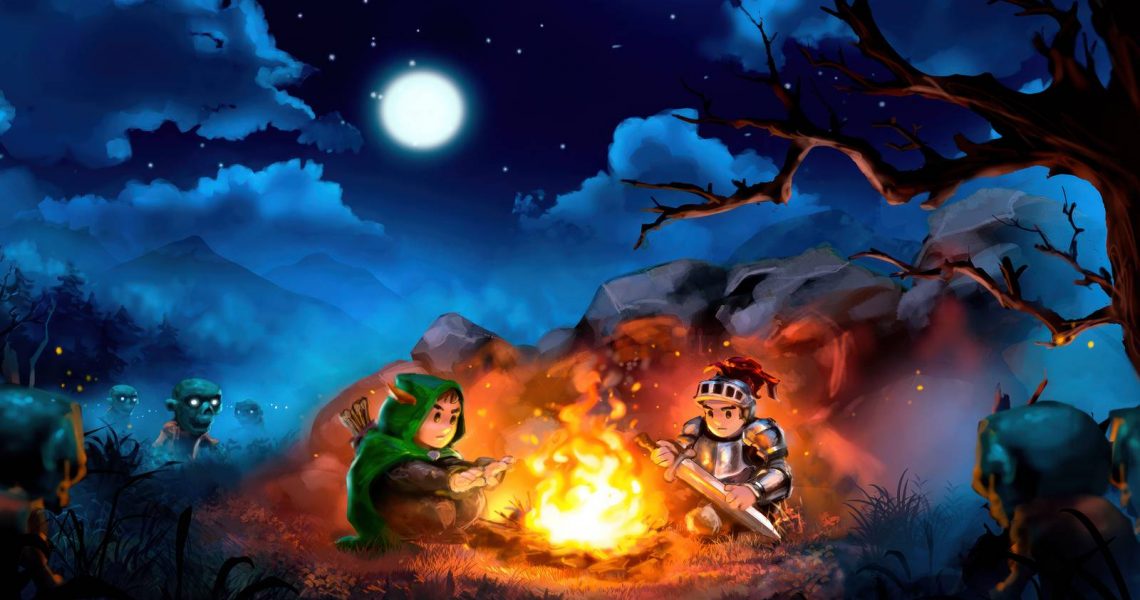
New Survival Crafting Game on Steam is What Happens if Project Zomboid’s Zombies Spawned in Terraria
Survival crafting games are known for wearing their influences on their sleeve, but that’s hard not to do when it feels like a new title in the genre is revealed or released just about every other day. Even so, there’s a reason the genre is so popular, so it’s rarely a bad thing when survival crafting fans get a new game to keep their eye on. One of the latest games to fit that bill is Rogue Night, an open-world survival-crafting roguelite that looks like what would happen if Project Zomboid‘s zombies spawned in Terraria. With its 2D pixel art and side-scrolling world, as well as its much harsher survival gameplay that sees players fending off waves of undead and even using their heads as currency, the upcoming Steam game looks like a wild hodgepodge of genres that could be the next big survival crafting hit if it plays its cards right.
Where Rogue Night really seems to click is in its ability to take the freedom and experimentation of a sandbox crafting game and put it inside a roguelite-shaped house. Players explore, craft, and build in the way they’d expect from the genre, but with the understanding that things can go awry at any moment. And as a roguelite, even when a run ends badly, players still benefit from all the time they spend out in the field, whether it’s with new materials or simply lessons learned. In the end, it feels like a familiar pixel art playground with a much meaner side to it all. Players won’t have to wait much longer for it either, as Rogue Night launches on Steam on April 17, 2026.
Rogue Night Puts Project Zomboid’s Zombie Survival Gameplay in a Terraria-Like 2D Pixel Sandbox
While it’s fun to compare Rogue Night to a blend of Terraria and Project Zomboid, those comparisons must be clarified. To put it simply, Rogue Night takes Project Zomboid‘s survival gameplay, where zombies are a constant threat and resources are limited, and drops it into a 2D pixel art sandbox that feels closer to Terraria. In that space, the side-scrolling perspective, exploration-heavy world design, crafting loop, and base construction of Rogue Night all reflect the design philosophy of Terraria, especially considering it offers players far more creativity and self-expression than Project Zomboid.
Gather resources to build and reinforce your base, rescue survivors who assist you, and manage your resources to withstand the relentless undead threat.
Like Terraria, Rogue Night gives players the tools and ability to build from scratch and approach survival creatively. Unlike Project Zomboid, which is more about modifying and surviving within existing spaces, Rogue Night lets players build their bases and other defenses block by block, allowing for more creative freedom. At the same time, it adopts the constant pressure that defines Project Zomboid‘s zombie-infested open world. As the game’s Steam description claims, players face a “relentless undead threat,” meaning bases aren’t just meant to be a form of expression but double as a way to survive the world.
Survival, Crafting, and Roguelite Gameplay in a Medieval Fantasy Zombie-Infested World
Battle hordes of undead enemies, collecting their heads to gain permanent upgrades that persist across runs.
Where Rogue Night really sets itself apart from Project Zomboid, Terraria, and other open-world survival crafting games is in its roguelite design. No doubt named as a nod to the genre, Rogue Night‘s gameplay is built around repeated “runs” into the open world, just as much as it is the base-building, crafting side of the loop back at home. Essentially, players jump into one of these runs, survive as long as they can, and generally accept that they are probably going to die. The key difference from classic roguelike games, however, is that progress carries over between runs. Even when players fail, they can still unlock permanent upgrades, new abilities, or possibly even characters that make future attempts more manageable.
Rogue Night’s Features at a Glance
- ROGUELITE SURVIVAL ACTION with persistent meta-progression between runs.
- SINGLE-PLAYER EXPERIENCE with sandbox, crafting, action, and RPG systems.
- OPEN-WORLD 2D EXPLORATION featuring varied biomes, dungeons, puzzles, traps, and enemies.
- RESOURCE GATHERING AND CRAFTING for tools, weapons, and structures.
- BASE BUILDING AND DEFENSE focused on surviving undead attacks.
- SURVIVAL MANAGEMENT driven by limited resources and constant pressure from zombies.
- COMBAT AGAINST HORDES OF ZOMBIES, central to progression.
- ZOMBIE HEAD CURRENCY used for permanent upgrades between runs.
- WEAPON LEVELING SYSTEM that unlocks increased power and new abilities.
- MULTIPLE PLAYABLE CLASSES with distinct playstyles.
- 15 EHCHANTED RINGS AND 35+ UPGRADES for deep build customization.
- RESCUABLE NPC SURVIVORS who support base growth and functionality.
- QUESTS AND OVERARCHING NARRATIVE, including a confrontation with Necrosarian the Vile.
- 2D PIXEL ART FANTASY ZOMBIE APOCALYPSE visual style.

Rogue Night might (intentionally or unintentionally) take some survival-crafting cues from games like Terraria and Project Zomboid, but where it really starts to distinguish itself is in how much it leans into its medieval fantasy roots. Most games with zombies take place in a post-apocalyptic setting, but Rogue Night‘s undead monsters wander a medieval fantasy world that is filled with dungeons, traps, and puzzles that almost give a Legend of Zelda twist to its gameplay. Exploration is dangerous by design, but it’s also where the game is at its most rewarding. New weapons, enchanted rings, blueprints, tools, and gold are all tucked away in places that players have to be bold to venture to, but that balance of risk and reward ultimately feeds into its roguelite loop.
Explore a huge world and dive into dungeons full of monsters, puzzles, and traps to find powerful weapons, rare rings, blueprints, tools, and of course, gold.
The gear players find on the run can change how they fight, the blueprints they unlock can expand what they build, and the tools they bring home can change how they prepare for their next encounter with the undead. While Rogue Night‘s base-building gameplay appears to thrive on creativity and expression, it still wants players out in the open world and taking chances if they want to make any progress back at home. Just as it is with traditional roguelite games, making those runs is necessary, and they end up becoming a choice between playing it safe or diving headfirst into something that might get players killed but could also completely change how their next run plays out. That mix of dungeon crawling, loot hunting, and survival pressure, all taped up in medieval fantasy-designed wrapping paper, makes Rogue Night a standout addition to the genre.

But just how it stands out will ultimately be decided once the game launches on Steam in April. That said, players can try out the game right now by playing the free Rogue Night demo, which includes the game’s core systems of exploration, survival, building, combat, and progression. Ahead of its April 17, 2026, launch, this might be the best way for players to get a taste of what Rogue Night has to offer, but it’s looking like a solid experience nonetheless.
Rogue Night launches on Steam on April 17, 2026.