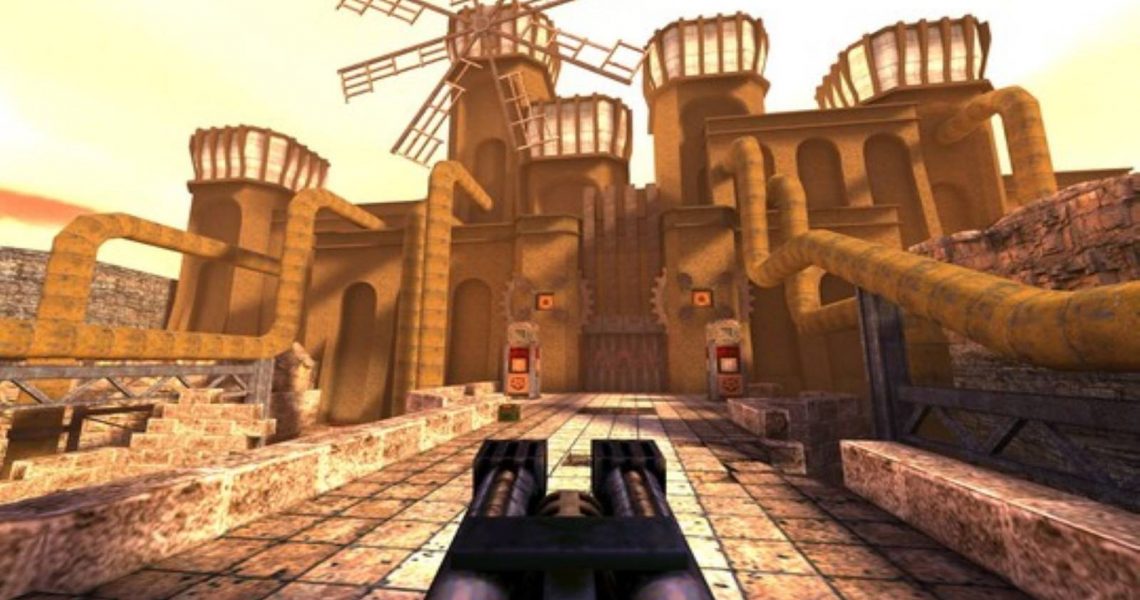
You Can STILL Slaughter Your Friends in One of the Greatest FPS Games Ever
The FPS genre has come a long way since the days of Quake and classic DOOM, and some would argue that its evolution hasn’t been all that appealing. Of course, that’s a bit of a radical generalization: even if someone rightly criticizes contemporary practices like battle passes or potential AI use in series like Call of Duty, it’s impossible to deny the ingenuity seen in indie FPS titles, as well as occasional AAA masterpieces like Doom Eternal and Titanfall 2.
But these industry-leading, exciting FPS projects likely would not have existed if not for Quake, which meaningfully evolved the formula id Software established with DOOM in the 1990s. To this day, few shooters have the same feel-good quality that the original Quake game had. Thankfully, Quake is easier than ever to access, thanks in large part to the efforts of Nightdive Studios. The studio helped bring the 1996 classic to modern platforms, running as seamlessly and buttery as ever, meaning it’s still easy to play 30 years later.
Why Quake Is Still So Good, Three Decades Later
Quake’s Vibe Is Untouchable
I’ll give modern-shooter aficionados this: the games certainly look great. Better resolutions, texture quality, depth-of-field, and animations make many recent FPS games, even less enjoyable ones, a feast for the senses. Of course, there’s something especially compelling about seeing a virtual world through your protagonist’s eyes, engaging in a closer simulation of everyday perception. In theory, and sometimes in practice, the higher fidelity of modern FPS titles bolsters this sense of immersion.
This is fair, but Quake is a great example that more realism doesn’t always lead to better atmosphere or a firmer artistic vision. The classic FPS channels Lovecraftian themes and imagery, combining them with science-fiction concepts slightly more cerebral than Doom‘s, ultimately leading to a uniquely compelling game world. Then, there’s Quake’s soundtrack, composed by Trent Reznor at the height of Nine Inch Nails’ popularity and creativity. If you love the combination of Mick Gordon’s heavy metal score and 2016 Doom‘s gruesome art design, Quake will definitely have you covered.
Nightdive Studios and MachineGames Made Quake Even Better in 2021
You can still have fun in the original Windows or MS-DOS versions of Quake, but you don’t have to resort to those classic editions either. In 2021, Nightdive Studios, an Atari subsidiary that had previously remastered games like Turok, released an “enhanced” version of the original Quake, with small changes and modern conveniences to bring it up to contemporary standards. Some of Nightdive’s most significant changes to the 1996 version include:
- Support for up to 4K resolution
- Widescreen support
- Antialiasing
- Dynamic lighting
- Better textures
- Longer depth-of-field
None of these changes are exactly transformative, which is for the best: Quake didn’t need much fixing. Still, the remaster features other, more substantive upgrades, such as dedicated server support and crossplay for online multiplayer. Nightdive also added a new Horde mode, which can be played solo or with other players, and is a meaningful expansion of the Quake sandbox. Naturally, this modern rendition of Quake also includes its two original DLCs, The Scourge of Armagon and Dissolution of Eternity, in addition to two special surprises from MachineGames.
MachineGames’ Modern DLC for Quake
In 2016, to celebrate Quake‘s 20-year anniversary, Wolfenstein developer MachineGames launched Dimension of the Past, a free DLC for Quake. The expansion bridges the gap between Quake and Quake 2, though it’s mostly considered an homage to the retro shooter rather than a significant reinterpretation or lore expansion of any sort. Dimension of the Past would go on to be included in the 2021 “enhanced” edition of Quake alongside the original two expansions.
Also included in the 2021 Quake re-release is Dimension of the Machine, another new DLC from MachineGames. This expansion pits the player against Chthon, a villain from the base game, and features a variety of new environments and demonic foes. The DLC was widely praised for its complex level design (perhaps foreshadowing MachineGames’ spectacular level design in Indiana Jones and the Great Circle), as well as for its new Deathmatch maps.
All of this is to say that, despite launching nearly three decades ago, Quake is still very much worth your time. If you played the original, there’s plenty more to discover and enjoy in the enhanced version, and if you’ve never played Quake, then checking it out should be a defcon-level priority for you. The series is surprisingly fluid, satisfying, and relentlessly compelling thanks to grotesque enemies, interesting levels, and a head-banging soundtrack that rises head and shoulders above those from similar games. Here’s hoping id Software gives Quake the Doom 2016 treatment sometime soon, but until then, the original lineup offers quite a cache to binge.

- Released
-
May 22, 1996
- ESRB
-
M for Mature: Blood and Gore, Violence