Exodus’ Greatest Weakness Means Mass Effect 5 Needs to Strike While the Iron is Hot
I’m extremely interested in Exodus, the debut from Archetype Games, but it still has a lot to prove. Exodus is clearly Mass Effect inspired, which is no coincidence considering Archetype Games is led by several BioWare luminaries, but this comparison might wind up doing it more harm than good. Whether Exodus bombs, soars, or lands somewhere in between, it will inevitably hold a mirror up to Mass Effect 5, reflecting the latter franchise’s unique strengths and weaknesses.
There’s no grand twist or genre-defying stunt that sets Mass Effect apart from the pack—it just nails the most essential aspects of a space opera. The series tackles difficult questions and plumbs the hidden depths of theoretical galactic civilization, offering a robust and comprehensive vision of the cosmic neighborhood that nourishes the mind as much as entertains it. Hopes are high that Exodus will pull the same narrative feats, but some sci-fi fans might feel a bit of unease after the recent Exodus Game Awards trailer, where it comes across as somewhat generic. Make no mistake, Exodus‘ lore is rich and detailed, and it would be disingenuous to call it generic as a whole. It’s definitely doing some cool stuff, but there’s a lot that’s kinda meh, especially compared to its stiff competition.
Exodus’ Alien Design Looks a Little Bland
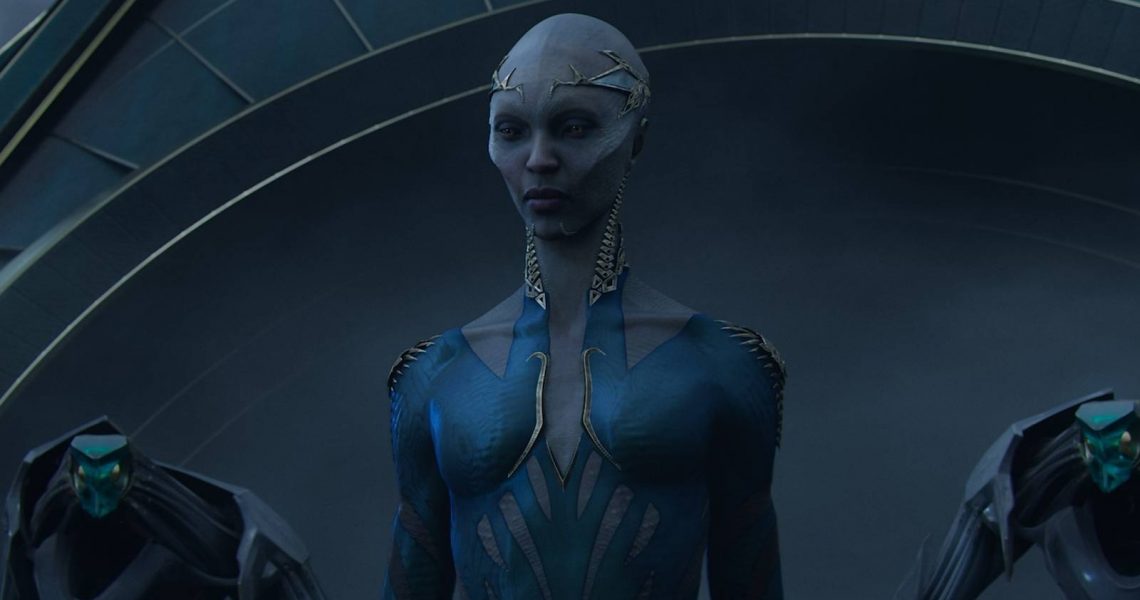
Exodus‘ aliens stray from convention a bit. Rather than traditional extraterrestrials or lifeforms who came into being on planets other than Earth, Exodus features highly evolved, delineated human progeny of the far-future. These beings, called Celestials, have essentially shed their humanity and have little in common with humans of today. Nor are they familiar with the Lidon Empire, the relatively young human society to which Exodus‘ protagonist belongs.
These Celestials, based on what’s been shown in Exodus trailers and previews so far, appear mostly humanoid. Archetype has only shown a handful of them so far, such as the Crown Celestials, who resemble elongated humans with gray skin. Other unnamed aliens have been glimpsed but not named. For example, Exodus‘ Game Awards trailer briefly shows protagonist Jun Aslan fighting a same-size blue humanoid, and a statue of a humanoid alien with a fringed, fin-shaped head.
Granted, it makes sense that these creatures would be humanoid since they are descendants of modern-day humanity, but this might mean that Exodus misses out on more bizarre or inventive alien species, like the hulking Elcor or ethereal Hanar of Mass Effect. Less important than these designs is how non-human characters are used. Exodus hasn’t revealed any alien squad mates yet, and a shot from The Game Awards trailer depicting a group of humans around a command table doesn’t inspire confidence to the contrary. Exodus might keep its aliens at arm’s length, which could wind up being a missed opportunity.
Comparisons May Not Be in Exodus’ Favor
Video games are in a unique position when it comes to presenting non-human species. Since they’re interactive, players can learn about such fantasy races in an active, multifaceted manner, whether that be through RPG-style dialog exchanges, side quests, or in-game logs and codices. When done correctly, like in games like Mass Effect or No Man’s Sky, the audience can have a far deeper and richer understanding of the fictional world than they could have through a book, film, or TV show.
If the next Mass Effect 5 trailer shows even one new interesting race, it’ll put itself in stark contrast with Exodus—and not on the lower end.
Exodus will be joining several heavy-hitting sci-fi franchises known for compelling alien races, including:
- Mass Effect
- Halo
- Half-Life 2
- StarCraft
- Warhammer 40,000
- Prey
- Outer Wilds
These IP convey their alien creations in different ways, but they are all generally praised for a combination of unique visual design, lore, and implementation into the player experience. If Exodus‘ aliens aren’t visually distinct, don’t have detailed and interesting backstories, or aren’t integrated into the story and gameplay in a more compelling way, it could make for unfavorable comparisons. In other words, Exodus‘ biggest weakness is not likely something to put it on par with Mass Effect 5, which has the benefit of inheriting some of the most iconic alien races in gaming.
Why Alien Design and Lore Will Be Crucial for Exodus
The best part about grand space-faring epics is how they can take a relatively simple concept—interplanetary colonization, in Exodus‘ case—and stretch it to its fullest conclusion, tackling fascinating questions about life, biology, ethics, civics, and more along the way. If this kind of story feels tame or pared-down, it doesn’t quite capture that same feeling of mysticism and wonder. Unfortunately, mysticism and wonder are not the emotions many viewers were left with after Exodus‘ most recent trailer, which painted it as more of a generic action-adventure with a space theme, complete with a chosen one hero and ragtag group of allies.
In Defense of Exodus: Why I’m Still Excited for It
I’ll admit that Exodus‘ Game Awards trailer was a bit milquetoast: it seemed to focus more on the game’s blockbuster elements, emphasizing explosive combat, setpieces, epic speeches, and other high adventure tropes. This probably wasn’t the best way to showcase Exodus‘ greatest narrative strengths, especially as they pertain to its alien races. At the end of the day, audiences have seen plenty of games trying to be Hollywood blockbusters—photorealistic graphics and epic music aren’t quite enough to capture the imagination these days.
But I get a strong sense that Exodus is more than what was shown at The Peacock Theater. There’s currently a wealth of Exodus lore information available in a literary miniseries on the game’s website, as well as several short clips covering bullet points like Awakened animals, the Mara Yama, and the Elohim. These concepts show a lot of promise, and if they continue to surprise and inform in the final product, then Exodus could be well on its way to being a true sci-fi contender. How it compares, and ultimately competes, remains to be seen.

- Released
-
2027
- Developer(s)
-
Archetype Entertainment
- Publisher(s)
-
Wizards of the Coast