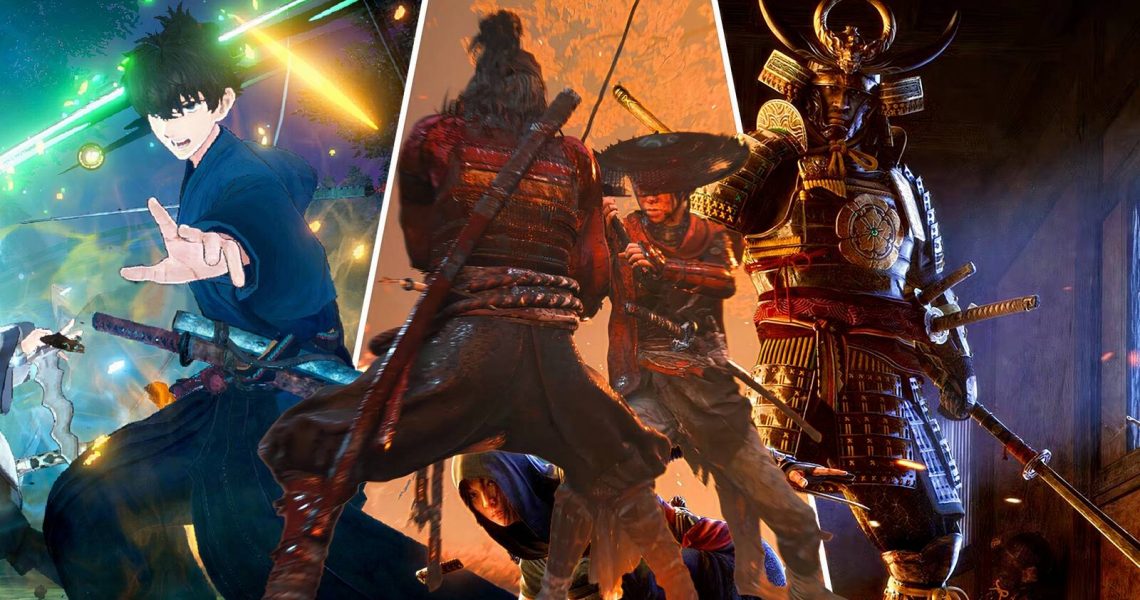
Best Open-World Samurai Games, Ranked
In feudal Japan, the Samurai were a class of skilled warriors. Wielding their iconic katanas and clad in distinctive armor, samurai were not only combat masters, but adherents of the Bushido Code, which emphasized virtues like bravery, respect, and integrity. The influence of the samurai extends beyond the battlefield, and to this day, people are heavily influenced by these elite warriors. This makes them perfect characters for a video game.
While there are a variety of games centered around the samurai, they usually restrict themselves to linear storytelling or plain fighting games. As open-world games become increasingly popular, many fans yearn for projects that allow them to experience the way of the samurai while exploring feudal Japan. Nowadays, there still aren’t all that many open-world samurai games, but the few that exist are generally high quality.
Sekiro: Shadows Die Twice was left out as it is more open-ended than open-world. Still, a great game.
6
Fate/Samurai Remnant
Feudal Japan In The Fate Universe
The multiverse of the Fate franchise is a vast, complex web of stories, and often, players require knowledge of the characters and the setting from previous titles. However, Fate/Samurai Remnant, while still a part of the web, can be played from a standalone perspective.

Best Fate Anime, Ranked
The Fate franchise is a long-standing one, and in the anime department, not every series is made of the same cut. Here’s how the best rank up.
While the Fate games mostly take place in a modern setting. Fate/Samurai Remnant takes place in the historical city of Edo in Japan as players take the role of Miyamoto Iori, a descendant of Miyamoto Musashi. The game involves a tournament to the death and people participating for the ultimate prize, the Waxing Moon, an artifact similar to the Holy Grail.
In this action RPG, Iori dual-wields katanas, a common weapon for the samurai from the Edo period. Players can switch between various stances to fight enemies and give various commands to Yamato Takeru, a saber-class servant Iori summons to perform special attacks and combos. In typical Musou fashion, the game’s combat is exciting and keeps the players engaged. The open world is a big star of the game, distinguishing it from other Fate titles by tying its plot to a real place and period of history.
5
Way of the Samurai 4
Player Actions Decide The Fate Of The Town
So far, the games discussed have samurai elements and open worlds to play in, but none do justice to the name “samurai” like Way of the Samurai 4. The game takes players into the fictional port town of Amihama as a wandering samurai who gets caught between the militant government, discriminatory nationalists, and the invading British forces seeking to occupy Japan.
As a Rōnin, players accept various missions. The missions they choose and the outcomes they end up with decide the player’s fate, as well as the fate of the town. The game can be completed in a few hours, but multiple playthroughs are required to experience the different endings.
The game’s combat has surprising depth to it, and players might find themselves having a fun time while learning the controls. Exploring the various parts of the town, players learn that the game has a quirky sense of humor. While the game fools around often, it allows players to play as a samurai in their own amusing way.
4
Like a Dragon: Ishin!
Familiar Faces In The Edo Period
Taking the Yakuza from modern Tokyo to Japan’s Edo Period, Like a Dragon: Ishin! takes place in the final days of the Edo Period. Protagonist Sakamoto Ryoma is a disgraced Rōnin who sets out to avenge his father figure by killing the person responsible for his death. Like a Dragon: Ishin! features a unique blend of blades and bullets in the familiar Yakuza gameplay, but instead of using fists to brawl, katanas are used to settle differences.
The story is about more than revenge, as it delves into local politics, criminals, and more. Like a Dragon: Ishin! features some half-baked gunplay, but it offers stylish sword fighting, hysterical action, and quality soap opera drama. Various side quests and substories make for interesting encounters in feudal Japan. Now, Ishin‘s open-world is nowhere near as big as any of the upcoming games, as it mainly consists of one medium-sized city. However, Like a Dragon has always excelled at creating small but dense hubs filled with personality and enjoyable content. Ishin is not really among the franchise’s greatest efforts, but it is still a very solid game that can be enjoyed even if the name “Kiryu” means nothing to you.
3
Assassin’s Creed Shadows
A Long Overdue Open-World Game That Is Part-Samurai, Part-Ninja
Ubisoft arguably waited too long to take Assassin’s Creed to Japan, as Shadows dropped long after Ghost of Tsushima and just a few months before its sequel, the highly anticipated Ghost of Yotei. By that point, the public’s craving for an open-world set in historical Japan had been satisfied to an extent, especially since all these games follow a fairly similar structure.

30 Best Games Set in Japan, Ranked (2025 Update)
Apart from offering fascinating gameplay, these exciting video games allow players to experience the Japanese culture and way of life.
Nevertheless, Assassin’s Creed Shadows is still a great open-world samurai game, although only a portion of the campaign really qualifies. Rather than sticking to a single protagonist, players are free to pick between Yasuke, a samurai, and Naoe, a shinobi, with only a few sections requiring a specific character. For the most part, Naoe seems to be most people’s favorite pick, so Shadows is arguably more of a ninja than a samurai game. However, you can still play most of the game as Yasuke, who comes with a competent hack-and-slash system along with a decent backstory. The open-world is consistently beautiful, comfortably ranking among Ubisoft’s greatest visual feats. The story is nothing too amazing, but it mostly gets the job done.
2
Rise of the Rōnin
Using A Sword Is Not That Easy
The developers of Nioh, Team Ninja, have a reputation for creating video games revolving around samurai and shinobi. Their latest endeavor takes a big leap. Rise of the Rōnin is an open-world action RPG set in a fictionalized version of historical Japan during the reopening of Japanese borders to foreign forces. The story of the game explores thought-provoking themes like colonialism, xenophobia, and nationalism while players meet historical figures from different factions.
However, the game is best when the players clash their swords with the enemy. When swordfighting, players have to monitor their Ki gauge to manage the offense and defense. Enemies are agile and aggressive, and even the easiest opponents can send the players to the afterlife. The combat has a lot of depth and a steep learning curve.
The bond system, though not unique, is a good touch as it rewards players for investing their time in the game and forming a personal connection with the NPCs. The fast-paced combat, along with the story, makes Rise of the Rōnin a great samurai game. While it takes some time to learn the combat, the commitment is worth it.
1
Ghost of Tsushima
An Epic Samurai Tale
Although not the first open-world samurai game, Sucker Punch’s Ghost of Tsushima felt like the first proper one. A love letter to fans of Japanese samurai cinema, the 2020 game tells a fictional tale set around the real Mongolian invasion of Japan, starting from the island of Tsushima. Jin, the main character, faces an inner conflict, struggling with whether to save Tsushima at the cost of his ideals or die following the teachings.
In samurai games, combat is crucial, and Ghost of Tsushima doesn’t disappoint. Taking cues from other titles like Sekiro and Assassin’s Creed, Ghost of Tsushima forms a magical blend that shines in both 1v1 duels and battles that prioritize crowd control. It is simple for players to learn, but it has a lot of depth and really shines when experienced on the highest difficulty.
GoT‘s strongest point is its world. The setting is simply breathtaking, with a minimalist HUD and great cinematography. The soundtrack is nothing to look down on, either, beautifully mixing the serenity of the world with the intensity of the battlefield. From the natural beauty of the island to the well-developed combat and intense story. Ghost of Tsushima is a great game in almost every aspect.
Somehow, Sucker Punch outdid its previous masterpiece with Ghost of Yotei, a sequel that does not reinvent the wheel but fine-tunes almost all of its predecessor’s ideas. The combat is expanded to support more weapon types, allowing for way more variety. The setting is bolstered by its mountain scenery, creating a vista that is arguably even more stunning than Tsushima. Atsu goes on a fairly typical revenge-fueled journey, but these types of stories are common in samurai fiction. Most importantly, Yotei improves the open-world optional content, making it far more engaging.

Should You Play Ghost of Tsushima Before Ghost of Yotei?
Ghost of Yotei is a sequel to Ghost of Tsushima, but with a whole new protagonist and time period, is playing the original even necessary?