Supreme Court Strikes Down Trump Tariffs That Have Caused Video Game Console Price Increases
On February 20, the Supreme Court of the United States (SCOTUS) ruled via a 6-3 vote that most of the tariffs imposed by US President Donald Trump, which have affected the prices of consoles like the PlayStation 5 and Nintendo Switch, were unconstitutional. The Trump administration cited the 1977 International Emergency Economic Powers Act (IEEPA) as a way to enforce its tariffs on countries like China, which had an adverse effect on the gaming industry.
In early 2025, at the start of his second term, Trump started implementing reciprocal tariffs via the IEEPA. The tariffs affected the prices of various goods from nations like China, Canada, and Mexico, and the costs were passed on to consumers. The administration cited immigration and drug trafficking as the main reasons for citing the IEEPA. Although the IEEPA allows the administration to block certain transactions during a national emergency, the law makes no mention of tariffs. Once enacted, the tariffs had a widespread effect on the global economy. The tariffs led to Switch 2 pre-orders being delayed in the US by a few weeks but did not change the price or release date of Nintendo’s latest console.

Xbox ROG Ally X Handheld is Getting More Expensive in at Least 1 Region
Reports indicate that the Asus ROG Xbox Ally X handheld gaming system is suddenly now more expensive to buy in at least one region of the world.
The Supreme Court Rules Against Trump’s Tariffs
Despite the Trump administration’s effort, the Supreme Court disagreed with the notion that most of the tariffs enacted under the IEEPA could be enforced by the President. The Supreme Court ruled 6-3 against Trump and said that the IEEPA does not authorize the President to impose tariffs, citing a lack of jurisdiction. The Court’s ruling was part of the case Learning Resources, Inc. v. Trump, with the SCOTUS hearing oral arguments in November 2025. Chief Justice John Roberts wrote the majority opinion, with concurrences from Justices Kagan, Sotomayor, Jackson, Gorsuch, and Barrett. The majority opinion said that the US Constitution states that Congress, not the President, has the authority to impose taxes and tariffs.

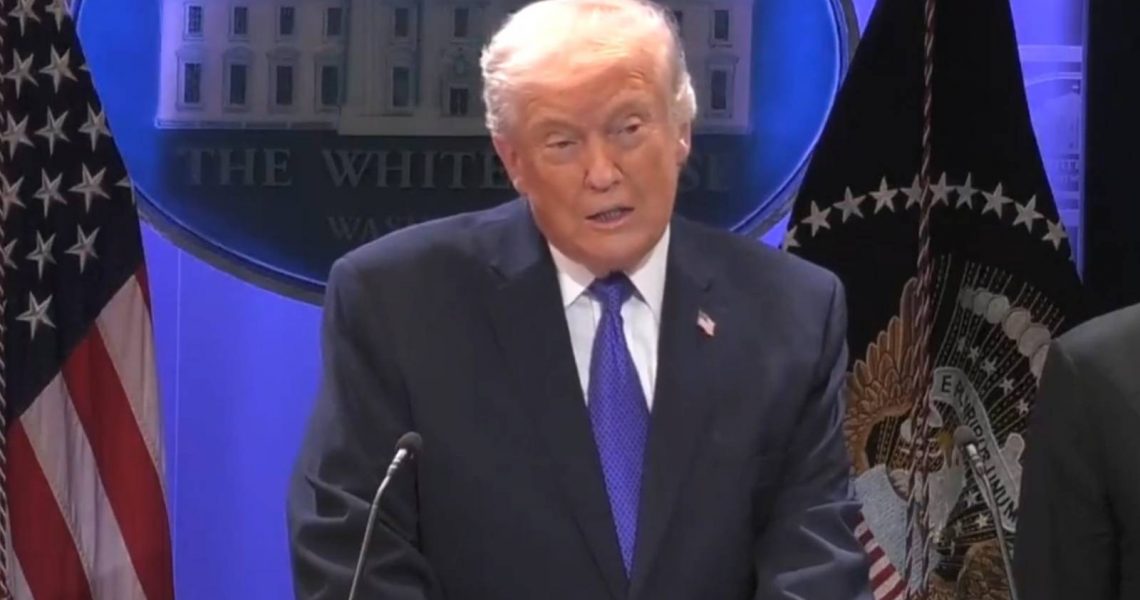
The dissenting opinion was delivered by Justice Brett Kavanaugh, who was joined by Justices Thomas and Alito. In his dissent, Justice Kavanaugh said, “The tariffs at issue here may or may not be wise policy. But as a matter of text, history, and precedent, they are clearly lawful.” Although the Trump administration’s tariffs have been blamed for causing games like Resident Evil Requiem to forego a physical collector’s edition, the Court’s ruling still leaves a few distinct tariffs on goods like steel in place. In response to the Court’s decision, Trump said, “Their decision is incorrect. But it doesn’t matter, because we have very powerful alternatives.” Trump then announced a global 10% tariff as one of those alternatives, though these tariffs are restricted to 150 days.
Don’t Expect Prices to Come Down Anytime Soon
Although the Trump administration’s economic plan has suffered a major blow, the Supreme Court’s ruling is unlikely to have any immediate effect on the prices of video game consoles and PC components. The ongoing RAM shortage crisis, which has been brought on by a high demand for essential components by AI-based data centers, has led to sharp price spikes on RAM and solid-state drives (SSDs). The ongoing shortage has also led stores like Costco to remove RAM sticks from its display PCs in response to theft. Although consumers can still purchase RAM at different retailers, the high price points have made building a new PC more prohibitive.
The crisis has also caused Valve to delay the launch of the Steam Machine to the first half of 2026. Additionally, the Steam Deck has completely sold out in the US, and Valve stated it expects shortages of the Steam Deck to be intermittent for the foreseeable future. With the Steam Machine facing an uncertain future, it remains to be seen when consumers can expect any economic relief.