Nioh 3’s Endings Explained
The following contains MAJOR spoilers for Nioh 3.
Nioh 3‘s story takes place across multiple eras of Japanese history, but its epic conclusion ultimately brings everything back to a single conflict that has been driving the narrative from the very beginning. After dozens of missions spent correcting yokai outbreaks in various time periods, Nioh 3 returns to the confrontation between Tokugawa Takechiyo and his younger brother, Kunimatsu, whose actions are responsible for destabilizing the timeline in the first place.
The final act of Nioh 3 resolves that conflict directly, culminating in a final boss battle and a player-driven choice that determines how the story concludes. While the game’s mechanics and post-game content remain unchanged, the ending features two distinct narrative outcomes depending on how Takechiyo handles Kunimatsu’s fate. But exactly how everything ends up there begins with a choice made by Kunimatsu during the opening hour of Nioh 3‘s story.
Events Leading Up to Nioh 3’s Ending
Throughout Nioh 3‘s story, players learn that Takechiyo’s younger brother, Kunimatsu, has been acting behind the scenes to alter history in his favor. After being denied succession to the Tokugawa shogunate, Kunimatsu becomes increasingly resentful and eventually aligns himself with powerful yokai forces. Upon doing so, multiple eras are destabilized, creating rifts that allow the yokai to wreak havoc unchecked.
Takechiyo’s guardian spirit thus sends him across different periods of Japanese history in an effort to contain the yokai threat. Each era reveals more about how Kunimatsu’s influence has spread and how deeply the yokai corruption has become tied to key historical events. While Takechiyo succeeds in restoring balance in individual regions, it becomes increasingly clear that, while Kunimatsu remains active, the yokai cannot be stopped.
The final chapters of Nioh 3‘s narrative confirm that Kunimatsu has fully embraced yokai power, no longer acting as a manipulator who is merely working behind the scenes. Instead, he is revealed to be the central force driving the chaos affecting the timeline.
The Final Mission and Boss Battle
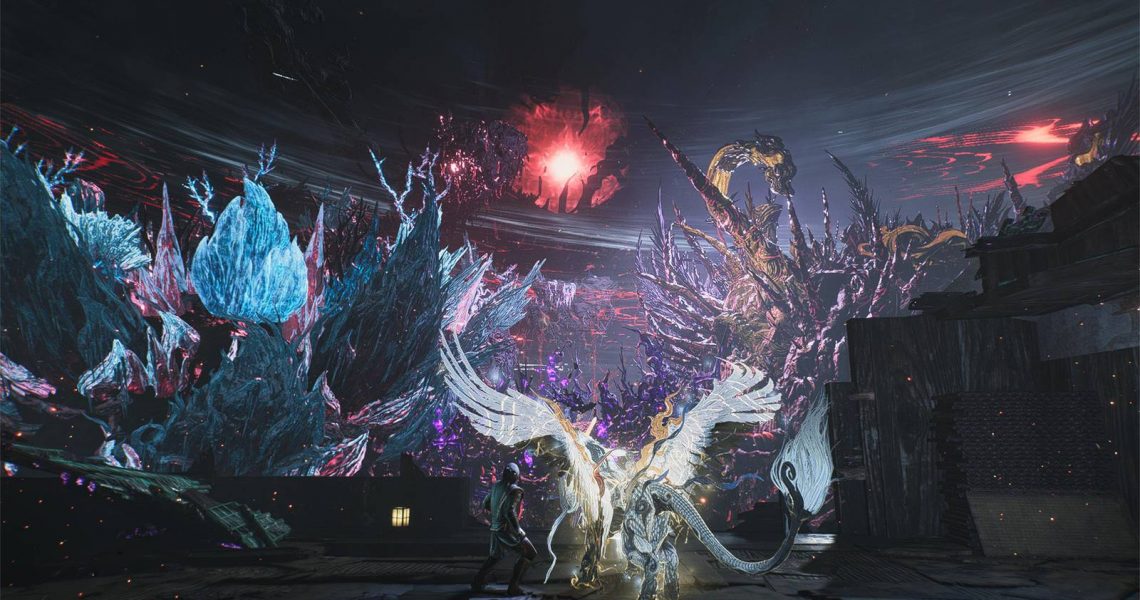
The ending of Nioh 3 begins with Takechiyo confronting Kunimatsu directly in a final mission designed to test everything the player has learned up to that point. Kunimatsu appears in a transformed state with a new name, Huriko, drawing heavily on yokai abilities that reflect the corruption he has embraced over the course of the story.
The final boss fight in Nioh 3 is one of the longest and most mechanically demanding encounters in the game. Huriko uses a mix of human combat techniques and yokai attacks, and takes advantage of multiple elements and status effects that players have had to navigate across each time period. This battle represents the last attempt to stop the yokai outbreaks destabilizing history. Once Kunimatsu is defeated, the game transitions into a cutscene that determines which ending the player receives.
Nioh 3’s Standard Ending
In the standard ending for Nioh 3, Takechiyo chooses to kill Kunimatsu after defeating him. In doing so, the source of the yokai corruption affecting the timeline is permanently removed. With Kunimatsu gone, the supernatural disruptions across history begin to dissolve, and the game implies that the damage caused by his actions is gradually corrected, restoring stability to the world. Takechiyo returns to his rightful place in history and proceeds toward his destined role as shogun.
This ending provides the most definitive resolution for Nioh 3‘s story, and it even feels like it with how abruptly it concludes. Kunimatsu’s influence is erased, the yokai threat is contained, and the timeline settles into a stable state. The final scenes show Japan moving forward without further supernatural interference tied to the succession conflict.
Nioh 3’s Alternate Ending
The alternate ending is triggered if Takechiyo chooses to spare Kunimatsu after the final battle. Instead of killing him, Takechiyo drops his blade before the final blow is delivered, and he takes Kunimatsu’s hand in an act of grace and forgiveness. In this version of events, Kunimatsu is freed from yokai influence but is left alive. The immediate yokai threat is still resolved, as the supernatural power sustaining the corruption is removed, but Kunimatsu’s true fate is left somewhat uncertain.
Rather than showing a fully stabilized timeline, this ending focuses on the aftermath of the confrontation itself. Kunimatsu is no longer a threat, and instead, the post-credits scene for this ending shows Kunimatsu presumably filling the role Takechiyo once filled in ridding the world of yokai, all so Takechiyo can tend to his duties as shogun. The story concludes here with the suggestion that history can continue without further interference, though this ending is a bit more ambiguous than the other.
How Nioh 3’s Ending Fits the Overall Story
Nioh 3‘s ending ties together its time-travel themes by closing the loop on the conflict that originally sent Takechiyo across history. Rather than introducing a new threat or cliffhanger, the game focuses on resolving the succession dispute that triggered the yokai outbreaks in the first place. Unlike other Nioh games, which ended with broader implications for the world, Nioh 3 feels like it has more of a definitive conclusion, even with the alternate ending inviting light assumptions. The conclusion centers on Takechiyo and Kunimatsu, bringing the story back to its original source rather than expanding outward as the series has done before.
After completing the game, players can continue exploring missions, side content, and the higher-difficulty Shogun’s Journey New Game Plus mode regardless of which ending they choose. The choice made at the end does not affect gameplay progression, loot availability, or access to missions. The ending primarily serves to conclude the story rather than impact the structure of the post-game experience.



- Released
-
February 6, 2026
- ESRB
-
Mature 17+ / Blood and Gore, Suggestive Themes, Violence, In-Game Purchases, Users Interact