No Rest for the Wicked Is Better Once You Stop Playing It Like Diablo
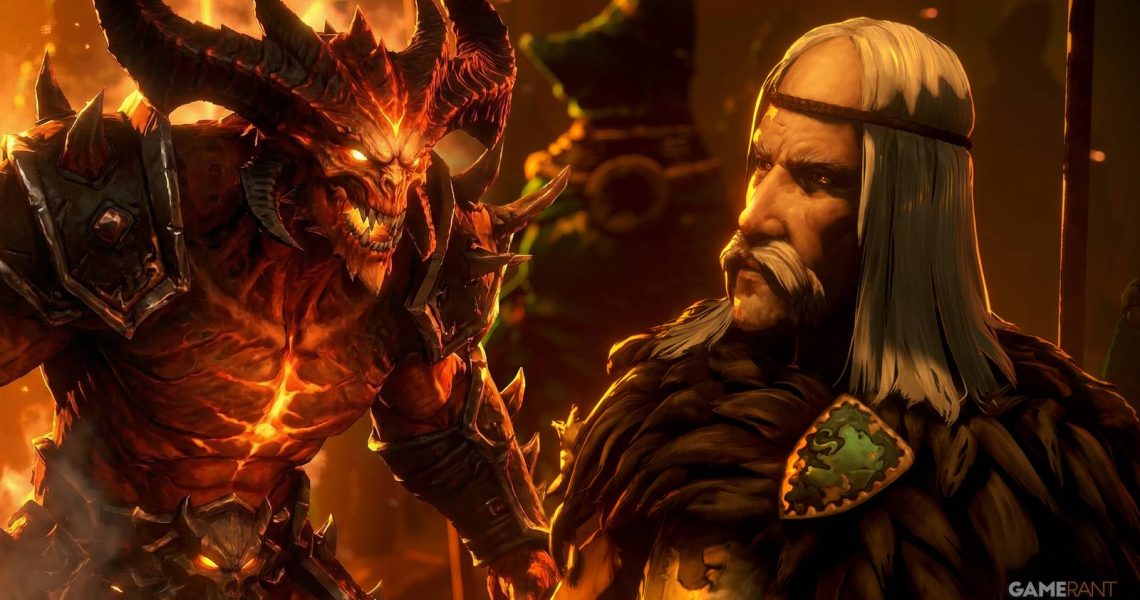
When a game like No Rest for the Wicked enters a space that is largely dominated by giants like Blizzard Entertainment’s Diablo franchise, it’s naturally not only going to draw comparisons to that franchise, but it may also throw players off who go in expecting it to be a similar experience. I’m unashamed to admit I was one of those players, and as a long-time fan of Diablo and other ARPGs like Path of Exile, washing up on the beach after completing No Rest for the Wicked‘s prologue had me rushing into the fray like I was invincible. However, after finding myself on the wrong end of my enemy’s blade one too many times, I realized this wasn’t the game I thought it was, and I would need to change my approach.
I recently went hands-on with No Rest for the Wicked to try out its new “Together” co-op update with Moon Studios CEO Thomas Mahler and game designer Kevin Jordan, during which they filled me in on various aspects of the game’s design, co-op mechanics, and upcoming features. During my time playing with the devs, I asked Mahler what he would consider to be a “fundamental misunderstanding” players have about No Rest for the Wicked, and his response solely centered around its frequent comparisons to Diablo. According to Mahler, there were plenty of others out there who, like me, went into No Rest for the Wicked expecting to deal absurd amounts of damage only to be humbled almost immediately.
No Rest for the Wicked Might Look Like Diablo, But It Plays Like a Souls-Like
What’s most perplexing about No Rest for the Wicked‘s comparisons to Diablo is that they have nothing to do with the gameplay itself and instead merely the perspective. Souls-like games are almost always played in third-person from behind the character’s back or at least over their shoulder, but No Rest for the Wicked is an isometric Souls-like, meaning the camera is elevated above the character in a similar manner to ARPGs like Diablo and Path of Exile. Mahler even confirmed during the interview that any comparisons made between No Rest for the Wicked and Diablo are due to the perspective, not the gameplay:
“One problem that we always had with No Rest for the Wicked, from the get-go, was that people saw the top-down perspective and immediately thought, “Oh, this is Diablo.” But it’s the exact opposite of Diablo in many ways. It’s way more what ARPGs used to be. ARPGs weren’t these spammy click-fest games where you just press buttons and the entire screen explodes. And a lot of players come in thinking it’s Diablo and start button-mashing, and then they get their butts handed to them.”
Again, I can attest to this, as I was one of those players during my first hour with No Rest for the Wicked, despite having countless hours of experience with Souls-like games and even being somewhat skilled in the genre. It’s interesting how a game explicitly labeled a Souls-like can still so easily mislead players with something as simple as perspective, but it makes sense nonetheless. No Rest for the Wicked is an attempt by Moon Studios to bridge the gap between ARPGs and Souls-likes, taking what the team loves about both and putting it all into one cohesive experience.
In the end, this philosophy allowed the developer to create an ARPG that pivots away from the expectations associated with the genre and offers a unique take on the formula instead. “I never really liked the levels that you played in Diablo or Path of Exile,” Mahler said, “because they’re literally just a procedurally generated flat plane. So, when we made Wicked, the immediate idea was, no, let’s actually properly design these levels.” Clearly, it wasn’t just the level design Moon Studios wanted to focus on, however, as No Rest for the Wicked‘s combat is ultimately what makes its isometric perspective so deceiving. As Mahler stated:
“The point-and-click system that you have in Diablo and Path of Exile, I think, in today’s world, isn’t the best thing you can do anymore. Obviously, I’m biased because I made No Rest for the Wicked, but I think something even better is those combat systems where you’re actually in control of your character. Combat where the spacing matters, the positioning matters, and the timing matters. To me, that’s logically the next step forward.”
Path of Exile is notorious for being one of those “explosive” games Mahler mentioned before, where players can craft builds that essentially function like lawn mowers, all but deleting any enemies they encounter with a single click of the mouse. Diablo can also be played that way, to a certain extent, and the developer is strongly implying here that those games require less real-time skill because players aren’t in control of every aspect of combat. It’s not entirely about a skill ceiling, though, as Moon Studios is simply aware of how “silly” ARPGs like Diablo and Path of Exile are these days and wants to offer something that feels more grounded in its execution.

Apparently, David Brevik, the original creator and lead designer of Diablo, actually agrees with the sentiment that modern ARPGs have gone a bit overboard. In fact, an interview with Brevik, whom Mahler and many others refer to as the “godfather of ARPGs,” helped back up his point that No Rest for the Wicked takes the genre in a positive direction compared to other entries. The Moon Studios CEO referenced said interview as he continued:
“This is something that the godfather of ARPGs, David Brevik, actually agrees with. I read an interview with him recently where he called these combat systems silly, because it has become absurd with these ARPGs where there are huge numbers spamming on the screen, and you’re making billions and trillions of damage, and I don’t even know what’s going on anymore. So, in many ways, we have tried to go in the opposite direction, and it has resulted in some weirdness. Probably because of the top-down perspective, the Diablo crowd jumped into the game expecting it to play like Diablo, but in terms of combat, it doesn’t. It’s intentionally not like that. We’re trying to create a next generation ARPG.”
And with that, it’s clear that No Rest for the Wicked isn’t trying to compete with Diablo by doing the same things louder or faster. It’s challenging the assumptions players bring with them into the genre, starting with how an ARPG is supposed to feel, even in its modern era. The camera may draw comparisons to other big isometric ARPGs, but the combat, level design, and pacing demand a different mindset of patience and thoughtfulness. Once that mental shift clicks, the game’s design begins to make sense, and it’s even better to play, as what initially feels punishing starts to feel rewarding. No Rest for the Wicked may look like a traditional ARPG, but it plays by a different set of rules, and that’s really the whole point.

- Released
-
April 18, 2024
- ESRB
-
M for Mature
- Developer(s)
-
Moon Studios