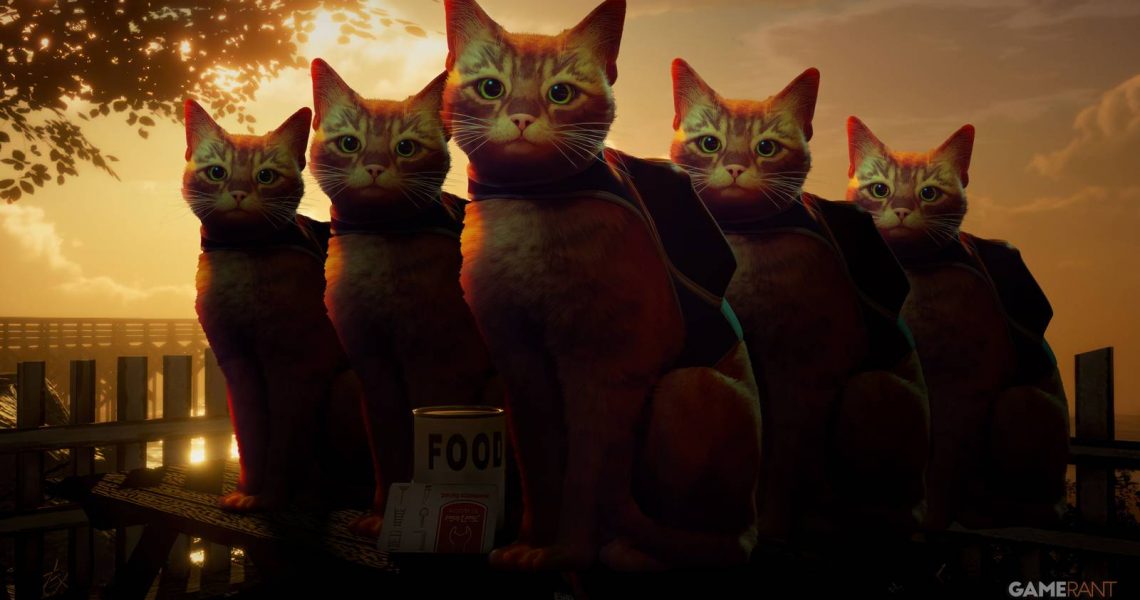
New Open-World Adventure Game on Steam is Basically Stray But With 9 Cats This Time Around
Stray was a potent reminder of the undeniable charm of feline protagonists, and an upcoming game called Peace Island seemingly wants to achieve something similar. The debut indie game from developer Peace Island LLC targets the same dramatic, apocalyptic storytelling as Stray, while promising a deep open world with more mechanical heft than Annapurna Interactive’s viral cat adventure.
Peace Island takes place in a fictional Maine island town, though the majority of its residents have mysteriously disappeared by the time the game begins: the island’s human population has been inexplicably spirited away, leaving behind only the animals. Exploring the island as one of its nine (a number choice that can hardly be incidental) remaining cats, players must determine the cause of the sudden human exodus, and decide whether humanity is really worth bringing back.
Peace Island’s Open World Promises to be Complex, Rewarding, and Immersive
Stray isn’t an open-world or sandbox game, but the lack of interactivity and reactivity in its environments is disappointing nevertheless. The game is often stunning and aesthetically rich, but it also feels a bit like a museum at times: you can look, but you can’t touch, unless a specific contingency has been put in place, such as a minigame or locked-in animation showcase. In other words, Stray‘s world may be interesting visually, but not so much mechanically.
This is where Peace Island promises to excel. Some highlights of the game’s open world, per its Steam page and Kickstarter materials, include:
- Hand-crafted interior spaces: there will be no “buildings with no purpose”
- Simulated weather and ocean tides
- “Contextual mini-games” based on typical cat activities
- An adaptive soundtrack influenced by time of day, weather, and “the mood of the cats”
Some of these selling points are a little vague, so it will be interesting to see how they are executed in the final product. At the very least, the idea of a persistent and seamless open world seems promising, as this is consistent with real-world cat behavior; cats love to wander and explore, so if someone is making a video game about them, it would make sense to encourage these same proclivities in the player. Granted, realistic open worlds, especially those with simulated weather and NPC behavior (more on that below), can be hard to get right, but Peace Island‘s smaller, denser map might strike the perfect balance between whimsical, realistic, and manageable.
Leaning Into Its Feline Formula Could Make Peace Island One-of-a-Kind
Smaller, richer open worlds aren’t unheard of—franchises like Yakuza/Like a Dragon have been thriving in this space for years now—but Peace Island‘s Animal Crossing vibes could help it stand out from its contemporaries and influences. For one thing, there is no combat (something that, as someone who grew up with outdoor cats, I think is slightly unrealistic), and gameplay is based more around the mysteries of non-human animal life. This includes the aforementioned cat-themed contextual mini-games, but also an apparent social simulation involving other animals.
According to the game’s Steam page, Peace Island will feature “old power structures” within the animal kingdom, and players will be able to negotiate relationships with deer, seagulls, bees, chicken, and other species. Due to interweaving layers of power and influence, forming positive relationships with one species may alienate another, for instance. This is perhaps the most interesting aspect of Peace Island, in my view, as it may provide fictionalized insight into the mysterious and powerful relationships between different animals. In a game where humanity is ostensibly out of the picture, this could wind up being quite important indeed.
Peace Island Still Has a Bit to Prove
Information about Peace Island is sparse, and gamers previously bitten by the lofty promises of developers both big and small might raise their eyebrows at some of Peace Island LLC’s claims. Many of the developer’s statements about the game are vague at best, and promises about player choice impacting the narrative, deeply interactive interior spaces, and distinct player-characters abound, but without many specifics to back them up. Put another way, Peace Island is positioning itself as ambitious and multilayered, but it hasn’t elucidated how it will actually accomplish these goals.
Deep, reactive open worlds, with and without more complex elements like simulated weather, NPC and faction relations, and choice-driven narrative design, are hard enough for massive AAA studios to get right. Peace Island is the definition of indie game, as it’s the first title from Peace Island LLC, which puts it at much greater risk when chasing these elusive targets. It’s one thing to say, for instance, that there are no “buildings with no purpose,” but it’s another thing to make players actually believe that while in-game.
But perhaps Peace Island LLC’s first experience will be an unlikely boon for its eponymous debut. At the end of the day, Peace Island is a passion project, its development led by a Portland, ME, line cook and care worker rather than a robust team of seasoned game creators. Though this lack of resources makes game development difficult for Peace Island, it might also unshackle it from the trends, conventions, and limitations of other open-world and sandbox games. Indeed, Peace Island‘s humble beginnings, paired with its considerable ambitions, could wind up spawning the X-factor that makes it truly special, not just serviceable.


- Released
-
July 1, 2026
- Developer(s)
-
Peace Island LLC
- Number of Players
-
Single-player
- Steam Deck Compatibility
-
Unknown
- Early Access Release
-
July 1, 2026