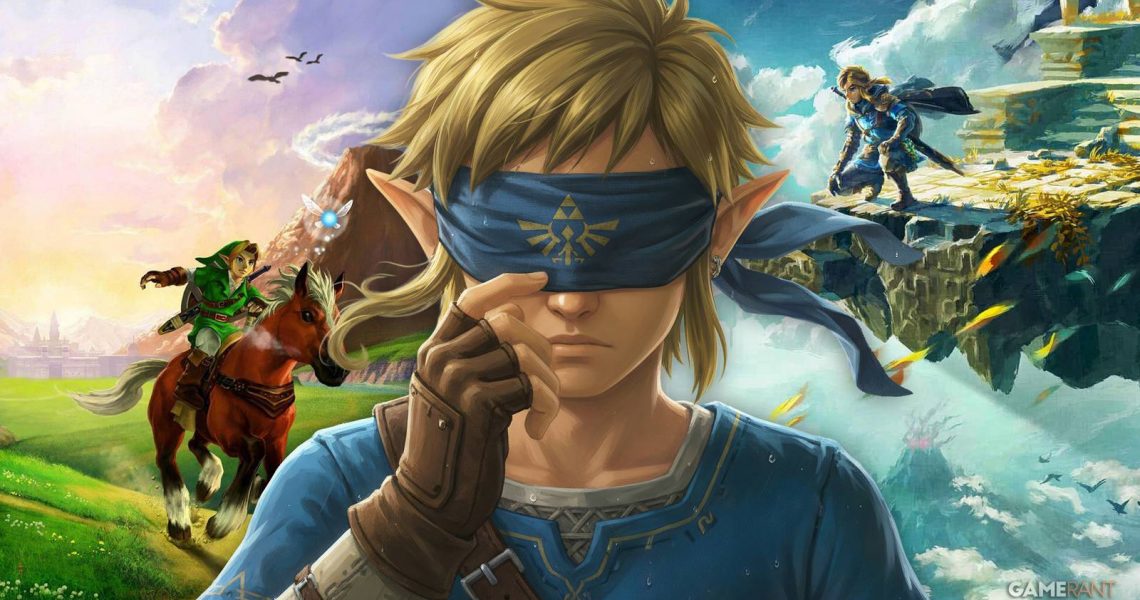
Why I’ll Always Preorder Zelda, Even Blindly
I remember sitting on the floor with my brother more than 30 years ago, playing NES games on our little box TV. From Super Mario Bros. 3 to Excitebike, and Teenage Mutant Ninja Turtles to Battletoads, the original Nintendo was our purest form of escape when we weren’t playing Pogs or outside hunting for box turtles. Those moments have stayed with me more clearly than a lot of other memories from that time, but none of them compare to the first time I played The Legend of Zelda. That was the first game that truly made me feel like a hero, and the first game to introduce me to a world that felt bigger than my backyard. I had no sense of how challenging it really was or how massive the franchise would eventually become, but looking back now, knowing I was there at the beginning is enough, especially when I consider how much The Legend of Zelda has meant to my life.
The Legend of Zelda has now been a part of my story for over three decades, and I plan on it remaining there until my hands can’t hold a controller anymore. There’s a reason that, like Super Mario, it’s still alive, kicking, and prospering today. Across decades, The Legend of Zelda games have consistently appeared on “best of all time” lists and been praised for their design and undeniable influence on the industry. The franchise has repeatedly received some of the highest critical scores in video game history, with multiple entries scoring perfect reviews from major outlets, and Ocarina of Time even holding a Guinness World Record for the highest-rated game ever made. That might be what everyone else thinks, and I share in those opinions, but this series means more to me than its scores—and that’s why I’ll always preorder Zelda, even blindly.
The Legend of Zelda Has Earned My Implicit Trust
My relationship with Zelda isn’t transactional or conditional, but built on the confidence that wherever the next adventure takes me, I know it will still feel like coming home.
I’ll get this out of the way right now: I don’t think every single Zelda game is perfect. In fact, there are certain entries I will never touch again, like The Legend of Zelda on NES, the game that got me into the franchise in the first place. But my love for Zelda has nothing to do with its ability—or lack thereof—to be perfect, which feels increasingly out of step with how a lot of modern gaming discourse works. We live in a time when it seems like any game lower than an 8/10 is often dismissed as not worth the time, and fans get upset at critics who give the next entry in their favorite franchise a 7 as though it’s a personal attack. That mindset has never really applied to me, and it applies even less when it comes to Zelda.
I don’t come to each new Zelda game asking whether it clears some arbitrary score threshold. I’m coming to it with decades of trust, knowing that even when a Zelda game stumbles, it still offers me something I want. Sometimes it’s a new take on Hyrule or a new way to explore it, sometimes it’s a creative gameplay mechanic that makes putting the game down more difficult, and sometimes it’s simply the comfort of returning to a series that I believe has never lost itself. In that way, my relationship with Zelda isn’t transactional or conditional, but built on the confidence that wherever the next adventure takes me, I know it will still feel like coming home.
Ocarina of Time Was My First Love
Largely, that relationship began with Ocarina of Time, after I rented it and kept it long past its due date. I remember being at school, unable to think about anything but Ocarina of Time, and games weren’t as widely appreciated then as they are today, so I didn’t have many friends I could talk to about it either. All I wanted was to get through the day so I could run up the road to my house from the bus, throw my bag on the floor, and play my new favorite game until my mom got home from work.
What I loved about Ocarina of Time was how utterly massive it was. Maybe it wasn’t as large as some other game worlds in terms of square mileage, but it not only offered me an unprecedented degree of freedom, there was just so much to do, and it continuously left me in awe with the countless surprises it threw at me. For example, after collecting the three Spiritual Stones, I thought I had beaten the game, but it just kept going! I wasn’t just surprised by how alive and dynamic its world felt either, but how it regularly asked me to think outside the box in terms of gameplay. I even got stuck on Phantom Ganon in the Forest Temple one day, but a dream I had that night told me how to beat him, and putting it into practice the next day actually worked.

Given Ocarina of Time‘s record-holding recognition, I know I wasn’t alone in my love for it either. But for me, that validation has always felt secondary to how deeply personal my experience with it was. It was the first game that made me think about it even when I wasn’t playing, the first virtual world that followed me into my dreams, and the first time I realized a game could occupy that much space in my imagination. Long before review scores or debates on its legacy ever entered the picture, Ocarina of Time had already made me fall in love with what games could be, and in doing so, it cemented my trust in Zelda for everything that would come after.
Games Like Majora’s Mask and The Wind Waker Kept That Love Alive
Speaking of what came after Ocarina of Time, Majora’s Mask fostered my love for Zelda even more. Despite somehow being darker than Ocarina of Time, that was actually something I enjoyed about it. Horror has always intrigued me, even if I didn’t get too deep into it as a kid, and Majora’s Mask was one of the closest things I had to a horror game at the time. For some reason, that part of it pulled me in deeper, intriguing me to the point of wanting to play it more and more. Apart from that, the mask-oriented gameplay was a ton of fun, satisfying both my collector and experimenter side. Plus, getting to continue the journey I had started in Ocarina of Time made the whole experience feel like the missing piece I didn’t know I needed until I had it in my hand.
Shortly after that came The Wind Waker, which I consider to be one of the best Zelda games ever made, even if its playful nature threw everyone in a frenzy at first. I, on the other hand, enjoyed the change. Going from games as dark as Ocarina of Time and Majora’s Mask to something as bright and whimsical as The Wind Waker was a nice change of pace, and the fact that it made me laugh more than once was a plus. I played through that entire game the week I got my wisdom teeth removed, and despite any pain I felt from the surgery, sailing on the game’s open seas and discovering its sprawling world was the best medicine.
In the Age of “Never Preorder,” Zelda Already Has My Money
When a franchise can still captivate me after this many years, that tells me everything I need to know before the next announcement even happens.
The thing is, I know I am going to enjoy every Zelda game long before anyone else tells me how I should feel about it. I have played entries in the series that are widely considered its worst, and I still found something in them I enjoyed. That doesn’t mean I love every game equally, but it does mean that shortcomings have never outweighed what I come to Zelda for in the first place. Even when an entry frustrates me, I still want to be there, still want to see it through, still want to understand what it’s trying to do. That kind of attachment is not something I can switch off because of mixed reviews or popular opinion, and it’s why outside criticism rarely affects how I approach a new Zelda release.
If anything, the last decade of Zelda has only strengthened that trust. Breath of the Wild reminded me just how special this series can be when it fully commits to reinvention, and Tears of the Kingdom proved that Nintendo still knows how to surprise me even when I think I know what to expect. Those games showed me that Zelda can still evolve without losing itself in the process, and they made it clear that my confidence in the series was not based on nostalgia alone. When a franchise can still captivate me after this many years, that tells me everything I need to know before the next announcement even happens.
That love has even spilled over into my life in unexpected ways. I managed to get my wife into Zelda through Breath of the Wild, to the point where I would wake up at 2 a.m. sometimes to the soft glow of the Switch and clicks of its thumbsticks as she kept playing. She followed that up with Tears of the Kingdom, and now she is every bit as invested as I am, all because this series has been such a constant part of who I am. That’s ultimately why, in an era where skepticism is often warranted, Zelda already has my money. Preordering it isn’t about knowing every detail ahead of time but about trusting a series that has walked with me through decades of my life and has never stopped giving me a reason to come back.

- Released
-
May 12, 2023
- ESRB
-
Rated E for Everyone 10+ for Fantasy Violence and Mild Suggestive Themes
- Developer(s)
-
Nintendo
- Publisher(s)
-
Nintendo