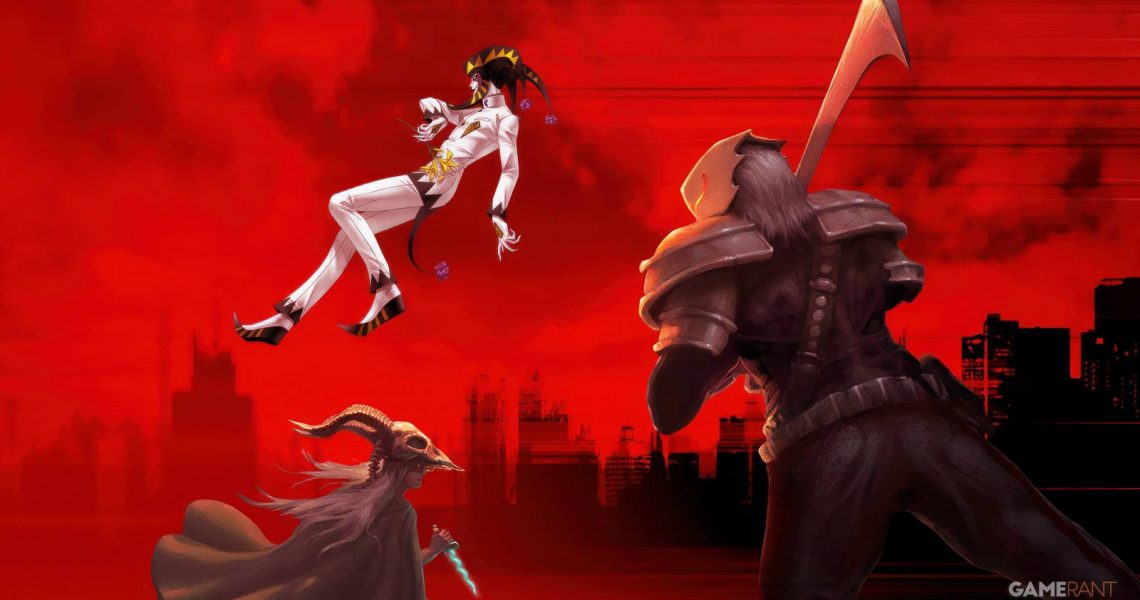
Surprisingly Deep Free-to-Play RPG on Steam Plays Like Slay the Spire Wrapped in Persona’s Presentation
I’m no great lover of gacha games, but one title currently available on Steam, iOS, and Android has certainly caught my attention. It’s called Reverse: 1999, a debut live-service game from Chinese publisher-developer Bluepoch, and it pulls a fascinating magic trick by channeling both Persona and Slay the Spire through its gameplay, presentation, and story, all of which are much better than they have any right to be.
Reverse: 1999 on Steam weaves a captivating tale of time-travel, cultural strife, and society’s difficult evolution over the course of the 20th century. It’s a turn-based, party-based RPG with deck-builder elements, clearly taking a few notes from Slay the Spire with its battle mechanics, but it’s also a compelling visual novel with plenty of surprises. Indeed, if you’re on the hunt for a new free-to-play title on Steam and aren’t interested in leading gacha games like Genshin Impact or Honkai Star Rail, Reverse: 1999 might be a good detour to explore.
What Is Reverse: 1999 About?
In addition to games like Slay the Spire and Persona, Reverse: 1999 channels iconic visual novels like Steins;Gate and The House in Fata Morgana, telling a grand, ambitious science-fantasy story with a sprawling cast of unique characters. But what exactly is this story all about, and what does the game’s vague title refer to?
On the last day of 1999, a mysterious phenomenon known as the Storm threw time into disarray. The Storm’s greatest, most obvious impact is something called Reversal, a strange event taking place in different time periods. During the Storm, certain people and objects are Reversed, meaning that they are sent either forward or backward in time. The result is a story that spans from the turn of the 20th century all the way up to the Y2K era, highlighting each epoch’s respective themes and struggles.
The Storm, starting in the year 1999, could be inspired by the Y2K panic of the late 90s in real life, though such comparisons aren’t so explicit in Reverse: 1999 itself.
Before the Storm’s arrival in a given time period, humans will experience something called Storm Syndrome, which makes them hallucinate and act irrationally. Interestingly, those affected by Storm Syndrome will typically engage in behaviors informed by the dominant themes of their era. For instance, Storm-affected humans in early 1940s Europe may become war-obsessed, while 1980s humans could be overly preoccupied with material goods and money.
Against this alternate history backdrop is a struggle between Humanity and Arcanists, a race akin to the Wizards of Harry Potter: they look like humans, but possess powerful superhuman abilities. Arcanists and Humans are entangled in an intense power struggle, with an Arcanist group called Manus Vindictae seeking to leverage the Storm to create a world with only purebred Arcanists. It’s up to the protagonist, Vertin the Timekeeper, alongside her Arcanist allies, to push back against Manus Vindictae across numerous distinct time periods.
Reverse: 1999’s Tactical Deck-Based Combat Explained
Between stylish cutscenes and visual novel passages, Reverse: 1999 manifests as a card-based, turn-based game that is visually similar to games like Slay the Spire and Griftlands. It’s quite close to these games mechanically as well, though without deck-building systems, and with a far greater emphasis on party composition, not unlike a traditional JRPG.
Up to four Arcanists can be brought into any given battle, and they each have their own unique cards, randomly pulled at the start of battle and after each turn. Cards can range from tiers 1 through 3, and same-tier cards can be merged for more powerful effects. Take the Commandment V card, for example:
- Tier 1 Commandment V: deals 220% Reality damage to a single target
- Tier 2 Commandment V: deals 230% Reality damage to a single target, and inflicts the Disarm status effect for one round
- Tier 3 Commandment V: deals 350% Reality damage to a single target, and inflicts the Disarm status effect for two rounds
Slay the Spire does something similar with its card upgrade system, but this is a process that takes place outside of battle. By integrating this temporary upgrade/buff mechanic mid-battle, Reverse: 1999 creates another layer of strategy, as players have to decide whether to be aggressive or bide their time by merging and empowering cards. Characters will also gain Moxie upon using or merging cards, and once Moxie reaches its max, a character can use their specific Ultimate ability.
Progression in Reverse: 1999 also features some unique twists. In addition to basic leveling and pulling for high-rank characters, the game has a Resonance system, which is comparable to the build-crafting mechanics of Nier: Automata and Dredge: You can increase character stats by positioning Tetris-like cubes on a grid, adding a fun spatial reasoning mini-game to the progression process. More than being a cool novelty, the Resonance mechanic further deepens Reverse: 1999‘s RPG build-crafting, offering more flexibility and freedom.
Reverse: 1999 Has an Undeniable X-Factor
The above is only a cursory overview of Reverse: 1999. Several other worthwhile surprises are waiting for players, like a persistent resource management mini-game and frequent in-game events. But something worth commenting on is the game’s overall personality and presentation. Similar to Persona and other Atlus games like Metaphor: Refantazio, Reverse: 1999 capitalizes on every opportunity to inject flair and style. For instance, the startup menu, mission select screen, and stats overview screens are all stunning and sophisticated, which is something that can often be overlooked in Atlus titles, but is still inextricable from their identity.
This is to say nothing of the more substantial manifestations of the game’s design philosophy. Cutscenes in particular, while not especially advanced compared to AAA games, manage to be striking and effective thanks to mixed visual styles, carefully crafted background art, and unforgettable character designs. All these sensibilities make Reverse: 1999 a consistent treat for the senses, even when adhering to the traditionally basic visual novel structure.