$900 million Raised. 12 Years in Development. So Why Isn’t Star Citizen Done Yet?
Regardless of what the future holds, Star Citizen will probably be remembered as an historic chapter of gaming history. The game, conceptualized by Wing Commander creator Chris Roberts, has been in full development since 2012, when it kicked off a crowdfunding campaign with an early goal of $2,000,000 USD. Roberts and Cloud Imperium Games, the studio he started specifically for Star Citizen, experienced so much early success with the campaign that the donation website actually crashed intermittently, prompting a Kickstarter campaign to run concurrently. Since then, Star Citizen has raised more than $900-million, making it the most heavily crowdfunded game of all time.
And that number continues to climb, because Star Citizen isn’t out yet. In fact, Cloud Imperium Games has yet to even issue a release date for the game, despite raking in cash hand-over-fist during this lengthy early access period. This makes it not only a notable project on the more niche crowdfunding stage, but within the world of gaming as a whole: Star Citizen has been in active development longer than many of the most notorious “development hell” projects, joining the ranks of Duke Nukem Forever and Beyond Good and Evil 2. Unlike those much-maligned games, though, Star Citizen is technically playable, and even has an active playerbase. So what’s the deal?
Why Star Citizen Has Taken So Long in Development

Star Citizen’s Ambition Continues to Swell
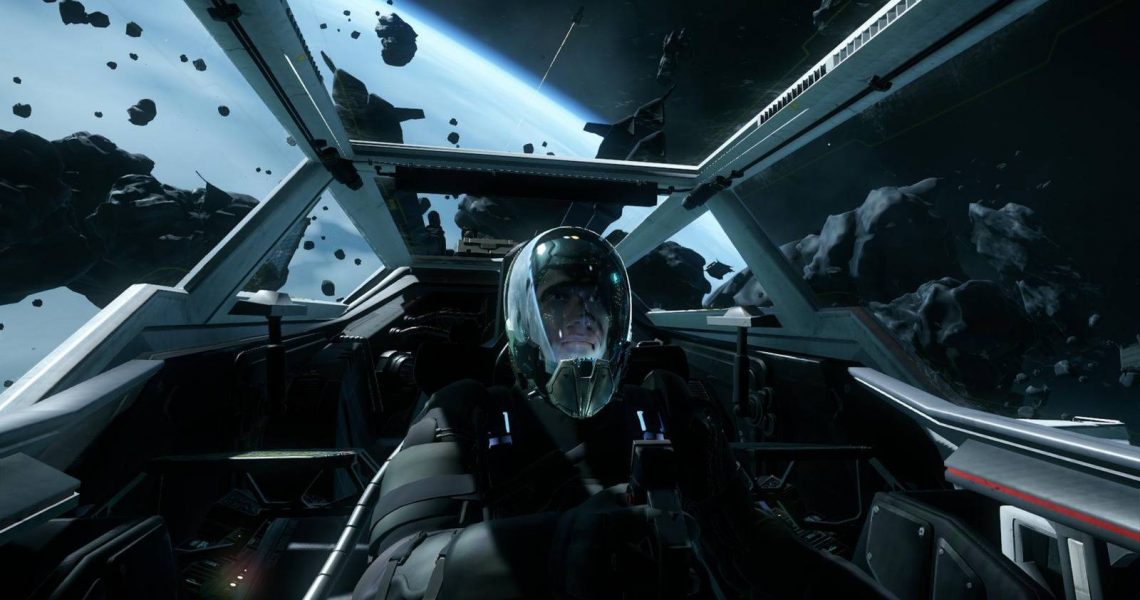
Put succinctly, Star Citizen is a space-themed sandbox MMO. The vision of the game is one of a galactic life simulator, wherein players can pursue a number of different careers, such as cargo hauling, space piracy, and mining, within a broader multiplayer framework. Each career has its own progression and improvement path, and is quite freeform. Cloud Imperium Games calls this massive sandbox Star Citizen‘s Persistent Universe, a platform meant to serve as the backdrop for more driven, tightly crafted gameplay loops.
Within these gameplay loops is a consistently high level of both visual and technical fidelity; Star Citizen is extremely simulation-like at times. For instance, players have a dedicated health bar for each limb, and depleting one of these health bars will lead to a persistent injury that needs to be treated by an in-game doctor. This sort of feature is relatively common in single-player games like Fallout 3, but virtually unheard of in an always-online MMO. As such, it’s impressive and adds depth.

But then there are other elements of Star Citizen‘s ambition that raise some eyebrows, prompting accusations of “feature creep.” Particularly infamous examples include face-over-IP (FoIP), a face-tracking software meant to track players’ facial expressions via webcam and map those expressions to their in-game avatars, and an update specifically targeting NPC interactions with bedsheets. Cloud Imperium Games argues that these granular improvements aren’t indicative of feature creep, but are rather integral parts of the immersive, high-fidelity sandbox. Either way, the continued growth of Star Citizen‘s features suite makes for a costly, lengthy development process.
Squadron 42
Worth particular attention is Squadron 42, a story-driven game nested within the Star Citizen world. It was originally meant to be a smaller, tutorial-like stretch of the game, introducing players to the fundamentals of its persistent MMO world. Over time, it ballooned in scope, eventually growing into a complete game developed by its own studio: Foundry 42, helmed by Erin Roberts, Chris Roberts’ brother. Squadron 42 even nabbed a star-studded cast, including such esteemed actors as:
- Gary Oldman
- Gillian Anderson
- Mark Strong
- Henry Cavill
- Ben Mendelsohn
Originally slated for a 2014 release, Squadron 42 suffered repeated delays, and is currently slated for a 2026 launch—12 years after its original release window. Even then, Star Citizen‘s Director of Content Jared Huckaby cast doubt on this revised prediction in September 2025, saying, “I don’t know if we’re going to make it.”
Squadron 42 is, in a sense, Star Citizen‘s greatest example of feature creep. It started small, and has mutated into a Hollywood-level production, taking up considerable time and resources. It has also cast extra doubt on Star Citizen‘s broader release: if Cloud Imperium Games can’t even launch the single-player game within a reasonable timeframe, how can they be expected to manage its MMO counterpart, which is far more ambitious and complex by comparison?
Why Star Citizen Doesn’t Follow a Typical Production Pipeline

Star Citizen‘s unusual development process has been sustained for a simple reason: it’s been working. No, Star Citizen hasn’t technically been released, but its early access modules, including a fairly advanced rendition of the Persistent Universe, generate revenue through the Pledge Store, a digital storefront that sells in-game items like ships and cosmetics. This is perhaps the most controversial element of the Star Citizen project: the Pledge Store is essentially a microtransaction marketplace in an unfinished game. It’s also notoriously expensive, with Game Packages selling for as much as $1,150.
Star Citizen has also received private funding from firms like Calder Family Office and Snoot Entertainment (which is not counted in that $900-million crowdfunding figure, by the way), and some of these firms have actually reinvested, indicating confidence in the game. This, combined with the well over 6-million independent backers, means that Cloud Imperium Games is continuously gaining funding, despite not actually releasing the 1.0 version of Star Citizen. In this scenario, why not take as long as possible to develop the game?
That’s the justification offered by Chris Roberts, who once said Squadron 42 would “be done when it is done,” and that “I am not willing to compromise the development of a game I believe in with all my heart and soul.” Others have had far less romantic interpretations, going as far as accusing Star Citizen of being a scam.
What to Expect From Star Citizen’s Release
It shouldn’t come as much of a surprise at this point, but Star Citizen has yet to get a locked-in release date. As previously mentioned, Squadron 42 has a tentative 2026 release window, but the 1.0 version of the Star Citizen MMO, which is positioned as the main course, is still up in the air. Fans have speculated that it could exit early access in 2027, but it’s anyone’s ballgame at this stage.
Is Star Citizen Worth Your Time?

Since Star Citizen is technically playable, some gamers may arrive at a reasonable question: should I get invested? To buy into Star Citizen‘s early access, you need to purchase one of several Game Packages, the cheapest of which being the $45 Citizen Starter Pack. This includes the Mustang Alpha ship and some in-game currency alongside a digital download.
Once you’re in the game, there’s actually quite a bit to do. The Persistent Universe is vast, with several diverse planets and planetary systems to visit, careers to pursue, vehicles to purchase, enemies to shoot, and so on. There are even NPC factions with whom you can develop relationships through activities like trading and transporting. Over the years, Cloud Imperium Games has continued to add fairly well-wrought missions, PvPvE environs, and other combat-centric encounters.

Star Citizen is already massive and incredibly impressive in some ways, but if you purchase a Game Package today, you’ll still be buying into a promise rather than a full-fledged game. Because for all the content that’s on offer, essentially all of it is centered around emergent gameplay or UGC: there are no real gameplay loops or quest chains. Put another way, Star Citizen lacks the structure offered by narrative, progression systems, and the like. But for those seeking little more than a technically impressive sandbox to mess around in, Star Citizen might scratch a certain itch. If you want a game that’s actually finished, you’ll have to wait a little (or a lot) longer.


- Engine
-
star engine
- Multiplayer
-
Local Multiplayer