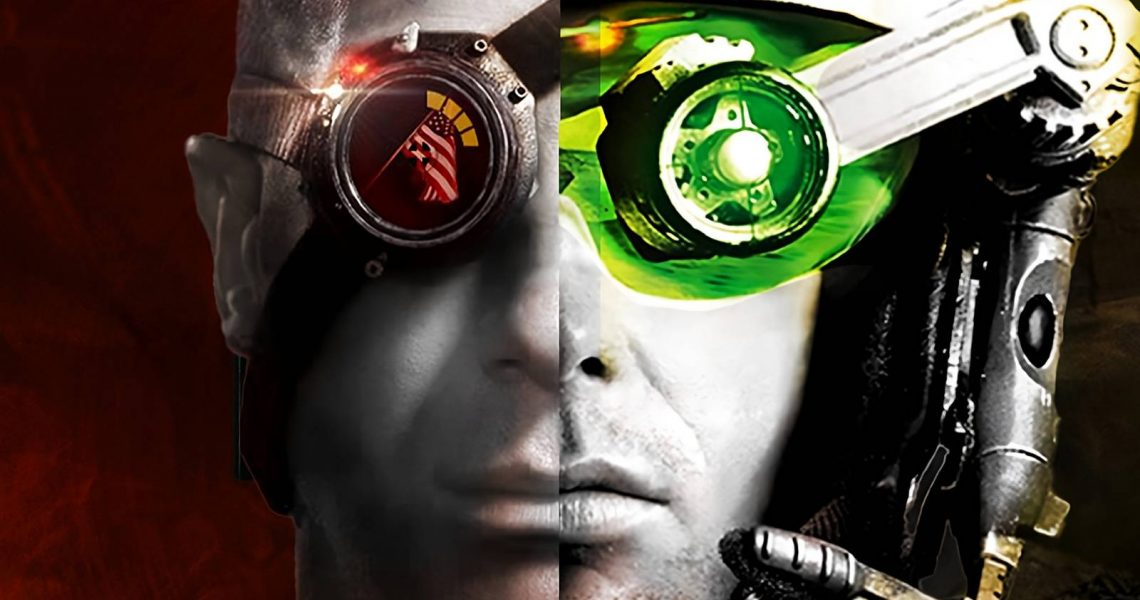
What happened to the Command & Conquer Franchise and will we ever see Red Alert 4?
Younger gamers may not be too familiar with Command & Conquer, but there was once a time when the IP was virtually synonymous with the real-time strategy genre. The first Command & Conquer game, which was released in 1995 and predates genre juggernauts like StarCraft and Total War, kicked off a dynasty of trend-setting strategy titles and spin-offs, paving the way for a franchise flooded with iconic releases.
The first Command & Conquer enjoyed major success and was immediately followed by the Command & Conquer: Red Alert spin-off in 1996. The strong commercial and critical performance of Red Alert led to a bifurcation of the series, with the mainline games being called the Tiberian games, after the fictional substance at the heart of their multi-game plot. The series would be prolific throughout the 2000s, receiving several mainline and spin-off installments, including the FPS Command & Conquer: Renegade. But despite its reach, prestige, and bustling online multiplayer and modding community, Command & Conquer mostly fell off the face of the earth by the end of the decade, with the last official mainline entry being Command & Conquer 4: Tiberian Twilight in early 2010.
The Golden Age of Command & Conquer
Westwood Studios’ first major RTS actually had nothing to do with Command & Conquer: the Vegas-based studio initially found success with Dune 2 in 1993. Despite this game being warmly received, Westwood opted instead to craft a different IP, one built around distinct terrain, lore, and technology. Thus, the first Command & Conquer was born.
Command & Conquer is set in the near future, after humanity has come into contact with Tiberium, an enigmatic substance with extreme value matched only by its volatility and hazardous effects. A cultish society called the Brotherhood of Nod claims to have foretold the arrival of Tiberium, worshiping it as a sort of sacred manna. This puts the group at odds with the Global Defense Initiative, a transnational anti-terrorist organization. The game is forked into two different campaigns, one where the player supports the Global Defense Initiative, and one where they work for the Brotherhood of Nod.
This near-future sci-fi premise and split campaign structure would come to define Command & Conquer moving forward. The series was effectively broken into two main collections:
- The Tiberian Command & Conquer games follow the story premise established by the first Command & Conquer. Known to have more serious themes and increasingly prominent science-fiction elements.
- The Red Alert Command & Conquer games take place before humanity makes contact with Tiberium. They follow an alternate history premise where the Soviet Union launches a major offensive against the Ally nations. Known to have a more lighthearted tone, which became more pronounced with each entry.
The Turning Point of Command & Conquer
Electronic Arts bought Westwood Studios in 1998, just two years after the release of the first Red Alert. EA oversaw Westwood Studios as it developed and shipped Command & Conquer: Tiberian Sun, Red Alert 2, and Renegade, the FPS spin-off. Despite these games being well-received critically, EA deemed that Renegade and Earth & Beyond, a fledgling MMO project from Westwood, failed to meet sales expectations. Westwood Studios was officially closed in 2003, and development of the Command & Conquer franchise was transferred to EA Los Angeles.
Several Westwood developers would go on to form Petroglyph Games, known for original projects like Guardians of Graxia and 8-Bit Armies.
EA Los Angeles was able to do justice to the Command & Conquer legacy for a few entries, shipping well-regarded games like Command & Conquer: Generals and Command & Conquer 3: Tiberian Wars. The LA outfit also proved that it could successfully oscillate between the Tiberian and Red Alert C&C games. But many longtime fans agreed that EA Los Angeles had only refined and built upon what Westwood had already created. The Command & Conquer franchise was running low on new ideas.
Those new ideas would come, but not in the way most players wanted. While Generals, Tiberian Wars, and Red Alert 3 were generally well-received, Command & Conquer 4: Tiberian Twilight marked a new critical and commercial low for the series. Critics and players alike argued that, among other problems, Tiberian Twilight was too different from the original C&C formula, de-emphasizing or removing key mechanics like resource gathering.
How Command & Conquer Unraveled
Tiberian Twilight isn’t without its merits, but it was the beginning of the end for Command & Conquer. The game was the worst-reviewed entry in the series by a considerable margin, sitting at a troubling 64 aggregate on Metacritic. Sadly, future Command & Conquer games would do little to reverse this downslide.
EA Los Angeles rebranded to Danger Close Games in 2010, shifting its focus to the Medal of Honor series. Command & Conquer was split between EA Phenomic and EA Redwood Studios, which produced Command & Conquer: Tiberium Alliances and Command & Conquer: Rivals, respectively. Tiberium Alliances was swiftly met with accusations of plagiarizing Warhammer 40,000, and while EA put out this fire early on, the final result was still underwhelming. The 2012 MMORTS was mostly written off as a lukewarm, watered-down game that had precious little in common with C&C fundamentals.
Command & Conquer: Rivals fared even worse. Released in 2018, this mobile free-to-play game has only a cursory connection to the broader C&C franchise, and although it’s maintained a somewhat loyal mobile audience, it’s widely considered one of the worst entries in the series.
Failed Reboots and a Niche Market

Command & Conquer remains iconic and beloved by many, no thanks to its most recent entries. EA made an attempt to revitalize the series in the wake of Tiberian Twilight, announcing Command & Conquer: Generals 2 in 2011. This might have had promise, considering the strong reception to the first Generals, but Generals 2 was quickly turned into a free-to-play mobile game simply called Command & Conquer, originally being slated for a 2013 release. But according to EA, early access player feedback was so negative that it warranted a complete cancellation. The FTP reboot was thereby scrapped, and its developer, Victory Games, was shut down.
Today, the perception of the Command & Conquer mobile game is somewhat mixed. Among those who claimed to have played the beta version, positive sentiment isn’t rare, although it’s hard to say if its broader reception would have reflected such optimism. Either way, the Command & Conquer mobile game marks the last time EA took an honest, public crack at continuing the fundamentals of the series. Since then, audiences have only seen remasters and the likes of Command & Conquer: Rivals.
What Would Need to Happen for Red Alert 4 to Exist
EA may be trying to gauge contemporary interest in the Command & Conquer IP before making any serious moves. 2020’s Command & Conquer Remastered Collection, which includes upgraded versions of the first Command & Conquer and the first Red Alert, was well-received. This may have prompted EA to release 2024’s Command & Conquer: The Ultimate Collection, which includes every C&C game up to Tiberian Twilight.
While Command & Conquer has never been truly forgotten, it has stagnated quite a bit, and these remaster collections could help generate further interest in the series. If the hype is deemed significant enough, EA could very well bring C&C back. The publisher has seen success in rebooting or remaking its older IP, such as Dead Space and Skate. A new Red Alert game would be next on the docket for C&C, and could be just the shot in the arm that the IP needs. And with the RTS genre having something of a minor renaissance now, with games like Tempest Rising and Age of Empires 4 signifying a new dawn, there’s plenty of relevant, high-profile talent for EA to mine.