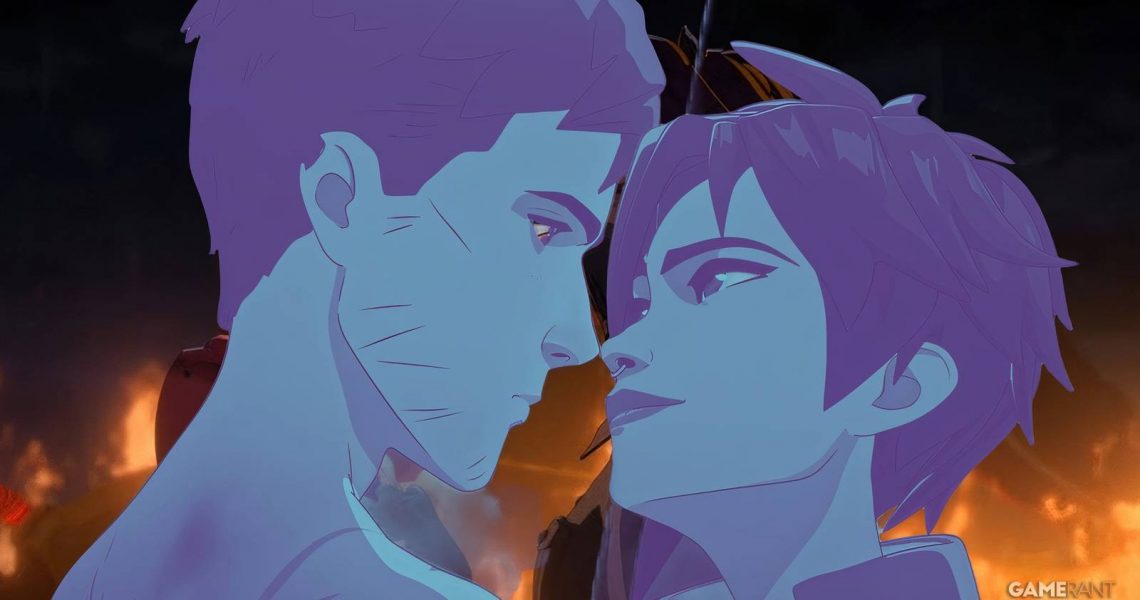
Only 28% of Dispatch Players Got the Bad Ending. I Was One of Them, But I Don’t Regret It.
Spoilers for all Dispatch episodes ahead.
One of the reasons I love narrative-driven games is the way strong characters can pull me in. Dispatch’s cast of misfits did precisely that. Playing as Robert Robertson, I took the mentor role seriously. I read early resistance as the reasonable caution of people who’ve been failed by authority before. The game practically begged me to put every workplace-psychological-safety training I’ve ever taken into full digital practice. Vulnerability builds trust, after all, and AdHoc Studios’ debut title is full of characters who wear their wounds openly. Leading them meant showing up the way they deserved.
But trust goes both ways, and not everyone in the Z-Team met me halfway. Invisigal, especially, made that gap hard to ignore. While others slowly let their guard down, she doubled hers. Invisigal wrapped misdirection in half-truths until every interaction felt more like a parade of red flags than a breakthrough. I kept hoping she’d offer a reason to rely on her, yet as Dispatch‘s stakes rose, she became the one member who consistently destabilized me. Those red flags didn’t just add tension; they nudged me toward the path only 28% of players ended up taking.
Dispatch’s Invisigal Started As An Underdog For Me

When I first met the Z-Team, it was love at first sight. Dispatch’s characters are simply outstanding. Every member is immediately memorable, visually expressive, and perfectly calibrated to their background. Their prickly, standoffish personalities only made them more compelling. Invisigal fits that mold beautifully. There were so many reasons I wanted to love her—earnestly, fully, without reservation.
- Her design already tells a story: I knew Invisigal was a romance option before I started Dispatch, and even though I committed to a Blonde Blazer run early, the contrast between those two fascinated me. Blonde Blazer is framed as an ideal: strong, statuesque, beautiful, and reliably principled. Invisigal is her visual opposite—small, angular, and undeniably scrappy. But there’s something deeply endearing beneath that roughness. Her design suggests a woman who’s had to survive more than she should have, someone who learned to be sharp because softness wasn’t safe.
- The game wants you to care about her: It’s obvious that Invisigal was a writer’s room favorite. Her backstory, motivations, and major beats are handled with striking intentionality. When it’s her turn in the spotlight, Dispatch doesn’t just nudge you toward her. It stops the entire narrative and holds your attention there.
- Her powers are weirdly relatable: This may sound silly, but as a fellow severe asthmatic who has to carry an emergency inhaler everywhere, the idea that her invisibility only works if she holds her breath hits me right in the empathy. Characters with disabilities in gaming are already rare, so this small detail made her feel human in a deeply personal way.
Altogether, Invisigal started as the perfect underdog: visually compelling, narratively rich, and just fragile enough to inspire genuine investment. I wanted to root for her.

…And Then It All Went Downhill
At first, I kept telling myself Invisigal just needed time, space, and a mentor who wouldn’t dismiss her as “difficult.” But the longer we worked together, the clearer it became that something fundamental wasn’t aligning. Her early and understandable disregard slowly morphed into a repeating cycle: a moment of consequence followed by a retreat, a half-truth masked as vulnerability, a sharp defensive quip right after what felt like genuine progress.

It wasn’t that she lacked depth. She had it in abundance, like every compelling Z-Team member in Dispatch, but the pattern exhausted me. I’d extend trust, she’d stretch it thin. I’d repair rapport, she’d reframe it as another test. And somewhere between the small betrayals, the emotional whiplash, and the flashes of sweetness that never quite stuck, I realized I wasn’t building trust anymore. I was managing damage.

Should You Have Dinner with Blazer or Movies with Invisigal in Dispatch Episode 4?
The final choice in Episode 4 can be a difficult one for players to make in Dispatch. Here’s what you should do.
I Got Dispatch’s Bad Ending. And I Stand By It.

Why I Couldn’t Keep Forgiving Invisigal
- Constantly Undermining Orders: From the start, I understood that Dispatch wanted me to earn the Z-Team’s trust. The early insults and the relentless dragging of Robert were part of that growing pain, but even then, the team still followed through. They challenged Robert, not the mission. Invisigal, on the other hand, repeatedly took those challenges a step too far. The moment at Granny’s Donut Shop in Episode 2 was the first of many offenses. She followed her “gut,” and her gut led straight into an avoidable mess. It wasn’t rebellion with purpose; it was impulsivity without foresight, consistently putting others at risk.
- The Uncomfortable Sexual Tension: Dispatch is an HR violation simulator masquerading as a superhero game, and I fully accepted that when I committed to a Blonde Blazer romance run. That route has eyebrow raises, sure, but it’s messy because these things, well, happen in real life. Invisigal’s version of flirtation veered into crude, uncomfortable territory, especially following the dream sequence. Her comments often felt invasive rather than endearing, pushing past “messy realism” into behavior that genuinely read as inappropriate. She may be Dispatch’s most romanced character, but I couldn’t get past the tone of it all.
- Chase Deserved Better: Chase’s fate in Dispatch Episode 6 was the final fracture for me. I adore Chase. His hilarious dialogue, his friendship with Robert, and his willingness to put himself on the line made him an emotional backbone. When Invisigal’s recklessness backed him into a corner and he became the one in danger, it crossed a line I couldn’t uncross. Leadership means making choices that keep everyone safe—not prioritizing one unpredictable team member over another. If Chase hadn’t intervened, someone else would’ve been forced to. Invisigal didn’t just make a mistake; she made someone else pay for it.
- The Team Finally Said What I Was Thinking: By Episode 7, the rest of the Z-Team heroes reached their limit. I genuinely respected the unity of that moment. These misfits, who bicker and banter and undercut each other constantly, finally came together to say something real. Invisigal’s volatility wasn’t just inconvenient anymore; it was dangerous. Their reasoning was uncharacteristically serious. When they told me she had to go, I didn’t feel manipulated by the narrative. As a dispatcher, you can’t let one person become “special” at the cost of everyone else. The team saw that clearly, so did I.

Why I Don’t Regret the Bad Ending
When I unlocked Dispatch’s bad ending (one that only 28% of players reached), it didn’t feel like punishment. It was a natural consequence of the choices that made sense for my story. It fit. It landed. It was genuinely satisfying.
The bad ending isn’t my badge of shame. It’s my canon. It reinforced exactly why I adore choice-driven games that respect emotional logic. My run with Invisigal wasn’t destined for trust, and the game didn’t twist itself into knots trying to make it work. It honored the path I walked, even when that path led straight into narrative fallout.

And honestly? It’s the most interesting version of events. The messiest. The one full of unresolved tension and consequences that promise even richer story threads in a potential Dispatch Season 2. I didn’t get the feel-good finale. I got the one that made sense, and that’s why I wouldn’t change a single decision.

Dispatch


- Released
-
October 22, 2025
- ESRB
-
Mature 17+ / Blood, Crude Humor, Intense Violence, Nudity, Sexual Content, Strong Language, Use of Drugs and Alcohol
- Developer(s)
-
AdHoc Studio
- Publisher(s)
-
AdHoc Studio
- Number of Players
-
Single-player