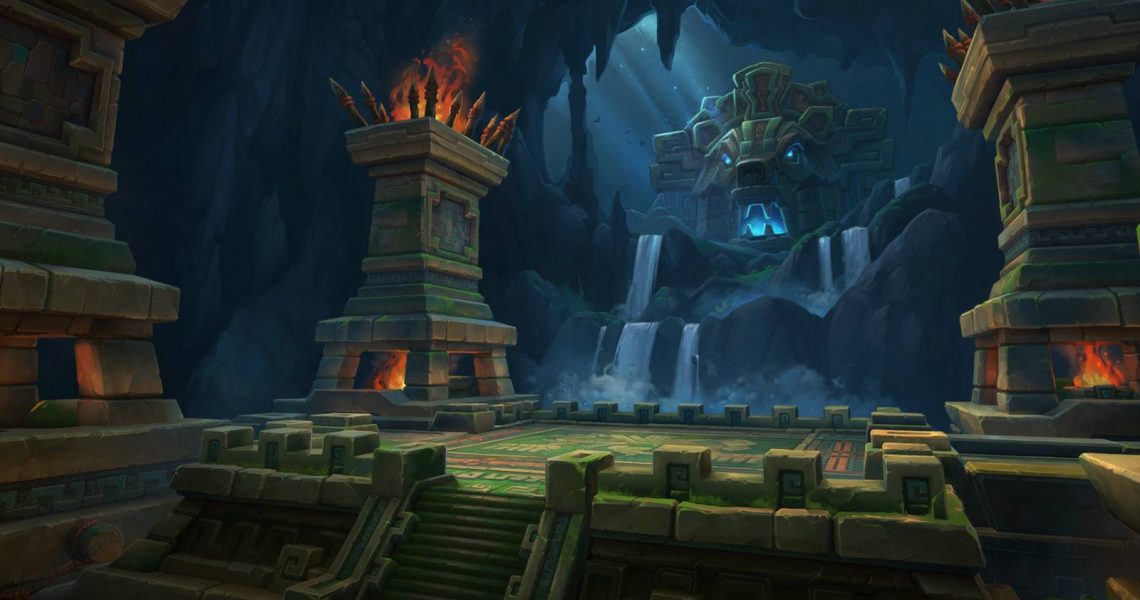
World of Warcraft Designers Discuss Zul’Aman and the Prey System
World of Warcraft: Midnight is nearly here, with early access for Epic Edition owners on February 26 ahead of the March 2 release. This expansion introduces tons of new content, including a revamped version of two familiar locations from The Burning Crusade: Eversong Woods and Zul’Aman. Additionally, a new endgame feature called Prey is being introduced in this World of Warcraft expansion, featuring dynamic, multi-stage encounters against personal nemeses.
GameRant talked with game designer Jake Shillan, who did a lot of work on the Zul’Aman zone, and senior game designer Kim Flack, one of the minds who developed the Prey system. Of the new zones, Zul’Aman was quite possibly one of Midnight‘s most important and difficult challenges, and of its new features, Prey may be one of its most transformative. Both developers shared the love that was put into both parts of the expansion and explained how they made sure the features lived up to player expectations.

‘There’s Fun In Not Knowing Exactly What’s Going to Happen’ WoW Developers On Dungeons and Raids In a Post-Addonpocalypse World
World of Warcraft: Midnight developers Paul Kubit and Dylan Barker share insights on designing an expansion with fewer addons in play.
‘This Culture’s Been Here the Whole Time’: World of Warcraft on Building the Amani of Zul’Aman For Midnight
Warcraft’s OG Troll Tribe Finally Gets Its Time In the Sun
Forest Trolls, also known as Amani Trolls, were the first ones to be introduced to the setting back in Warcraft 2. It was at this time that Zul’jin, chieftain of the Amani, allied with the Horde during the Second War, before eventually splitting off after Orgrim Doomhammer broke his end of their agreement. The Darkspear Troll tribe then rose to prominence in Warcraft 3 when they became staunch allies of Thrall’s Horde, later becoming playable in vanilla WoW, with the Zandalari Trolls joining in Battle for Azeroth.
Who’s That Character?

Identify the silhouettes before time runs out.
Identify the silhouettes before time runs out.
Easy (7.5s)Medium (5.0s)Hard (2.5s)Permadeath (2.5s)
The Amani appeared in World of Warcraft as well, but for over 20 years, they have only been prominently featured as antagonists. “Zul’Aman was an interesting case because everybody knows them, they’ve been around for so long,” Shillan said. “But really, can you name many Amani trolls? Maybe you can name Malacrass. You can definitely name Zul’jin. But that’s where the buck stops. And they’ve always been mostly enemies, antagonists.” Despite being around for the longest time, the Amani have not had their time in the spotlight.

That is all changing in Midnight. “Our goal was to make sure they weren’t just enemy fodder anymore.” In order to develop this zone, Shillan and the other devs combed through all the existing lore about the Amani, from WC2 and quests in WoW to old Warcraft books and short stories. This, of course, led them back to where it all began: Zul’jin.
“Where we came to was taking Zul’jin as a character – the Amani character with the most depth – and saying, ‘Why did he do the things he did? What is the context, not just in his life, but before his life in the history of the Amani culture? What is it that led to this person being born, being created how they were created, growing up in the environment they grew up in, and becoming Warlord Zul’Jin?’”
“But that wasn’t enough,” Shillan clarified. “We needed to make this foundation that we could launch from.” He explained that, though Zul’jin was core to the Amani experience, the culture needed to exist beyond him alone. “Put that all together. All those characters, all that story, all that background. And then go, alright, let’s times 10 it, let’s times 100 it. What’s the context? Fill in the blanks! That’s how we came to Midnight’s Zul’Aman.”
The Amani tribe, who share the name of the Amani Trolls as a whole, were the first Forest Troll tribe, but there are many other prominent tribes in Midnight as well, such as the Revantusk, Shadowpine, Witherbark, and Vilebranch.
As for Zul’Aman itself, Shillan went on to explain that “A zone is everything in it. It’s not just the ecology, the biomes. It’s the buildings, it’s the people, it’s the content, it’s the story, it’s the gossips, it’s the one-liners.” For as important as Zul’jin is in World of Warcraft, they wanted to tell new stories with these building blocks in mind, rather than just retreading old ground and being stuck in the past.

Enter Zul’jarra and Zul’jan, the focal points of the Zul’Aman story. The zone campaign follows Zul’jarra as she ascends to become hash’ey, a spiritual leader and chosen of the Loa, while Zul’jan acts as both advisor and lancer to his heroic sister. The shadow of Zul’jin looms over both of them and their people; indeed, the player character might even have been responsible for his death during WoW: The Burning Crusade‘s Zul’Aman raid. “What are the consequences of his actions 17 years ago, whether you believe they were justified or not? We see those in his grandchildren, Zul’Jarra and Zul’Jan.”

Judging from Shillan’s words, Zul’jarra and Zul’jan are not going anywhere any time soon, even once Midnight’s story is finished. “We want to make characters that make you want to see what comes next for them,” he said, with special regard to the Amani siblings. They, and the Amani as a whole, are not just a “flash in the pan,” and were designed to fill a space in Azeroth that will continue to have stories in Midnight and beyond.

This could manifest in Atal’Utek, the mysterious island that many WoW players suspect might be the Patch 12.1 zone, or in other future stories. Either way, the Amani are here to stay. “This culture’s been here the whole time,” Shillan said. “Welcome! And watch out; they’re dangerous.”
Regardless, Shillan expressed that giving the Amani this level of detail and respect was important, and that he is eager to see what fans think of them after the release of World of Warcraft: Midnight. “[We worked] so hard to try and give the appropriate space to a culture that’s been there for so long, that so many people are fans of already, and to give everybody what they want.” The Amani Trolls have existed in the lore for 30 years now, and until now, they hadn’t been given the development space many other cultures have, including some other Troll tribes.
Simply put, fans of the Amani Trolls deserved to see their favorite race given this level of attention. “We wanted to make sure we hit home with the Troll identity that people have come to know and love,” Shillan said, “and then to +1 that, we wanted to give them the Amani Troll identity that they’ve surmised, maybe they’ve seen before, but really the one that we haven’t given a full picture of.” This, of course, includes the developers themselves, many of whom grew up as fans alongside the game they now help create.
“The overwhelming majority of the people who work on World of Warcraft love World of Warcraft. They play World of Warcraft, they grew up playing World of Warcraft most likely. We want to give as much to the players because we want to give it to ourselves, too, because we are the players.”
World of Warcraft’s Prey System Is the Sum of Many Parts

A New Type of Evergreen Endgame Content Arrives In WoW: Midnight
Similarly to Zul’Aman, a great deal of passion was put into the new Prey system. In this feature, players can accept contracts from Astalor Bloodsworn to hunt targets across multiple difficulty levels. But as fans venture across the open world, these targets will hunt them back, ambushing them a number of times and leading up to a final battle. In many ways, fans have likened it to the Nemesis system from Shadow of Mordor and the World Tiers of Diablo 4.

“Getting personality into the targets was something I had as a goal,” Flack explained. Each of these marks has “pithy one-liners” when they show up to attack, and even has different quotes on each difficulty. The 30 different Prey targets range from Blood Elves and Draenei to Void creatures and other monsters. But all of them have personalities and backstories, creating unique and flavorful encounters of many varieties.
Prey pulls from many different game activities from the past. Flack compared it to Nemeses ambushing World of Warcraft players in the middle of a delve. However, the Torments available in Hard and Nightmare difficulties had several other inspirations, including:
- Mythic+ affixes
- Horrific Visions Masks
- Torghast modifiers

Of course, any system like this is going to have its kinks. Because Prey is an optional, opt-in endgame feature located in WoW‘s overworld, ensuring the system did not intrude on other players’ experiences was a challenge. Likewise, ensuring ambushes did not happen at inopportune times was something they had to contend with. “There’s been a couple of funny instances where it was like ‘Oh, I was watching a cutscene, and I came back dead.’” Prey targets, fixating adds, and other dangers will thankfully turn off while players are engaging in content where it would be hard to respond, but progress will pick up right where it left off, regardless of what they do.
From the sound of it, Prey is here to stay as well. “Prey does have a lot of vectors for exploration, deepening, and expansion in the future,” Flack admitted. While she could not share specifics, it sounded as if, like Delves from WoW: The War Within, Prey was designed to become an evergreen feature moving forward. It remains to be seen exactly how it could be implemented in future expansions, but the system should provide even more enjoyable ways to gear up for solo-focused players.


- Released
-
2026
- Multiplayer
-
Online Multiplayer, Online Co-Op