Hardcore Survival Game Features Tarkov Chaos and S.T.A.L.K.E.R. Dread
As video game development tools become more accessible and the industry expands to encompass more genres, demographics, and broader concepts, the potential for creative and ambitious games grows as well. A game called Road to Vostok, which will soon be launching in early access on Steam, is emblematic of this, with its core concept being so promising that it’ll be hard for survival fans to ignore.
Road to Vostok won’t release in early access until April 7, but it currently has a demo available on Steam.
Road to Vostok, coming from solo developer Antti, is a gritty and grim first-person survival-adventure game set in a near-future post-apocalypse. Much of Europe has seemingly been decimated, and players must navigate through a “border zone,” which is effectively a no-man’s land, between Finland and Russia. Making it through this area will land them in Vostok, a “high-risk, high-reward” zone with extremely valuable loot. Survival sim staples like permadeath and crafting mingle with thick atmosphere in Road to Vostok, but perhaps the most interesting aspect of the game is that it’s a strictly single-player experience, despite honing in on so many of the tropes associated with contemporary extraction-shooter titles.

Best Co-Op Games On Steam To Play Right Now
From online multiplayer titles to local masterpieces, Steam has plenty of fantastic co-op games that should be played in 2026.
Road to Vostok Feels Like a More Grounded Version of S.T.A.L.K.E.R.
At first brush, Road to Vostok looks most similar to the S.T.A.L.K.E.R. franchise, games based on the 1979 film of the same name, which is itself loosely based on the novel Roadside Picnic. These games, which are effectively part of a broader science-fiction subgenre stemming from Roadside Picnic, task players with entering the Chernobyl Exclusion Zone, an area surrounding the Chernobyl nuclear plant in Ukraine, which suffered from a second meltdown in this series’ universe, leading to various bizarre phenomena.
Fit the 9 games into the grid.
Road to Vostok doesn’t have the Strugatsky-inspired sci-fi trappings of the S.T.A.L.K.E.R. games, but the two IPs have some important commonalities—and not just their Eastern European setting. For its part, Road to Vostok pits players against a world of abject desolation, where anarchy has taken hold and modern society has crumbled. It’s not fantastical or supernatural, but it is surprisingly captivating and terrifying.
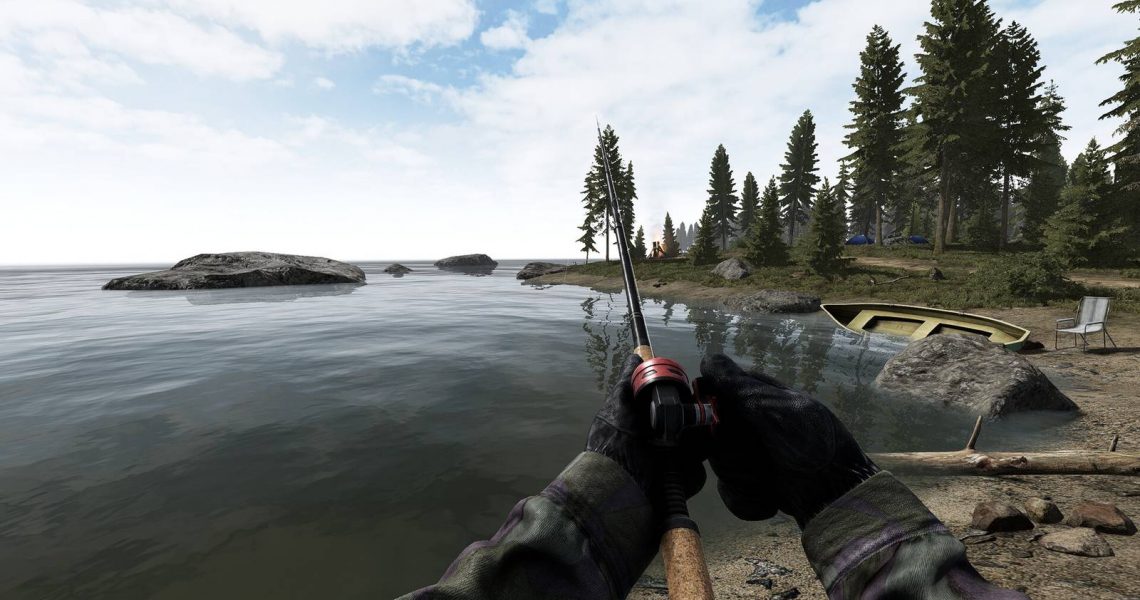
Moving through Road to Vostok’s is a serene experience, its restrained but photorealistic graphical style and natural sound design lulling you into a sense of security as you rummage through myriad buildings and rubbish piles. Any tranquility you may feel will be regularly interrupted, however, since hostile NPCs are roaming the map as well, eager to shoot you before you even know they’re there. Since the punishment for death is so severe, hearing a bullet whiz by your character’s head, when a moment ago you could only hear birds and crickets, can be quite terrifying. In the case of both tranquility and terror, Road to Vostok excels in attention to detail, bringing its “zone” to life.
Road to Vostok Aims for a Tense, Detailed-Oriented Single-Player Survival Experience
After playing the Road to Vostok demo, I’m impressed and excited for the final product, but I’d be lying if I said I wasn’t torn about the fact that it’s single-player only. As someone who has bounced off extraction shooters like ARC Raiders and Escape from Tarkov, I welcome the idea of a single-player spin on the concept; Road to Vostok’s core gameplay loop, from what I can tell, evolves around finding better and rarer loot, much like a traditional extraction shooter.
In a single-player game, the player can adapt to the behavior of the AI, mastering a more static, or at least predictable, challenge. This rigidity is why it’s enjoyable to, for instance, watch someone play Elden Ring without taking any damage. For a game like Road to Vostok, this can mean a more novel survival-extraction experience, as you don’t have to worry about the inherent unpredictability of different people, and can instead focus on mastering Vostok’s other mechanics. If nothing else, you won’t have to worry about getting wiped out by a more hardcore player while you’re still learning the ropes. And you can pause and save, which obviously facilitates long-term planning.
But by that same token, Road to Vostok being single-player only means less emergent gameplay and, potentially, fewer surprises overall. Those close calls against enemies just aren’t as cathartic or interesting when the enemies are computers rather than fellow players. But then again, I seem to be able to beat these computers a bit more easily than I can beat my fellow players, so I shouldn’t complain.
At any rate, Road to Vostok is shaping up to be a compelling survival simulation, its similarity to the multiplayer-focused extraction shooter genre being just one of its many interesting qualities. The game requires players to monitor various stats like health and hydration, but it also has a dynamic weather system, complex trade-based virtual economy, and pointedly realistic gunplay, all of which contribute to a deep sense of immersion. The fact that the game is coming from a solo developer only makes all of this more impressive and admirable. I’ll certainly be rooting for Vostok to succeed when it launches in early access soon.