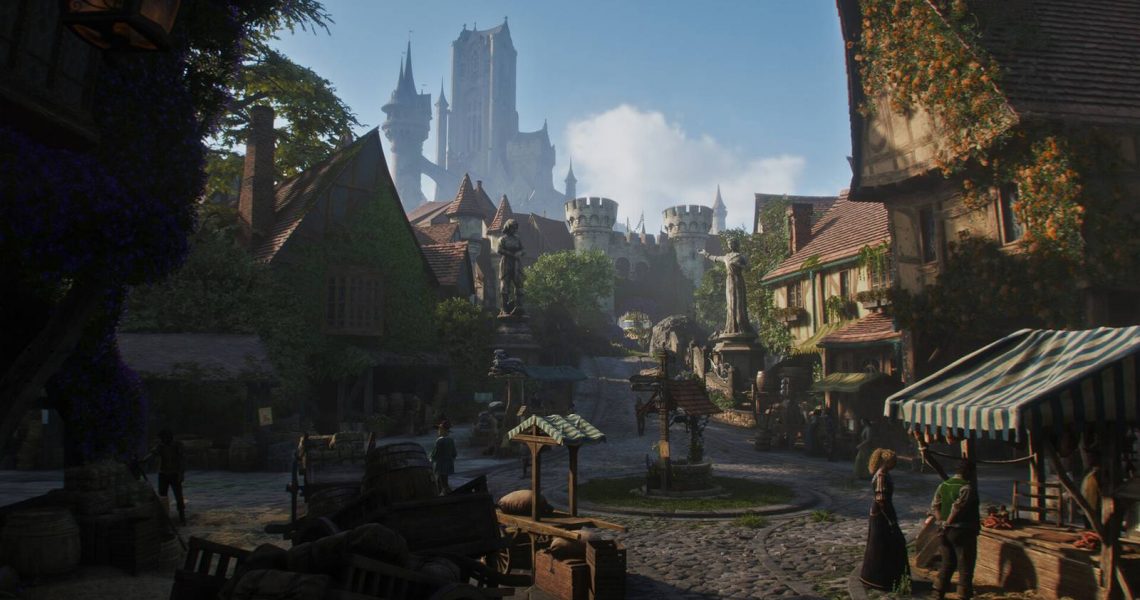
Fable Is Making One of the Original Trilogy’s Best Features Even Better, And It’s Easily Going to Eat Up My Time
I have a lot of favorite video game franchises, but none of them hit me quite like Fable. Created by Lionhead Studios, the original trilogy brought fantasy, choice, and crass British humor to the RPG world in a way no games before them had. For me, every Fable game has been an easy buy, and I have never regretted a single one of those purchases. Now, Playground Games’ upcoming Fable reboot already has my money, and I’m not at all ashamed to admit that.
Since its initial reveal, Fable has always looked fantastic, though a part of me was curious about whether it would still feel like the original trilogy. Well, after the deep dive into the game’s biggest features during the recent Xbox Developer Direct, I’m even more confident about what the long-awaited reboot will bring to the table—especially after finally learning that it will be reviving what I consider to be one of the original trilogy’s best features. And not just reviving that feature, but somehow improving it.
Fable Is Expanding on the Original Trilogy’s Property Ownership System
Of course, I wanted the Fable reboot to somehow capture the magic of the original games, but I put my hope in Playground Games to understand the task ahead of it and design the game accordingly. This is a franchise that many fans like me hold near and dear to our hearts, and I was always fairly certain that PG understood that and would take the project seriously. One thing I wasn’t sure about, however, was whether Fable would bring back the original trilogy’s property ownership and real estate system that I probably enjoyed a little too much.
I Poured Way Too Many Hours Into Fable 2’s Real Estate System
Property ownership has always been a feature in Fable, but it was very limited at first. In the first game, it was only possible to buy specific houses in certain towns, and ownership was mostly about having a place to sleep and earning a small amount of passive income. You could marry and live in those houses, and you could rent them out if you didn’t live there yourself. It wasn’t until Fable 2 that the franchise introduced a more fleshed-out real estate and landlord system that allowed you to purchase nearly every house in Albion, along with shops, stalls, and businesses that would earn you a passive income.
Fable 2‘s property ownership went from being a mere side activity to what I would consider a core part of its gameplay. Players could set rent and prices on the homes and shops they owned, and then those choices would ripple outward through NPC reactions, town prosperity, and the Hero’s own alignment. Pushing rents too high made money fast, but could also result in resentment, corruption, and even visible decay, while fair pricing helped towns thrive and kept public opinion on your side. It turned real estate into a genuine role-playing path, where getting rich quickly came with consequences.
But the reason I poured so many hours into it is not just because there were countless properties to own, but because you could furnish the houses. Every day, the furniture store would feature new furniture available for purchase, and my personal goal was to make sure every single house that I owned in Albion had the best furniture. I didn’t even really need to do that, but it was important to me, and it fulfilled my benevolent gamer side. I was essentially able to build the kind of Albion I wanted to exist in, and now it looks like I’ll be able to do that once again in the upcoming Fable reboot.
How the Fable Reboot Is Improving the Series’ Property Ownership and Real Estate System
- OVER 1,000 UNIQUE NAMED NPCS replace generic tenants with fully voiced characters who have unique identities, jobs, routines, and personalities.
- EVICTION HAS VISIBLE CONSEQUENCES, as NPCs can lose their homes and end up sleeping on the streets rather than simply affecting a hidden morality value.
- HOUSING AND EMPLOYMENT ARE DIRECTLY LINKED, allowing NPCs to work in businesses you own while also living in properties you control.
- PROPERTY OWNERSHIP FEEDS A LIVING ECONOMY, where housing, jobs, routines, and reputation influence one another instead of operating as isolated systems.
- REPUTATION IS BUILT THROUGH SPECIFIC ACTIONS, with NPCs forming opinions based on how your decisions affect their actual lives.
- PLAYERS CAN OBSERVE OUTCOMES FIRSTHAND, following NPCs through their daily routines to see how ownership choices change their behavior.
- REAL ESTATE BECOMES A CORE SIMULATION PILLAR, expanding beyond passive income into a systemic, people-driven “game within the game.”
What really excites me the most about the Fable reboot’s take on the series’ property ownership and real estate system is how personal it already feels. Based on what was shown during the Xbox Developer Direct, the system hasn’t felt this personal since Fable 2, since Fable 3 made it all more of a top-down town management simulator where you could essentially avoid interacting with townspeople and focus more on the financial side of things. The upcoming Fable reboot, on the other hand, looks like it will be bringing me back to a street-level viewpoint, where I can actually witness the weight of every decision I make in real estate firsthand.

Essentially, Playground Games’ Fable reboot is taking the hands-on approach to the system that I’ve missed from Fable 2. Owning a business isn’t just about collecting money anymore, but specifically about the people involved. If I hire someone to work in one of my shops, that is a real person with a routine and an opinion of me, and there is something inherently very Fable about knowing they might actually appreciate that I gave them a job. Rather than watching a number tick up or seeing that money come in, then, the reboot seems to actually make ownership feel like an active role I’m playing rather than a passive perk.
What really excites me the most about the Fable reboot’s take on the series’ property ownership and real estate system is how personal it already feels.
On the flip side, the same goes for the darker choices I make. If I evict someone from a house I own, that decision isn’t just going to disappear into Fable‘s morality system, but from the looks of things, it will follow me wherever I go. That person remembers it, reacts to it, and carries that bitterness with them as they go about their life in Albion. The next time I see them, their disposition toward me will have changed, and it seems like that one individual’s opinion can even go on to shape how the public at large thinks of me. I’ve always loved that about this series, and seeing it applied directly to property ownership now makes it feel like Playground Games really understands why people like me sunk so much time into real estate in Fable 2.
I know there is a lot more to Fable than just property ownership, but considering I was really hoping the reboot would bring it back, seeing how much it aims to improve it just has me ecstatic. More than ever, this little “game within a game” is going to play an even bigger role in the iconic choice-based mechanics Fable has always been known for, and that alone makes me feel really good about where it’s headed. If the reboot is giving this much thought to something as specific as property ownership, then I can’t wait to see how the rest of the game comes together. At this point, I’m more than ready to sink way too many hours into Albion all over again.



- Released
-
2026
- Publisher(s)
-
Xbox Game Studios
- Engine
-
unreal engine 4, forza tech