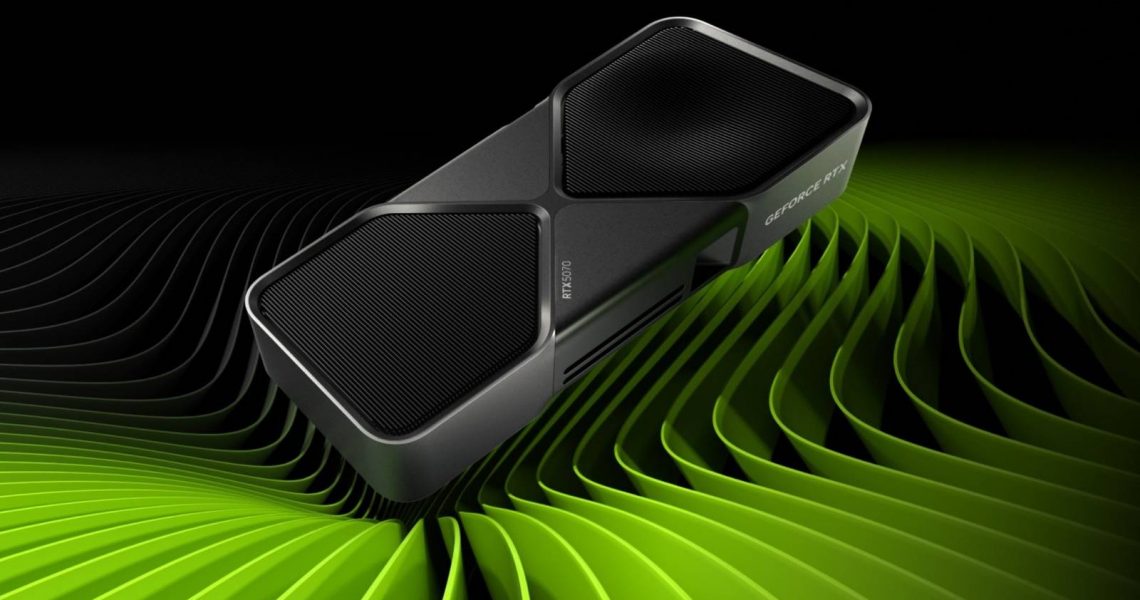
Nvidia Reportedly Cuts RTX 5070 Ti GPU Production
Nvidia is reportedly ending production of the GeForce RTX 5070 Ti graphics card, according to statements from Asus, one of Nvidia’s largest add-in-board (AIB) partners. The RTX 5070 Ti is not the only Nvidia graphics card on the chopping block for Asus in particular, as the RTX 5060 Ti is reportedly also reaching end-of-life status due to the ongoing DRAM shortage crisis affecting the entire tech industry.
Since October 2025, around 40% of the world’s RAM wafer supply has been reserved by OpenAI for its AI-based server infrastructure plans. Ergo, prices on RAM, solid-state drives (SSDs), and other PC components have spiked across the board. RAM kits have been hit the hardest, with DDR5 kits quadrupling in price throughout the fall of 2025. Additionally, one of the globe’s largest RAM manufacturers, Micron, stated it was exiting the consumer sector in favor of enterprise manufacturing. Micron stated that it does not expect the RAM shortage crisis to be resolved anytime soon, and predicted the crisis would last through 2026 at least.

11 Years After Launch, Fallout 4 is Suddenly Blowing Up All Over Again
Fallout 4 is enjoying a massive player count boost at the moment, 11 years after its 2015 launch.
The RTX 5070 Ti Reaches End-of-Life Status
Given that Nvidia has previously stated it would start cutting GPU production in response to the RAM crisis, it appears one of the tech giant’s AIB partners has followed through with its plans. Asus confirmed to Hardware Unboxed that it was no longer producing RTX 5070 Ti graphics cards due to the ongoing shortages, and that the RTX 5060 Ti would soon follow. Although no other AIB partners have publicly stated their plans for the RTX 5070 Ti or RTX 5060 Ti, Asus’ decision to no longer make them could have major ramifications across the GPU market. As of this writing, the Asus models of the GeForce RTX 5070 Ti were sold out on Newegg, though a few Asus RTX 5070 Ti kits were still available on Amazon for marked-up prices. Additionally, RTX 5070 Ti cards from brands like MSI and Zotac were still available on Newegg, with prices that started at $830 as of this writing. The RTX 5060 Ti still hovered around the $450 to $500 price range on Amazon, with cards from Gigabyte and Asus still available for under $500.
The main reason that Nvidia cut back on producing the RTX 5070 Ti and RTX 5060 Ti in particular is because both models came with 16GB of video memory. Since the RAM crisis became widespread, manufacturing these GPUs has become expensive to produce, as both cards utilized GDDR7 video memory chips. Given that the same 16GB chips are used on the more expensive GeForce RTX 5080 graphics cards, Nvidia and its AIB partners will likely shift the remaining 16GB kits toward the RTX 5080. But, the RTX 5080 is more expensive than the outgoing 5070 TI model, with prices starting at $1,300. To add insult to injury for PC builders, prices of the RTX 5090 flagship GPU are much higher, as some cards were being sold as low as $3,000.
PC Gamers Still Have GPU Options Available
Despite the gloomy outlook for affordable Nvidia GPUs that have 16GB of VRAM or more, rumors claimed that the tech giant may revive one of its most popular products to give consumers some relief. The GeForce RTX 3060, considered the most-popular GPU on Steam’s hardware charts, is reportedly coming back sometime in the first quarter of 2026. Although Nvidia has not publicly commented about the status of the RTX 3060, it’s rumored revival would come over a year since it initially ended mass production in late 2024. Given that the RTX 3060 uses older technology, costs would likely remain at a budget-friendly point for consumers. Additionally, Nvidia is reportedly ramping up production of RTX 50 series GPUs with 8GB of VRAM as a way to alleviate costs, though these cards are limited in their capabilities compared to GPUs with 12GB of video memory or more.
However, consumers looking for 16GB GPUs for $600 to $800 may still be in luck. AMD’s Radeon RX 9000 series, including the Radon RX 9060 XT, are widely available through various retailers. Although AMD graphics cards lack the feature set of Nvidia GPUs, the Radeon RX 9060 XT and Radeon RX 9070 XT are more than capable of playing all current PC titles at native 1080p and 1440p resolutions and at the highest settings. Given the ongoing RAM shortage, time will tell how many PC gamers will flock to AMD over Nvidia’s choices.