Expedition 33 Is What Happens When a Final Fantasy Story Doesn’t Pull Its Punches
The following contains MAJOR SPOILERS for Clair Obscur: Expedition 33 and various Final Fantasy games.
Clair Obscur: Expedition 33 has been relentlessly compared to Final Fantasy, and justifiably so. Not only was it designed to resemble the tone and worldbuilding of classic JRPGs, it deliberately channels the spirit of those games in both its turn-based combat and character-driven storytelling. Final Fantasy 10, in particular, has often been cited as the closest cousin of Clair Obscur: Expedition 33 for its ensemble cast, emotional storytelling, PS2-era JRPG feel, and even its mini-games. However, despite unashamedly digging its roots into Final Fantasy, Clair Obscur: Expedition 33 commits to something that many stories from Square Enix’s beloved franchise have been afraid of.
Final Fantasy has never been a stranger to tragedy, but in its modern age, it has had considerable trouble committing to some of its most tragic story beats. It may still reach for loss, sacrifice, or death as emotional turning points, but it tends to play the Uno Reverse card and undo those moments by either resurrecting deceased characters or softening their departure in some way. Clair Obscur: Expedition 33, by contrast, embraces finality in a way Final Fantasy has found increasingly difficult to do. Rather than reversing tragedy, it asks its players and characters to sit in it and accept it, letting grief linger and putting a period on its most heartbreaking plot points.
Final Fantasy Has Had Trouble Committing to Its Toughest Narrative Beats
Final Fantasy has never been afraid of letting characters die or depart, but it has also proven to be afraid of letting them stay gone. In one way or another, it seems, Final Fantasy characters are frequently resurrected or brought back, or their death is at least softened by ambiguity. One of the most recent examples of this is Aerith in Final Fantasy 7 Rebirth.
In the original Final Fantasy 7, Aerith dies, and her death is final. After Sephiroth kills her, the party mourns her loss, and she is no longer a playable character from that point on. However, Final Fantasy 7 Rebirth, the second game in the Final Fantasy 7 Remake trilogy, softens the blow of her death by clouding it in ambiguity. Rather than leaving players with a moment of finality after her death, Final Fantasy 7 Rebirth briefly presents a version of events in which Cloud appears to save Aerith, then fractures that moment across overlapping realities and perceptions. Afterward, Cloud continues to see and speak with her, even as the rest of the party grieves, creating the sense that Aerith is both gone and not entirely gone at the same time. It’s not the same thing as resurrecting her, but it does make her death less painful—one of the defining traits of the original game.

Final Fantasy 16‘s story is another recent example of this. After witnessing his father’s death, Joshua Rosfield awakens as the Phoenix and begins attacking his surroundings indiscriminately. In response, his brother, Clive Rosfield, then awakens as Ifrit to fight off the Phoenix, not knowing at the time that it was his brother. In the clash, Ifrit appears to slay the Phoenix, leading Clive to eventually believe that he is responsible for his brother’s death. However, the twist is that Phoenix’s nature actually allows Joshua to survive the encounter. It is later revealed that Joshua’s body was spirited away by a secretive group called the Undying, and he later regains consciousness years after Phoenix Gate, so he isn’t truly dead despite how that fight looks.
Even with Final Fantasy 16‘s Cid, who actually stays dead after he is killed, Clive eventually “becomes Cid” by adopting his name, thereby resurrecting the character in some sense.
It wasn’t just Final Fantasy‘s most recent games that observed the resurrection trend either, as Final Fantasy 10 and 10-2 did the same thing from 2001 to 2003. In Final Fantasy 10, Tidus effectively “dies” at the end of the game’s story, as he ceases to exist in the world of Spira after the final battle because of the way his existence is tied to the Fayth’s dream and the summoning of Dream Zanarkand. After the party defeats Yu Yevon and ends Sin’s cycle, the Fayth stop dreaming Dream Zanarkand, which means Tidus’ existence in Spira also collapses. So, in the original Final Fantasy 10 story, Tidus’ disappearance is essentially his “death” or permanent departure from the world Yuna and her friends inhabit after Sin’s defeat.

Then came Final Fantasy 10-2 with the apparent goal of somehow bringing Tidus back. Final Fantasy 10-2 begins after the events of 10, with Yuna still haunted by Tidus’ disappearance. As she and her friends hunt spheres and uncover more of Spira’s history, they encounter hints and memories of him, suggesting the possibility of his return. If players fulfill certain conditions, Final Fantasy 10-2‘s perfect ending plays out, in which the Fayth decide to grant Yuna’s wish to see Tidus again, and he returns to Spira as a living presence instead of a dream. Here, Tidus reunites with Yuna, and they even go to the place where Tidus first arrived in Spira to affirm that he doesn’t immediately fade away, implying he has become real in a way he wasn’t before.
Final Fantasy Games That Resurrect Fallen Characters
- Final Fantasy 2 – Characters who die in the main game’s story are featured as playable in the optional Soul of Rebirth bonus scenario
- Final Fantasy 4: The After Years – Characters believed permanently gone (like Kain and others) in the original FF4 return
- Final Fantasy 10-2 – Tidus
- Final Fantasy 13-2 and Lightning Returns: Final Fantasy 13 – Multiple characters return after apparent deaths or near-deaths throughout the sequels, including Lightning, Serah, Vanille, and Fang
- Final Fantasy 16 – Joshua Rosfield
- Final Fantasy 7 Rebirth – Aerith Gainsborough
What this “resurrection trend” ultimately does to Final Fantasy stories is dilute the power of their most emotionally charged moments. When death or departure can be revisited or reversed later, those moments lose their impact, and they start feeling more provisional in nature. Tragedy becomes something the series gestures toward rather than something it fully commits to, leaving players conditioned to expect that no loss is truly permanent, and no goodbye is entirely final.
Clair Obscur: Expedition 33 Kills Off Gustave and Sticks to It
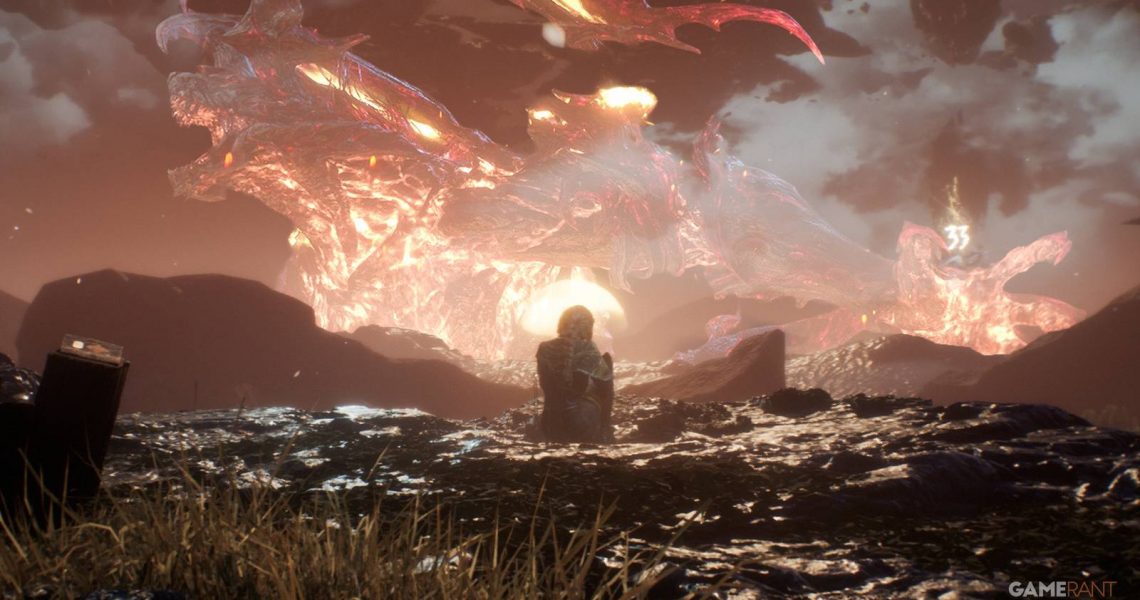
Unlike many Final Fantasy games, however, one of Clair Obscur: Expedition 33‘s most painful story beats happens, and the game never apologizes for it, nor does it ever attempt to undo it. That beat is none other than the moment Gustave is killed by Renoir at the end of Act 1, and it is one that no one saw coming because the game not only hides it well, but once it’s done, it’s done. Almost expertly, Clair Obscur: Expedition 33 leaves players in denial throughout the game, as it even gave Gustave a skill tree that was larger than his lifespan. This created the illusion that the beloved character would eventually return, but he never did. Just as Aline Dessendre is expected to accept the death of her son, and Alicia (Maelle), her brother, players are expected to accept the death of Gustave.
What makes Gustave’s death in Clair Obscur: Expedition 33 work is precisely that it refuses to relieve the discomfort it creates. Over 35 years of Final Fantasy conditioning have taught players to expect an escape hatch, whether through resurrection, revelation, or reinterpretation, so the game intentionally leaves room for denial and then never fills it. Gustave doesn’t return in another timeline; his death is not undone, and there is no later twist designed to soften the loss or leave it in ambiguity. By forcing players to accept his absence, Clair Obscur: Expedition 33 makes death final in a way that many Final Fantasy stories avoid. It trusts its players to endure grief without needing it to be reversed, and in doing so, it proves that finality can be more fulfilling than resurrection.

- Released
-
April 24, 2025
- ESRB
-
Mature 17+ / Blood and Gore, Strong Language, Suggestive Themes, Violence
- Developer(s)
-
Sandfall Interactive
- Publisher(s)
-
Kepler Interactive