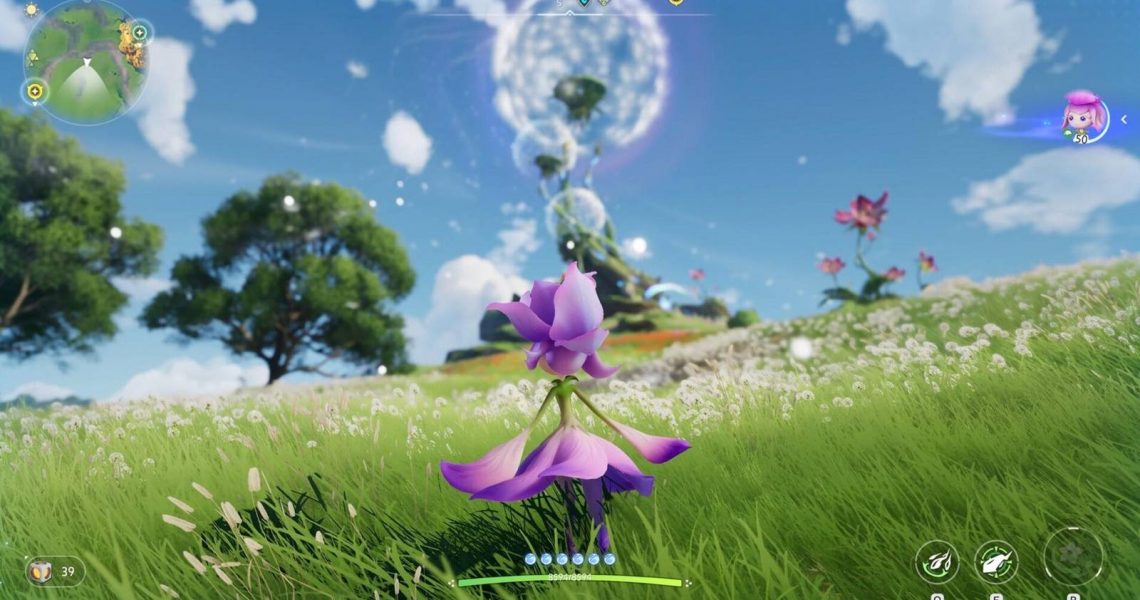
Brand New Creature Collector on Steam Feels Like Pokemon & Palworld Finally Agreed to Get Along
The creature collecting subgenre has a lot of potential, which is clearly attempting to be realized by several developers and publishers, but it’s not the happiest neighborhood. Indeed, many creature collectors are bland and derivative, and the scene’s two juggernauts, Palworld and Pokemon, are still at each other’s throats, wrapped up in a legal battle that’s still ongoing.
Stepping back from the Palworld–Pokemon drama, there are a good handful of creature-collecting games that look compelling and seem to lack the strings of Pocketpair’s legally contested project. One such title is Aniimo, a bubbly and technically ambitious creature-collecting JRPG that seems to have a lot of charm and is planned to launch on Steam. Crucially, while Palworld‘s particular game mechanics have drawn the ire of Nintendo’s lawyers, Aniimo appears to be approaching its gameplay from a different angle, potentially making for a much more mechanically rich and visceral experience. It’s still untested and has a lot to prove for a number of reasons, but Aniimo could very well be the next Palworld, sans litigation, hopefully.
Aniimo has no firm release date, though developer Pawprint Studio is targeting a 2026 window.
Is Aniimo Like Pokémon?
Aniimo–Pokemon comparisons are to be expected, but they do very little to illuminate what the former actually purports to be about. Yes, there are cute, mystical animals to capture and bond with, but Aniimo diverges from its progenitors through its moment-to-moment gameplay, which informs the broader experience.
Although players will be spending the game capturing new and unique Aniimo, these beings aren’t just pawns to be used during certain battles or scripted, binary decisions like whether to clear an obstacle. Rather, players can “Twine” with their Aniimo, essentially creating a sort of psychic link. From there, the game will cede complete control over a given Aniimo to the player, leading to radically different combat, traversal, and puzzle-solving powers, all of which can be used through real-time gameplay.
For instance, there are bird-like Aniimo that, after Twining, can be used to fly to previously inaccessible locations, or ice-type Aniimo that can freeze bodies of water to create makeshift bridges. This injection of real-time gameplay takes the creature-collecting premise—which is, on the surface, very similar to something like Pokemon—and makes it more layered, dynamic, and inventive.
Aniimo’s Combat Turns It Into a Proper Action-RPG
Perhaps the most fascinating aspect of Aniimo as it compares to the rest of the creature-collecting genre is its blend of real-time and tactical combat. Players can switch between two modes when sending their Aniimo into battle:
- Command: the Aniimo attacks independently while the player issues commands, like Pokemon Legends: Z-A.
- Twine: the player-character performs the aforementioned skin-changing magic and takes direct control of a given Aniimo, resulting in flashy, real-time ARPG whaling.
Players switch between these two modes on the fly, which could inject combat encounters with valuable texture and depth, especially as new Aniimo and abilities expand the sandbox over time. And based on currently available information, these Aniimo-specific abilities can be quite inventive and distinct. For instance, the Aniimo Besauce has music-based melee attacks with rhythm mechanics.
The Other Shoe Drops: Why Any Aniimo Hype Should Be Tempered
Aniimo Could Be Another Palworld in More Ways than One
Despite their mechanical, visual, and structural differences, it’s clear that Aniimo takes at least some inspiration from the Pokemon series. For one thing, several Aniimo bear a striking resemblance to various Pokemon. Examples of this include Jawling, which looks quite a bit like Onyx, and Sheldon, which would be almost visually identical to Jigglypuff if not for their protective shell. On top of these parallels, Aniimo are captured with Aniipods, small throwable devices; higher-tier Aniipods have higher chances of successfully capturing Aniimo. This should obviously sound familiar to Pokemon fans, as should the Aniilog, which is effectively the same as a Pokedex.
While similarities between Aniimo and Pokemon aren’t inherently problematic, it pays to remember the ongoing Palworld fiasco. Nintendo’s case against Pocketpair centers mostly on the perceived encroachment on series-staple mechanics, of which Pokeball-throwing is a major example. Aniimo features like Aniipods, the Aniilog, and even the rock-paper-scissors elemental classifications of individual Aniimo could all put the game in Nintendo’s crosshairs, resulting in any number of complications or 11th-hour changes.
Aniimo Will Be Free-to-Play, Which Is Always Risky
Early impressions from Aniimo‘s closed betas have been positive, but these playtests lack a central, transformative element: Aniimo‘s monetization scheme. It’s hard to say what role microtransactions and randomized gacha systems will play in Aniimo, but considering that the game is free, one would assume that these monetization elements will be relatively pervasive. It’s frustrating, but FTP games that appeal to the widest audience tend to leverage their in-game monetization more heavily, as they have a larger customer pool to take advantage of. In other words, Aniimo being successful at launch could actually lead to more troubling monetization in the long run.
Already, playtesters and previewers have found hints of monetization in Aniimo, such as the rare Aniipod Ultra items, which seem tailor-made for an in-game cash shop. The closed betas have also featured sign-in bonus menus consistent with what’s found in many FTP titles, especially those on mobile. The bottom line is this: Aniimo will be free-to-play, so there will absolutely be in-game spending of some sort. Like other promising or mechanically sound GaaS titles (Diablo Immortal comes to mind), Aniimo might end up undermining its strengths through its monetization strategy. Only time will tell how this will shake out.

- Released
-
2026
- Developer(s)
-
Pawprint Studio
- Publisher(s)
-
Kingsglory
- Multiplayer
-
Online Co-Op, Online Multiplayer