Forget Cyberpunk 2077, This 2012 Steampunk RPG Made Choice and Fallout Feel Unavoidable
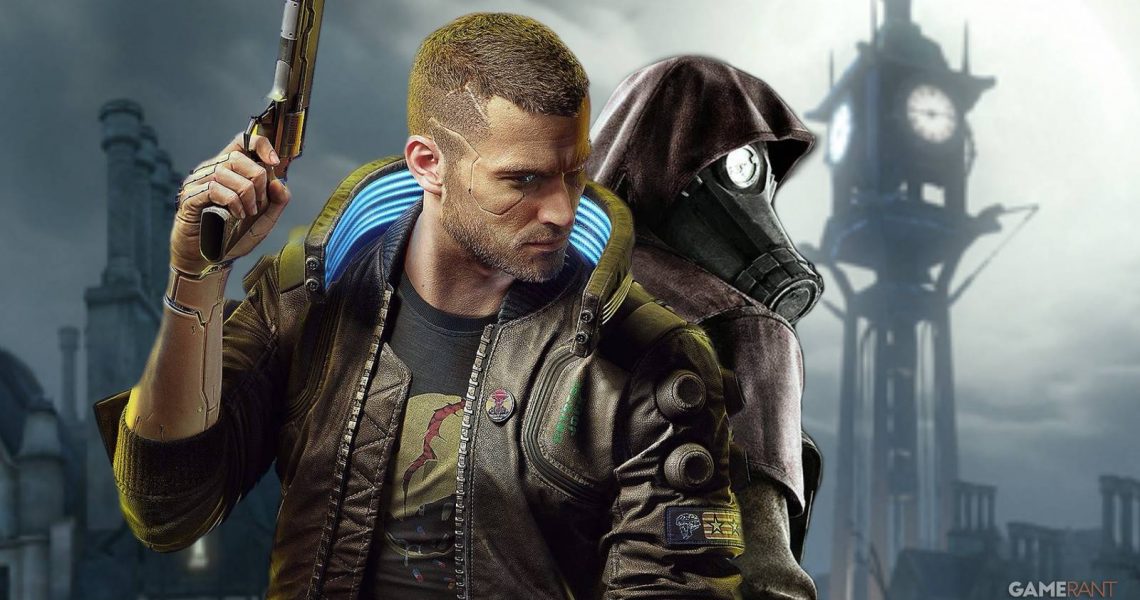
Cyberpunk 2077 is one of the biggest RPGs around at the moment, and even though it took a few years for the game to reach its promised potential, it’s still one of the strongest additions to the genre in the past decade. Throughout Cyberpunk 2077, a player’s choices can really hold weight, and while the consequences and outcomes can be dire, there are still games that have excelled beyond what CD Projekt Red’s dystopian world offers. It’s hard to one-up a game like Cyberpunk 2077, but when it comes to this 2012 steampunk RPG, a player’s choices are even more dire.
Dishonored came out 13 years ago, and since then, it’s remained a blueprint for how choice-based mechanics are done. There have been plenty of games that feature tough decision-making since Dishonored debuted, but its specific version of choice-based gameplay can be felt all throughout its world, making it a uniquely beautiful RPG, even over a decade later. Over the years, developers have tried to make in-game choices more complex, and while most have been successful, Dishonored features a system that features a lot more depth than one may first think.
The rest of this article contains major spoilers for Dishonored.
In Dishonored, Your Actions Can Quickly Have Dire Consequences

In Dishonored, you play as Corvo Attano, the sole bodyguard of the missing Empress Emily who is set to take the throne of Dunwall, a bleak steampunk-inspired city that’s suffering from a deadly plague.
Of course, a player’s decisions shaping the outcome of a story or a character’s fate is a staple in many strong RPGs, but Dishonored takes the concept and truly makes it part of its world’s atmosphere. Instead of just a basic morality mechanic, Dishonored‘s take on decision-making is called the Chaos System. The Chaos System serves as a mirror of protagonist Corvo’s morality. Not only does it affect him, but also the world around him and ultimately the game’s ending.
Sure, that’s not necessarily anything new, but what sets it apart is just how drastically one’s play style can really affect the overall outcome of the story and its characters. There are only three endings in Dishonored, and they all pack a punch, whether good or bad, and it’s all reliant on what Corvo’s Chaos level is by the end of the game.
What Affects Corvo’s Chaos Level in Dishonored?
- Killing people
- Certain decisions made during side missions
On the surface, the Chaos System is simple. If you kill a lot of people throughout the game, the Chaos level rises. If Corvo kills fewer or no people, his Chaos level decreases. However, beyond that, Special Actions need to be taken into consideration, too. For example, when playing “The Royal Physician,” Corvo encounters a woman who’s surrounded by a swarm of rats and later in Sokolov’s house, a test subject. Rescuing these people will lower Corvo’s Chaos level, and that’s just one of several instances where the protagonist can decide to save people or ignore the task. These Special Actions aren’t necessary for completing the game, but for those who want to lower Chaos, they can come in handy. Consequences like these put Dishonored on any good list of great RPGs with hard choices.
Stealthily making one’s way through Dishonored and killing as few people as possible is far easier said than done. Dishonored‘s gameplay can be difficult, but it isn’t overly complicated. It just takes a lot of extra effort to get through the story while still trying to keep Corvo a morally honorable person.
The Chaos System Makes the City of Dunwall Feel Vastly Different With Each Playthrough
From the environment to how NPCs and allies interact with Corvo, Dishonored makes it decently clear what one’s Chaos level is. Ultimately, a high Chaos level in Dishonored is going to make everything more difficult than it needs to be, but for those who like a good challenge, it can also be pretty fun.
How Dishonored’s Chaos Level Affects the Experience
|
High Chaos |
Low Chaos |
|
Increases rat and weeper populations |
Decreases rat and weeper populations |
|
Loyalist members will become more hostile |
Friendlier encounters with Loyalists |
|
Emily’s personality has negative changes. |
Emily’s personality stays positive. |
|
More story-related deaths |
Less story-related deaths |
|
The Outsider becomes more negative |
The Outsider interactions are more positive. |
|
More guards will be present. |
Decrease in guards |
|
Dark ending |
Optimistic ending |
Depending on what a player chooses, Corvo’s quest to save Emily can be far more difficult and unpleasant, and it’s completely up to the player how this plays out. It may seem easier to just kill everyone throughout the story to not deal with slower, methodical stealth, but that definitely isn’t the case. The obstacles that high Chaos presents are only worth it if players are actually looking for extra difficulty and a dark conclusion. Dishonored‘s three endings can bring the story to an optimistic end or a dark and bleak finale, and while they are fascinating, it can be shocking to see how things turn out for Corvo and Emily.
Dishonored’s Three Endings Demonstrate the Harshness of its World
While there are three different possible endings, only one is good. So, if Corvo’s Chaos level isn’t in good standing, then players are out of luck once the final moments come around. Of course, since there’s a Dishonored sequel, there’s obviously a canon ending, but the various branching story possibilities add fun replayability.
Dishonored’s Three Endings Explained
- The good ending — Emily takes the throne, and Corvo remains her protector. Dunwall’s plague is cured, leading the city into an age of peace.
- The bad ending — Emily still takes the throne, but her rule is far from optimistic. Dunwall is still drowning in corruption and plague, leaving the city in a hopeless state.
- The even worse ending — In this outcome, Emily dies, leaving the throne without an heir, which quickly causes infighting and further chaos. Plague-infected rats attack people on the streets, further spreading the disease, and Corvo flees Dunwall.
There may have been plenty of choice-based and story-driven RPGs that have wowed gamers since 2012, but Dishonored remains one of the best in this genre. It balances linear storytelling with strong RPG mechanics, and regardless of one’s choices, the ending is bound to leave an impression.

- Released
-
October 9, 2012
- ESRB
-
M For Mature 17+ Due To Blood and Gore, Intense Violence, Sexual Themes, Strong Language
- Engine
-
Unreal Engine 3