Call of Duty Didn’t Lose Its Identity With Black Ops 7 — It Lost It 12 Years Ago
While Call of Duty: Black Ops 7 Zombies and multiplayer have been largely well received by the franchise’s existing fans, those with an outside view of Call of Duty have been poking no shortage of fun at the latest entry in the series. Out-of-context clips highlighting the campaign’s boss fights have spread like wildfire, with Black Ops 7 accused of “losing the plot.” However, those that have followed the franchise closely would argue that it “lost the plot” ages ago, as a majority of entries released since 2012’s Black Ops 2 have arguably strayed further and further from what used to be the Call of Duty series’ general vibe.
Black Ops 2 managed to keep its near-future setting fairly grounded, especially with the campaign mixing in missions set in the past, but it also felt like the calm before the storm. Its multiplayer introduced the series’ first truly wacky camos, with purchasable bundles letting players cover their guns in bacon or kawaii pandas, something that would eventually spiral into the ridiculous weapon blueprints and Operator skins of 2025. Still, it was fairly grounded if gamers ignored these camos, meaning the seal truly broke with the following CoD game: 2013’s Ghosts.
Call of Duty: Ghosts Served as a Turning Point For Call of Duty’s Tone

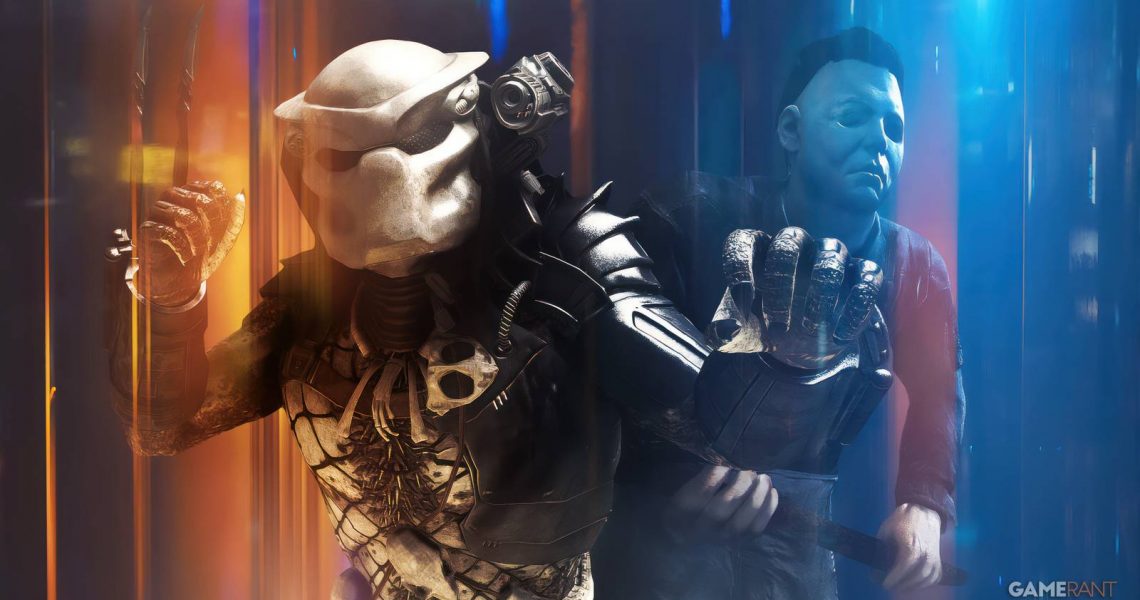
Call of Duty had become truly mainstream by 2013, so much so that it began to trade out its serious military vibes for celebrity cameos and collaborations. In Call of Duty: Ghosts (the first of two attempts from Infinity Ward to distance itself from the Modern Warfare brand) DLC content shifted from just weapon skins and map packs to include features like the Snoop Dogg voice pack, which swapped out the typical announcer with the famous rapper. Some of the post-launch maps also featured playable horror icons, which had unique mechanics as opposed to just being skins, making them crucial to the identities of certain maps. Michael Myers wielded an axe alongside a huge health pool, while the Predator boasted a range of abilities as well as a nuke-like explosion when he was finally brought down by the opposition.
Snoop Dogg wasn’t the only Announcer voice pack in CoD Ghosts, as the actor who portrayed Gunny in Full Metal Jacket, R. Lee Ermey, voiced a Drill Instructor.
These two famous movie collabs were accessed via Field Orders, CoD Ghosts’ unique reward system which saw players completing random challenges for a chance at special killstreaks. However, even these tasks indicated the shifting tone, as one of the objectives made teabagging a legitimate mechanic and asked players to crouch on eliminated opponents. Potentially getting a K.E.M. Strike, Ghosts’ equivalent of a Nuke, just for teabagging on the map Strikezone was funny for some, but insulting to others who loved the gritty tone of games like World at War. This was the beginning of an entirely new identity for CoD, one that has lasted just as long as the grounded tone so many look back on with fondness.
Call of Duty’s Identity Change Has Been a Long Process, Not a Sudden Shift
When looking back at the entries released between CoD Ghosts and Modern Warfare 2019—the game that started the Warzone era of CoD—nearly every game took a step toward making Call of Duty into what it has become. As such, it’s impossible to pin the identity change on a single game. Just some of these changes are as follows:
- Advanced Warfare (2014): Loot boxes, a deep focus on character customization and cosmetics, and the early equivalent of weapon blueprints.
- Black Ops 3 (2015): The introduction of the Winner’s Circle, which shows the top three participants of the winning team and allows them to emote, something many have described as “cringe” in newer games.
- Infinite Warfare (2016): A far-future setting that makes even Advanced Warfare look grounded in comparison, causing a sense of whiplash for CoD fans.
- WW2 (2017): The introduction of a Headquarters social hub, which, while a one-off, was an early example of CoD chasing industry trends and trying to offer its take on Destiny’s Tower.
- Black Ops 4 (2018): Blackout battle royale was released in this game, and while relatively well-received, it kick-started a focus on the genre that many would soon come to hate. It also had no campaign, which showed how single-player was becoming an afterthought for the series, and the story that was there focused on an absurd cloning concept. A proto-battle pass system also debuted.
- Modern Warfare (2019): While the modern reboot of the MW subseries was very well received for its back-to-basics approach and an impressive engine shift, it introduced Warzone, a mode that has hogged attention from the paid games in the eyes of many. Additionally, Infinity Ward introduced many systems here that have become hated, like battle passes, SBMM, and so on.

With all this in mind, it feels strange to act as if Black Ops 7 was the game that finally jumped the shark. Cloning characters like Frank Woods, like what happened in Black Ops 4, is far more absurd than fighting a giant when under the influence of some hallucinogenic gas. Wacky skins and blueprints began over 5 years ago, coming to Modern Warfare near the end of its life cycle, and the groundwork for the latter was arguably placed in the beloved Black Ops 2 with camo patterns like Bacon. Black Ops 3 featured levels just as trippy as Black Ops 7’s bolder moments, too. If someone feels that Call of Duty has declined and lost focus on what made it great, that’s a fair argument to make, but it’s important to recognize that it was more of a steady evolution than a drastic change in BO7. For better or worse, the latest Black Ops game is a direct result of numerous changes, the biggest of which is a tonal shift that can be traced back to CoD Ghosts.

- Released
-
November 14, 2025
- ESRB
-
Mature 17+ / Blood and Gore, Intense Violence, Strong Language, Suggestive Themes, Use of Drugs