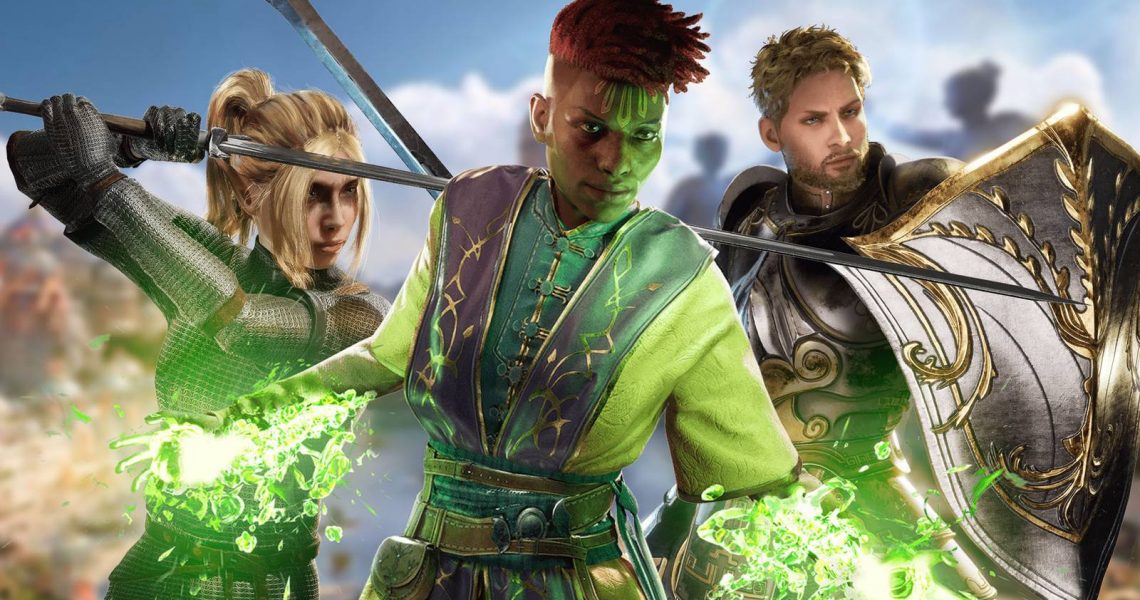
Solasta 2 Best Beginner Class for Main Campaign
Creating a campaign in Solasta 2 will require players to create not one, but four different characters to compose a party of adventurers (The Colwells) who have been raised together by Ma Him Colwell, a Cleric of Mariake, Goddess of Life and Death. Creating a competent and balanced party of adventurers will require more than just some minmaxing, since Solasta 2 has a few particular mechanics that are good to keep in mind while building them.
Amongst them, some unique takes on 5e Classes that slightly change their abilities, Subclasses, and how they work inside and outside combat. As one of the party members would be required to act as a sort of ‘leader’ or ‘face’ of the crew, beginner players should keep in mind that they will need at least one Charisma-based class. Use this guide as a reference when building your first party for the Solasta 2 main campaign.

Baldur’s Gate 3: Every Class, Ranked
Classic D&D classes form the backbone of classes in Baldur’s Gate 3. Here’s how they stack up against each other.
Best Beginner Classes in Solasta 2
Paladin
Recommended Attributes with 27 Point Buy/Without Ancestry Bonuses:
|
STRENGTH |
15 |
|---|---|
|
DEXTERITY |
10 |
|
CONSTITUTION |
15 |
|
INTELLIGENCE |
8 |
|
WISDOM |
10 |
|
CHARISMA |
14 |
- Recommended Ancestry: Human (Versatile – Robust Feat)
- Recommended Background: Lawkeeper (Grants Alert Feat)
- Recommended Skills: Performance, Persuasion, Athletics, Intimidation
- Starting Gear: Scale Mail x1, Longsword x1, Shield x1, Javelin x1, Holy Symbol x1, Potion of Healing x1, Gold Piece x15, Food Ration x1, Lantern x1 – Note: Don’t lose or sell the Holy Symbol, it is the catalyst the Paladin class needs to channel its powers.
The Paladin is a combination of strength and sacred magic, a bastion of might and righteous fury that can use his healing powers to aid and shield his party members, and also to smite down foes with Radiant and Fire damage.
The paladin is proficient with most Martial Weapons, but requires players to choose Mastery over certain weapons like Scimitars. Paladins have proficiency with Heavy Armor and Shields, turning them into the best tanks you can ask for.
Its main Attributes are Strength, Constitution, and Charisma, where CHA is the spellcasting attribute governing all Paladin’s Divine abilities and spells. Divine Smite and Lay On Hands are the core abilities. One is used to apply extra radiant damage on Enemies as a Reaction, the other is used as a Bonus Action to heal a certain amount of HP (Paladin Level + CHA Modifier) to the Paladin or any ally within melee range.
The Paladin has certain Oaths (Subclasses) that can be taken at level 3:
- Oath of Devotion
- Oath of Judgement (Available)
- Oath of Liberation (Available)
- Oath of the Motherland
- Oath of Tirmar
Only the Oaths of Judgement and Liberation are available for play at the moment.
Each of these Oaths slightly changes the way the Paladin fights and uses its Divine Powers. For example, the Oath of Judgement specializes in chasing and warding off evil, with Weight of Justice, Purge Corruption, and Aura of Righteousness as its core mechanics.
On the other hand, the Oath of Liberation is focused on pursuing Tyrants and breaking the chains that weigh on people, using its Divine Smite to blind foes with absolute radiance, and aiding those in need with advanced healing and protection spells.
Fighter
Recommended Attributes with 27 Point Buy/Without Ancestry Bonuses:
|
STRENGTH |
16 |
|---|---|
|
DEXTERITY |
10 |
|
CONSTITUTION |
16 |
|
INTELLIGENCE |
8 |
|
WISDOM |
10 |
|
CHARISMA |
14 |
- Recommended Ancestry: Human (Versatile – Robust Feat)
- Recommended Background: Wanderer (Savage Attacker Feat)
- Recommended Skills: Athletics, Intimidation, Persuasion
- Recommended Fighting Style: Two-Weapon Fighting/Defense
Starting Gear: Chain Mail x1, Longsword x1, Shield x1, Longbow x1, Potion of Healing x1, Gold Piece x10, Food Ration x1, Lantern x1
Fighters are the very definition of a frontliner, excelling at both tanking and dealing damage with various weapons. Competent with all types of Armor, Simple Weapons, and Martial Weapons, the Fighter’s main gimmick is Action Surge, which enables it to push beyond its physical limits and become a true master of war.

Elden Ring: Best Overpowered Builds
These powerful, OP builds will make adventuring and fighting through the world of Elden Ring feel like a walk at the local park.
Warriors are able to pick a Weapon Mastery of their choosing, and doing so accumulates even greater bonuses to their attack rates. A warrior wielding a two-handed weapon is a true menace on the battlefield, and a warrior wielding a shield and sword can become an unflinching barrier between him and his party.
The Fighter’s Main Attributes are Strength and Constitution, but since some players will also want to build it for Intimidation, Charisma is a must-have as well, more so if you take the Commander Subclass at level 3, which improves the character’s persuasion and intimidation thanks to Gruff Authority, which also adds the Strength modifier to their checks.
The currently available SubClasses are Aether Warden and Commander, though in future versions, players will be able to choose more SubClasses:
- Aether Warden (Available)
- Commander (Available)
- Champion
- Mountaineer
- Spellblade
The Aether Warden is similar to the Eldritch Knight from D&D 5e, but uses Constitution as its Spellcasting attribute, and is capable of unleashing lots of control-type spells like Sleep and Hideous Laughter. Plus, it gains Earthly Succor, a healing-type Spell unique to the Aether Warden SubClass.
The Commander, on the other hand, is a tactician who thrives by encouraging their allies in battle. This subclass excels at coordinating attacks, defense, and shouting commands to grant attack advantage on their next turn. It’s a support-type fighter who relinquishes damage in exchange for a more defensive/counterattack type of play.
Cleric
Recommended Attributes with 27 Point Buy/Without Ancestry Bonuses:
|
STRENGTH |
13 |
|---|---|
|
DEXTERITY |
10 |
|
CONSTITUTION |
16 |
|
INTELLIGENCE |
10 |
|
WISDOM |
17 |
|
CHARISMA |
8 |
- Recommended Ancestry: Elf, High Elf
- Recommended Background: Ascetic (Feat – Robust)
- Recommended Skills: Medicine, Survival, Insight, Religion
- Recommended Divine Order: Taumaturgy (extra cantrips, Mysty Step)
Starting Gear: Chain Shirt x1, Mace x1, Shield x1, Light Crossbow x1, Holy Symbol x1, Gold Piece x20, Scroll of Cure Wounds x1, Food Ration x1 – Note: Same as with the Paladin, don’t lose or sell the Holy Symbol, it is the catalyst the Paladin class needs to channel its powers.
Clerics are the Healers of the party in Solasta 2, and as it happens in most TTRPGs and games based on 5e Rulesets, Clerics are Divine Casters that use Wisdom as their Main Attribute to cast spells, while also retaining a certain amount of Constitution and Strength to fend off opponents in battle. They use divine powers to heal and cause wounds, as well as Channel Divinity as an action per short rest to heal or banish undead.
A Cleric is proficient in Medium Armor, though those who choose the Defender Divine Order will become proficient in Heavy Armor as well. All Simple Weapons, like maces, are the Cleric’s main way to deal damage. It is a great character to have in any party, and depending on their ‘Domain’ (chosen at level 3), they can become quite useful in the long run:
- Battle Domain (Available)
- Elemental Domain
- Insight Domain
- Law Domain
- Life Domain (Available)
- Mischief Domain
- Oblivion Domain (Available)
- Sun Domain
Currently, only Oblivion, Battle, and Life Domain are Available for choosing in Solasta 2′s main campaign. Oblivion Domain channels the power of death from the eternal cycle to deliver swift retribution to those who dabble in forbidden arts. An Oblivion Cleric is more focused on Causing Wounds and Bestow Curses to evil doers, but still retains a basic capability of aiding those in need with healing.

Divinity Original Sin 2: Every Class, Ranked From Worst To Best
Each class has unique pros and cons in Divinity: Original Sin 2, but some stand out as better than the rest and are much more worth a player’s time.
The Battle Domain Cleric channels its divinity through combat, becoming a frontline herald of war. Wielding its divine strength to rally others by using powers like Divine Fortitude, Armed and Ready, Decisive Strike, and Herald of Battle, the Battle Domain Cleric turns away from the path of healing and steps into the fray as the vanguard of their Divine Order. It is a good domain to choose for those who enjoy the Paladin style, but are tired of always using the same Smite powers.
The Life Domain Clerics are the epitome of healing and have been trained to aid others, offering Divine intervention and saving their party Members even from the brink of death. A Life Domain Cleric’s Channel Divinity Power becomes strong enough to save everyone on sight by using Preserve Life, and also heal themselves at the same time through the power of their divinity.
Rogue
Recommended Attributes with 27 Point Buy/Without Ancestry Bonuses:
|
STRENGTH |
10 |
|---|---|
|
DEXTERITY |
16 |
|
CONSTITUTION |
14 |
|
INTELLIGENCE |
10 |
|
WISDOM |
15 |
|
CHARISMA |
10 |
- Recommended Ancestry: Halfling
- Recommended Background: Lowlife (Quick Speed)
- Recommended Skills: Acrobatics, Sleight of Hand, Stealth
Starting Gear: Leather Armor x1, Shortbow x1, Shortsword x1, Dagger x1, Food Ration x1, Gold Piece x10, Potion of Healing x1, Lantern x1, Thieves’ Tools x3
Rogues are thieves, spies, and scouts, capable of going ahead stealthily and coming back with news about enemies, treasure, traps, and such. But, as in Solasta 2 the whole party acts simultaneously, Rogues are often the ones who spot traps, so they should be leading the party to ensure their allies are safe. Plus, using Thieves’ Tools, they can disarm traps, open locks, chests, and activate mechanisms.
Rogues are proficient in the arts of Acrobatics, Athletics, Deception, Insight, Intimidation, Perception, Persuasion, Sleight of Hand, Stealth, so choosing any of these skills will ensure they are a decent toolbox for the party.
GameRant Quiz
Easy (15s)Medium (10s)Hard (5s)
In combat, Rogues use Sneak Attack, and add a 1d6 bonus damage (which increases every 4 levels) to their strikes, as long as the enemy is flanked, distracted, or cannot detect the Rogue (which is often the case for ranged combat Rogues using Shortbows).
Rogues also use ‘Cunning Action,’ which allows them to gain bonus movement (Dash) or move away safely from battle (Disengage) without causing Attacks of Opportunity.
In Solasta 2, Rogues can be either Scavengers or Shadowcasters, with the first one adding extra damage to their attacks, and gaining more gold from merchant transactions, and the second specialization becoming something similar to the Arcane Trickster from 5e. Although beginner players should focus on being Scavengers, since it’s the easiest subclass to use and causes lots of damage.

Solasta II

- Released
-
March 12, 2026
- Developer(s)
-
Tactical Adventures
- Publisher(s)
-
Tactical Adventures
- Engine
-
Unreal Engine 5
- Multiplayer
-
Online Co-Op