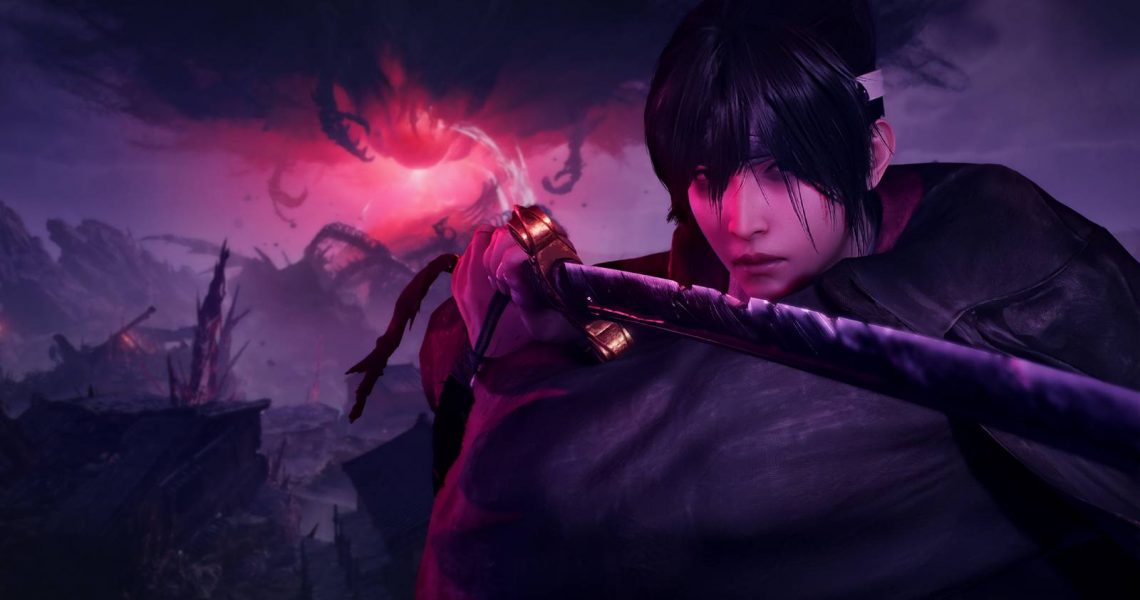
Dual Playstyles, Tough Bosses, and Tense Moments
Nioh 3 will land on PC and PS5 in just a few months, and it’s shaping up to be a worthwhile successor to the first two games. Story-wise, Nioh 3 players step into the shoes of protagonist Tokugawa Takechiyo as he journeys through time to save Japan with his guardian spirit, facing the legions of Yokai scattered around the Edo, Sengoku, and Heian eras (among others).
Nioh 3 also maintains the focus on action that makes it more akin to Ninja Gaiden or Onimusha as opposed to a traditional Soulslike game, but make no mistake, the difficulty is still very much there. Where Nioh 3 truly sets itself apart from its predecessors and similar titles is the focus on two key playstyles. The Samurai plays much like former Nioh protagonists, with the iconic Ki Pulse returning, but it also introduces a faster playstyle, the Ninja, that has its own quirks. Game Rant recently spent about 3 hours with Nioh 3 at publisher Koei Tecmo’s offices in San Francisco, and during that time, we played through a section of the Bakumatsu era. We also challenged the Tokyo Game Show boss, Takeda Shingen, and left with a personal vendetta against him.
Learning the Ninja
Nioh has always been a complex game with tons of menu diving, and that’s doubly so with the way Nioh 3 essentially treats the Samurai and Ninja as two separate characters. Players have to manage twice the gear, twice the menus, and so on, but it seems rather intuitive. We acclimated more quickly than we thought we would, despite essentially being thrown into the deep end of the pool with plenty of gear and skills already unlocked. But after playing through the tutorial, we tested out a few weapons to manage our run with.

For my Samurai, I went with a spear and Odachi for a reach/heavy character. It works well with the Samurai because it feels a little more tanky than the Ninja, and for the latter, we eventually leaned into the class identity and focused on dual long swords. The Ki Pulse returns for the Samurai, which, when timed right, lets players restore lost stamina. For the Ninja, the Ki Pulse is replaced with an ability called Mist that sees them reposition after turning into mist. This is key to success because a Ninja does double damage when attacking from behind. Now, I was just unleashing combos on the standard enemies and wasn’t that concerned about positioning most of the time—the Ninja is still viable in straightforward combat—but the ability can definitely come in clutch. Navigating and learning the various abilities, ninjutsu, and so forth was as complicated as expected for character builds, as expected. However, it was surprisingly intuitive in action thanks to its strong, action-focused gameplay and tight controls.

The Samurai plays pretty closely to what any Nioh fan would expect, but the quickness, rapid attacks, and agility of the Ninja fit right in, too. In fact, and I was quite surprised by this, I think I enjoyed playing the Ninja a little more. After a few minutes, I settled into a combined playstyle that I really enjoyed. There’s a new mechanic that is essentially a parry/character shift. Enemies will prepare a powerful attack and glow red, and by timing the character switch button correctly, you’ll parry and stop the attack, damage the enemy, and shift into the other playstyle instantly. I would essentially play a Ninja 90% of the time, look for and hit these moments, and use my powerful Samurai weapons to beat down the weakened enemy before reverting to the Ninja for increased mobility. It’s a powerful utilization of both playstyles, I think, because it allows me to leverage both of their strengths without worrying too much about their weaknesses against tougher enemies. Of course, that timing is always a risk, but that’s what makes it so exhilarating.
Exploring the Bakumatsu Era
We started in the Bakumatsu Era/Stage, where we fought through an adjusted Pleasure District before proceeding through the end—clearing the Crucible. The level design didn’t necessarily feel all that different from past Nioh games, though it was a strong level to show off for sure, yet there was a nice mix of the linear point A-to-B design and exploration. It does seem like the open-field design, which we didn’t see a lot of, would let players come and go freely from/to certain areas. The areas themselves have a little more room to breathe, but players can still expect the tightness and tension of past Nioh games’ level designs. I got sidetracked plenty of times just exploring, but of course, I ultimately arrived at the end of the level: The Crucible Realm.
In it was the constant threat of enemies, even more challenges, more unique designs (like traps that include spinning tops of death), and clearing the area was the fun and challenge I expected from the game. The openness may, from time to time, make it seem a little easier than past Nioh games, but there are plenty of traps and challenges baked into it. Overall, if this was just a taste of Nioh 3‘s level design, I’m ready to check out the whole meal. I genuinely think it has the potential to deliver strong, unique, and challenging stages with this gameplay and level design formula.
I will say, while there were plenty of challenges, I am quite seasoned at these types of games. I wanted even more. I fought a few bosses throughout the realm, and each time it only took one or two tries to beat them. This could have been because of the gear and setup we were given, but each boss and their tactics did feel unique and fun to encounter. At the end of the Crucible was this unassuming stone statue boss, who initially seemed like it would be the easiest one I faced. It telegraphed everything so well and so slowly that it took advantage of my confidence, shifted into this twisted, vine creature, and proceeded to actually challenge me. The fight was tense, and it created one of those iconic gaming moments.
I was out of heals, I was one shot from death, and so was the enemy. I knew if I made a mistake, it would be game over. It prepared one of its massive red attacks, which gave me an option: I could try to avoid it and strike it afterward, beating the boss with a relatively safe and doable option. Alternatively, if I timed it right, I could beat the boss with the parry/character shift, but that risked me missing the timing and losing to the boss. I am nothing if not a risk-taker, so I went for the shift, and cut down the boss in an incredibly satisfying moment. If the full release of Nioh 3 continues to deliver such moments for me next year, I could easily see it ending up on my top ten list for 2026. It just felt that good.
Getting Humbled by Takeda Shingen

After that, I was loaded about halfway into the Tokyo Game Show level and fought my way to the boss there, Takeda Shingen. Needless to say, I was feeling pretty good, and I was feeling pretty confident. I had gotten the controls down, I knew how to play my character build/strategy successfully, and I had rather easily overcome every boss to this point.
My first impression of Takeda wasn’t really fear, but awe. I’m a sucker for lion-influenced boss designs, and Takeda Shingen comes close to Elden Ring‘s Godfrey in my opinion. And then Shingen proceeded to whip me seven ways from Sunday. I managed to get him to a quarter of his health a time or two, but it wasn’t really close most of the time. He showed me the real challenge awaiting me in Nioh 3, and I am so excited about it. I fought him probably close to ten times, but I could not seize victory against him.
Anyway, that’s my vow: Upon Nioh 3‘s release, I am gunning for Takeda Shingen and can’t wait to score this victory. It’s a personal vendetta at this point, so I can’t wait for February 6 to get here just to experience all of this again and then plenty more.