New Action RPG Is Already Being Compared to Skyrim, and It’s Easy to See Why
With The Elder Scrolls 5: Skyrim being one of the most influential games of all time, it makes sense why other developers would want to follow in its footsteps. Its expansive open-world RPG design, deep player freedom, and enduring cultural impact helped define and popularize the modern fantasy open-world genre, inspiring countless games and remaining relevant years after release. Even when developers won’t outright admit to being inspired by Skyrim, it’s often hard to believe there isn’t at least some influence there, especially when the similarities are evident. Paraglacial and THQ Nordic’s Fatekeeper is one of the latest cases of that phenomenon, with many onlookers already comparing it to Bethesda’s token RPG.
Fatekeeper is an upcoming first-person action RPG that tosses players into a handcrafted fantasy world filled with ruins, caverns, forests, and ancient sanctuaries to explore. In it, they’ll use a blend of sword-and-sorcery combat, engage in reactive melee fights against diverse enemies, and develop a customizable character build through meaningful progression choices across combat styles and spell schools. Fatekeeper is currently slated for PC Early Access in 2026, and while it hasn’t been positioned as a Skyrim successor outright, its core design pillars naturally invite comparison.
Why People Are Comparing Fatekeeper to Skyrim
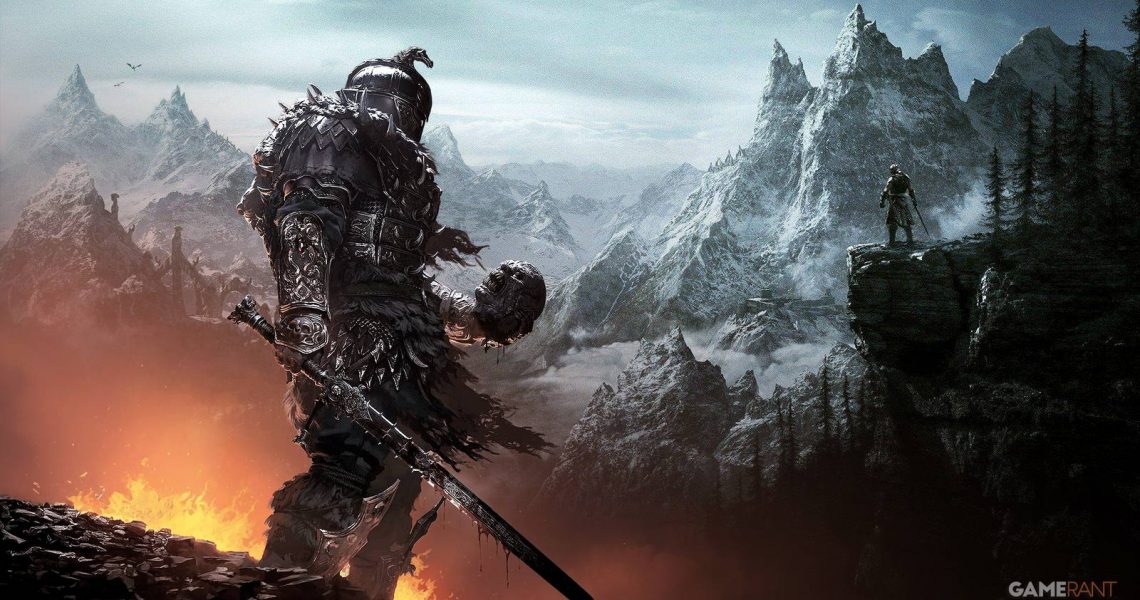
To be fair, it’s easy to see why Fatekeeper is being so relentlessly compared to Skyrim, as its fantasy visuals alone seem to channel the same feel and tone of Bethesda’s prized possession. In fact, that’s primarily how it echoes Skyrim, though its gameplay and exploration also subtly contribute to those comparisons. Some fans have suggested the action RPG has Dark Messiah of Might and Magic vibes in its atmosphere and worldbuilding even more, but upon first glance, Fatekeeper nonetheless looks like Skyrim if it were aiming to launch in 2026.
Fatekeeper’s Skyrim-Like Features
- FIRST-PERSON FANTASY — It’s a first-person fantasy RPG in the same subgenre that Skyrim helped define, including swords, spells, and exploration.
- ENVIRONMENTAL MOTIFS — Its detailed ruined landscapes, forests, and ancient locales are similar to the aesthetics of Skyrim‘s world.
- COMBAT WITH SWORDS AND MAGIC — The mix of melee fighting and magic evokes the combat style many associate with Skyrim.
- RPG PROGRESSION SYSTEM — Rich character progression and build options give players customization depth similar to classic RPGs in Skyrim‘s vein.
- EXPLORATION-ORIENTED DESIGN — Though not fully open world, the emphasis on exploration through handcrafted areas draws comparisons to open fantasy adventures like Skyrim.
Skyrim helped define the first-person fantasy RPG subgenre with its expansive world, quest flexibility, and exploration mechanics. Fatekeeper may not replicate all of that to a tee, but it does “invite exploration” in its “handcrafted world,” according to its Steam description. “From ancient battlegrounds, vast underground caverns and serene forests,” it mentions, “to crumbling sanctuaries forgotten by time, each area rewards curiosity with hidden lore, forgotten relics, and unexpected encounters.” That kind of world design paired with Fatekeeper‘s visuals make it feel like something straight out of Skyrim‘s playbook, though, again, there is some nuance.
To be fair, it’s easy to see why Fatekeeper is being so relentlessly compared to Skyrim, as its fantasy visuals alone seem to channel the same feel and tone of Bethesda’s prized possession.
The combination of swords and magic in its combat also reinforces that perception, especially with its progression system that lets players develop their own playstyles rather than locking them into a rigid class. Much like Skyrim, Fatekeeper encourages players to experiment with different builds, whether that means prioritizing raw melee strength, investing in spell-focused damage, or finding a hybrid balance between the two. Equipment choices, stat upgrades, and combat specialization all feed into that sense of ownership over a character’s identity, which is a core pillar of Bethesda’s RPG philosophy. Even if Fatekeeper‘s structure is more curated than Skyrim‘s sprawling sandbox, its emphasis on player-driven customization and build variety makes the comparison feel like less of a stretch.
What Fatekeeper Does Differently
Anytime a game as monumental as Skyrim drops, it sets a new standard for the industry and any games that follow are naturally compared. That could be the case with Fatekeeper, considering it looks a lot like Skyrim, and yet once you get a good look at its gameplay, it’s hard not to notice the differences. Every swing of the sword, line of dialogue, and corner of the world explored makes Fatekeeper feel like a more modern action RPG than Skyrim. Furthermore, even though it’s easy to say that this is how Skyrim might play if it were released today rather than 15 years ago, Fatekeeper clearly differentiates itself from Bethesda’s signature style that the developer has even recently gone on record saying it intends to bring into The Elder Scrolls 6.
How Fatekeeper Distinguishes Itself From Skyrim
- NON-OPEN-WORLD DESIGN — Unlike Skyrim‘s massive open world, Fatekeeper uses focused, handcrafted levels with exploration built into curated paths rather than full sandbox roaming.
- TACTICAL MELEE COMBAT — Combat emphasizes reactive and strategic sword strikes, dodges, and enemy patterns, offering a more skill-based feel than Skyrim‘s simpler targeting system.
- VISUAL IMPACT AND BRUTALITY — Battles are designed to be viscerally impactful and gritty, with Fatekeeper leaning into a darker, more intense fantasy tone than Skyrim‘s broader fantasy palette.
- RICH PROGRESSION SYSTEM — Character progression supports distinct build choices and deeper specialization rather than Skyrim‘s more generic skill leveling.
- NARRATIVE-DRIVEN PATHS — The game leans toward story focus and linear narrative beats, contrasting Skyrim‘s freeform questing and open narrative structure.
Despite resembling Skyrim in its world design, Fatekeeper isn’t fully open world like its Bethesda cousin. Specifically, it “follows a focused narrative path,” although there are still plenty of reasons to explore off the beaten path. Given that Skyrim is primarily known for its groundbreaking open-world design and curiosity-driven exploration, Fatekeeper sets itself apart here significantly. In fact, based on what has been revealed about its exploration and level design so far, it’s probably more comparable to something like a first-person Dark Souls than anything else.
Every swing of the sword, line of dialogue, and corner of the world explored makes Fatekeeper feel like a more modern action RPG than Skyrim.
Another way Fatekeeper differs considerably from Skyrim is in its combat and progression. Not only is its combat darker, grittier, and even bloodier than Skyrim‘s, it also emphasizes dodging and skill-based mechanics in a way that almost echoes something like Avowed‘s combat even more. Fatekeeper‘s combat is also founded on a skill and progression system that starkly contrasts Skyrim‘s more open-ended skill tree. While it does aim to offer players opportunities to craft unique builds, it’s not quite as generic as Skyrim‘s freeform skill leveling, as it takes more of a specialization approach.
In the end, the comparisons to Skyrim are understandable, but they only tell part of the story. Fatekeeper may borrow familiar fantasy aesthetics and RPG pillars, but its curated world design, skill-driven combat, and more deliberate specialization systems suggest a different set of priorities. Rather than chasing the scale and sandbox freedom that defined Bethesda’s timeless classic, it appears focused on tighter encounters and more intentional progression. Whether that approach ultimately resonates will depend on how well those systems come together in Early Access, but what’s clear already is that Fatekeeper is carving out its own lane within a subgenre that Skyrim helped popularize.