Romeo Is a Dead Man Has Cult Classic Written All Over It [Review]
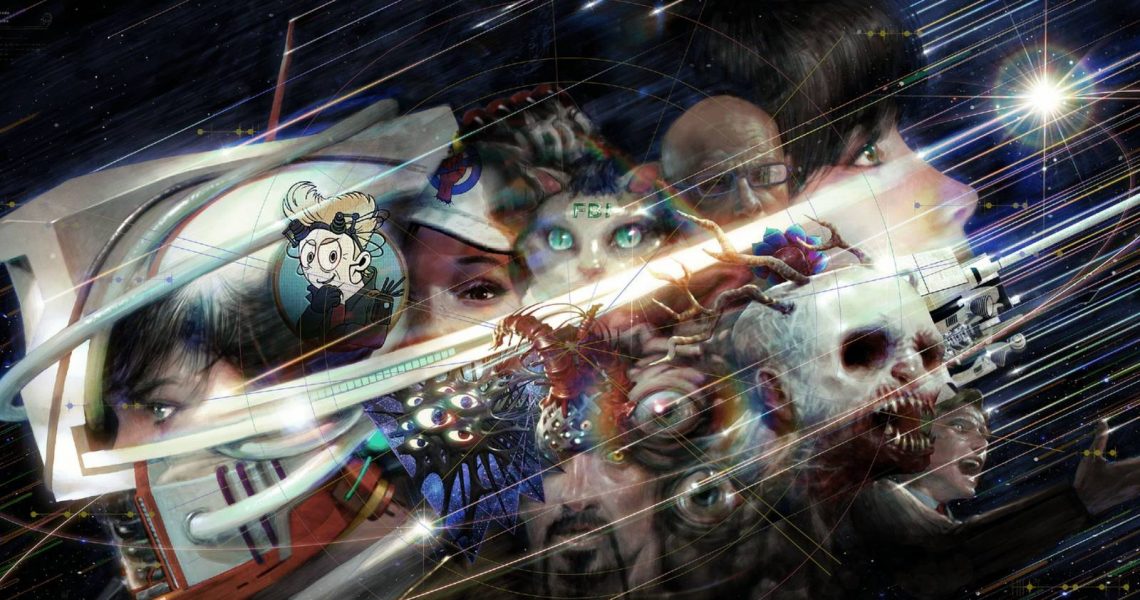
Romeo Is a Dead Man is a Suda51 game, top to bottom. This isn’t to say that Romeo Is a Dead Man is like any other Suda game—on the contrary, it’s quite unique despite its obvious similarities to Lollipop Chainsaw and No More Heroes. But it still has that Suda51 spirit, which means that it’s expressive, bombastic, surprising, and doesn’t seem to care whether you like it or not.
You play as the titular Romeo, a lovestruck cop-turned-intergalactic-agent. He is enamored with Juliet, a space-time criminal wrapped up in the quandaries of various other enhanced beings throughout the Fragment Universe, a smattering of pocket dimensions created after a singularity event in the fictional town of Deadford, Pennsylvania, during which Romeo was nearly killed and subsequently revived as Deadman. His genius, Rick Sanchez-coded grandfather, Benjamin Stargazer, has enhanced him to a superhuman level, and lives in a 2D image on the back of his grandson’s jacket, serving as an assistant-mentor of sorts.
If that description doesn’t make much sense to you, then you’ve basically gotten a taste of the Romeo Is a Dead Man experience. It’s a psychedelic joyride through the time-space continuum, peppered with colorful and bizarre characters that only Goichi Suda could conjure, and while I won’t be surprised if it’s not to everyone’s liking, it’s certainly to mine.
Romeo Is a Dead Man Is a Bloody Good Time
There are a lot of games, both good and bad, that feel designed by committee, as the saying goes. They are clean and polished—no rough edges in sight. Story and gameplay are rigorously tested and honed to appeal to as many people as possible, and each feature and system works in harmony with each other, like an intricate clockwork. This is not how Suda51 and Grasshopper Manufacture make games, and Romeo Is a Dead Man is proof of that.
Romeo‘s gameplay can be broken into two main pillars: combat and environmental puzzles. The first pillar is simple and unsophisticated (Benjamin Stargazer literally tells Romeo to not think too much during the first combat tutorial), consisting of a mix of melee and ranged options. Romeo has four weapons in each category, all of which can be upgraded over the course of the game, but only in an obvious, stat-based way. For the most part, the combos and techniques that you learn in Romeo’s first few hours will carry you to the end credits.
This doesn’t mean that combat isn’t fun, though. Actually, Romeo Is a Dead Man might be a breath of fresh air for anyone longing for the PS3 era of hack-and-slash games, which was often focused on making players feel powerful, not weak or disadvantaged like in so many modern action titles. I played Romeo on the hardest difficulty available on a first playthrough, and I found that this sense of power did not totally trivialize enemy encounters: a combination of decent enemy variety and aggressive enemy AI made for a gameplay experience akin to a blend of Dark Souls, modern God of War, and even a splash of Resident Evil—a winning combination, if ever there was one. Romeo‘s combat is simple, but it doesn’t suffer much from it.
Worth pointing out are Romeo‘s bosses: while there aren’t many of them, they are almost all visually interesting and mechanically compelling, making them fun to fight, even multiple times.
Romeo Is an Unpolished Man
I wish I could offer the same praise to Romeo‘s other main gameplay pillar, its environmental puzzles. These puzzles are generally relegated to Subspace, a sort of alternate dimension made from shifting, nondescript blocks. Navigating these areas can be a bit of a headache due to their lack of distinguishing features, and because moving in and out of Subspace, which you must do frequently, is a loading-screen experience; it’s not a seamless transition, seen in the likes of Alan Wake 2 and Ratchet & Clank: Rift Apart.
There are parts of Romeo‘s gameplay formula that feel rushed and incomplete as well. For instance, you can completely break the game’s progression loop after unlocking a certain mini-game, which can be played indefinitely and yields a considerable amount of upgrade resources in a short amount of time, making traditional progression trivial. You unlock this mini-game very early in the story. There’s also a farming mini-game that’s quite important for continued progression and build experimentation, but the process of harvesting, planting, and “fusing” (AKA cross-breeding) is incredibly slow and arduous. Basically, imagine Stardew Valley, but you have to watch a 10-15-second cutscene every time you harvest a plant, and you’ll have a good idea of what Romeo Is a Dead Man‘s farming mini-game is like.
All of this is to say that Romeo Is a Dead Man is jam-packed with stuff, but this stuff is often awkwardly implemented or tacked-on. Even the game’s supporting cast, Romeo’s colleagues in the Space-Time Police, feel disconnected from the core gameplay and narrative, despite having colorful personalities, compelling character designs, and well-defined roles on the team. These side characters, like Romeo‘s various mini-games, seem to be forgotten by the game at many points, and so I often forgot about them as well.
Romeo Is a Dead Man Is More Than the Sum of Its Parts
Like the rest of Suda51’s work, Romeo Is a Dead Man succeeds through its unbridled creativity and panache. The game will take you through no-frills combat gauntlets, which might segue into Lynchian cutscenes in different art styles, which might segue into surprisingly effective horror sections. On paper, there’s a lot that can be held against Romeo Is a Dead Man, but Romeo Is a Dead Man isn’t a work that can be captured on paper in the first place. It’s an outlandish, delirious dream of a video game, and must be experienced firsthand to be understood.
This is why, despite my frustrations with Romeo‘s often incoherent and cumbersome mechanics, confounding narrative design, and smaller gripes like occasionally amateurish sound mixing and editing, I simply can’t dislike it. It’s rare to see a game, or any piece of contemporary art for that matter, that feels born from pure, concentrated creative energy, rather than the dictates of the market or some other presiding entity. Romeo Is a Dead Man is like a Suda51 brain blast, a trippy and irreverent vision beamed directly into our minds by Grasshopper Manufacture. There’s not a stuffy, responsible business committee in the world that would approve of this game, which is exactly what makes it worthwhile.

- Released
-
February 11, 2026
- ESRB
-
Mature 17+ / Intense Violence, Blood and Gore, Suggestive Themes, Use of Drugs, Strong Language
- Fun, simple combat
- Terrific music and atmosphere
- Unpredictable gameplay and setpieces
- Charming, silly characters and writing
- Ham-fisted systems, features, and mini-games
- Disappointing environmental puzzles
- A general lack of polish, especially in cutscenes
Romeo Is a Dead Man releases on February 11, 2026 on PS5, Xbox Series X|S, and PC. Game Rant was provided a Steam code for the purposes of this review.